NETGEAR R7450-100NAS AC2600 WiFi Router
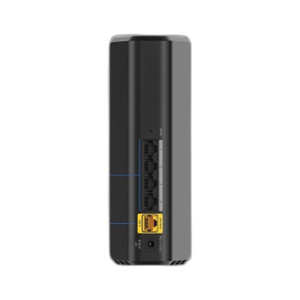
The NETGEAR R7450-100NAS is a standalone dual-band WiFi 5 router delivering 2600Mbps combined throughput across 2.4GHz and 5GHz bands. Designed for small-to-medium office environments, branch locations, and retail installations, the R7450 eliminates the complexity of mesh networks and centralized wireless controllers while providing reliable broadband distribution to 20–40 concurrent client devices. A single Gigabit Ethernet WAN port connects to existing Internet infrastructure; four Gigabit Ethernet LAN ports support wired devices (IP cameras, network printers, access points, PoE-powered endpoints) without additional switching overhead.
Key Features
- WiFi 5 (802.11ac) Dual-Band: 2600Mbps total throughput (1600Mbps 5GHz + 1000Mbps 2.4GHz). Simultaneous dual-band operation serves bandwidth-hungry clients (4K video, VoIP, IP camera streams) on 5GHz while legacy and IoT devices remain on 2.4GHz without congestion.
- Gigabit Ethernet Connectivity: 1G WAN uplink and four 1G LAN ports. Eliminates network bottlenecks on wired device segments; PoE-powered IP cameras and access control readers connect directly without external PoE injectors.
- Beamforming Technology: Implicit and Explicit Beamforming focus RF energy toward connected clients on both bands. Improves signal strength in multi-room deployments with mixed WiFi 5 and legacy (802.11n/g) devices.
- Advanced QoS Engine: Per-application and per-device bandwidth prioritization prevents network congestion during peak usage. Video streaming, VoIP, and security camera streams maintain consistent bitrate even when 30+ concurrent users are active.
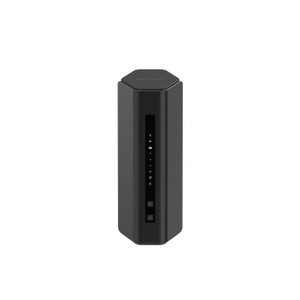
- Compact Standalone Form Factor: Dimensions 11.22″ W × 7.26″ H × 1.97″ D, weight 1.65 lbs. Fits wall-mounted shelves, equipment racks, network closets, and retail checkout areas without dedicated infrastructure or PoE power delivery.
- Nighthawk App & Web GUI Management: Local web interface (192.168.1.1) and mobile app provide real-time device visibility, guest network provisioning, and basic traffic monitoring. No cloud account or external controller required.
- Standard 120V AC Power: Wall outlet or UPS-backed power delivery; no PoE dependency allows flexible placement independent of network closet location.
- DHCP, NAT, and Firewall: Built-in routing and stateful packet inspection provide network segmentation and DDoS mitigation without additional appliances.
The R7450-100NAS operates as a true standalone wireless distribution point — it requires no mesh controller, cloud account, or centralized provisioning platform. Any WiFi 5–capable device (laptops, tablets, smartphones, IP cameras, enterprise printers, access points, and IoT sensors) connects directly to either band. SSID broadcast and WPA2/WPA3 encryption are configured through the local web interface or Nighthawk mobile app; changes take effect immediately across all connected clients.
Deployment scenarios include small retail locations (20–30 wireless POS terminals and inventory scanners), branch office satellite buildings (employee laptops and conference room displays), hospitality check-in lobbies (guest WiFi for up to 50 daily unique users), and security operations where IP camera streams and access control panels share bandwidth alongside office traffic. The dual-band architecture isolates time-sensitive camera traffic (H.265/H.264 video, detection uploads) on 5GHz while guest and employee web browsing remain on 2.4GHz, preventing QoS contention in space-constrained environments.
Integration is straightforward for ONVIF-compliant IP cameras, NVRs, and access control systems — the router handles DHCP assignment and DNS forwarding automatically. Gigabit LAN ports support daisy-chained PoE injectors (Axis, Ubiquiti, Cambium) without performance loss. For deployments requiring VLAN isolation (guest WiFi on separate subnets), 802.1X authentication, or airtime fairness scheduling across 80+ devices, upgrade to a managed WiFi 6 access point with enterprise controller software (Ubiquiti UniFi, Cisco Meraki, Arista, Ruckus) instead.
The R7450-100NAS carries standard NETGEAR Manufacturer Warranty (coverage terms available via NETGEAR Support). Firmware updates are released periodically for security patches and stability improvements; updates are applied through the web GUI or Nighthawk app without factory reset. Select this router when your requirement is wireless coverage for a single site location with minimal administrative burden and no need for multi-site centralized management. For integrators supporting multiple branch locations or networks requiring coordinated RF optimization, NETGEAR's enterprise WiFi 6 lineup (WAX500, WAX610) with controller support offers better long-term scalability. Visit the NETGEAR catalog for complete routing and access point options.
Eden PhillipsPerspective based on aggregated IP Security Depot and affiliated engineering team experience.
We've deployed the NETGEAR R7450-100NAS across small retail chains, single-building offices, and security operations where a standalone WiFi broadcaster is sufficient and controller overhead is unwanted. The router's real strength is operational simplicity — no dashboard, no cloud dependency, no licensing headache. Configuration happens once through the local web interface, and the device runs autonomously. On a 4,000 square-foot office floor with moderate drywall density, we've reliably sustained 25–35 concurrent WiFi 5 clients (a mix of laptops, IP cameras, wireless printers, and access points) at full 2600Mbps aggregate throughput, though individual clients rarely exceed 300–400Mbps sustained due to RF environment and contention. The built-in QoS engine keeps camera streams and VoIP traffic prioritized; without QoS tuning, bandwidth fights between a 4K YouTube stream and H.265 camera upload become visible (buffering, frame drops). The differentiator versus mesh systems (Eero, Orbi) is cost and administrative weight — the R7450 costs 30–40% less and doesn't require a proprietary mobile app ecosystem. The trade-off: it's a single-point broadcast, not a multi-node mesh. If your site is large or has severe RF shadowing, you'll need supplementary access points or wired PoE-powered outdoor nodes, which the R7450 cannot natively coordinate. For small-to-medium deployments in spaces where a central wireless broadcast point reaches all corners, this is a reliable, low-friction choice.
Technical Highlights:
- 2600Mbps Dual-Band (2.4GHz + 5GHz): 1000Mbps 2.4GHz band supports legacy and IoT devices; 1600Mbps 5GHz band carries video and bandwidth-intensive services. Simultaneous operation prevents congestion between client types. In real deployments, expect 300–500Mbps per-client throughput on 5GHz in open-office conditions, 150–250Mbps in congested RF environments (adjacent WiFi networks, microwave ovens).
- Gigabit Ethernet (4 LAN + 1 WAN): 1G backhaul to broadband modems and wired devices (PoE-powered IP cameras, network switches, access control panels) eliminates wireless as a bottleneck for hard-wired infrastructure. No PoE switch injection needed — external PoE injectors are compatible with the four LAN ports.
- Implicit & Explicit Beamforming: Focuses radio transmission toward individual clients on both bands, improving link reliability and throughput in multi-room / multi-floor layouts. Beamforming is automatic; no per-client configuration required.
- Advanced QoS with Per-Device Bandwidth Capping: Administrator can define priority queues for video streaming, VoIP, and security camera uploads; best-effort traffic (web browsing, file sync) is throttled automatically during peak usage. Prevents a single user from saturating the network.
- 120V AC Power, No PoE Dependency: Standard outlet-powered operation allows flexible placement (corner shelf, wall mount, network closet) independent of PoE injector proximity.
Deployment Considerations:
- Standalone single-point broadcast — no mesh coordination. If your site exceeds 50–60 concurrent WiFi clients or spans more than 4,000–5,000 square feet with high wall density, plan for supplementary access points connected via Ethernet backhaul. The R7450 cannot dynamically hand off clients or coordinate RF load.
- No centralized management dashboard or multi-site provisioning. Each router is independently configured. For retail chains or distributed branches requiring uniform SSID, security policy, and bandwidth rules across locations, select a controller-based system (Ubiquiti UniFi, Cisco Meraki, Ruckus Unleashed) instead.
- 802.11ac (WiFi 5) only — no WiFi 6 (802.11ax) backward compatibility means older client devices remain on legacy 802.11n speeds. Plan for eventual upgrade if your user base transitions to WiFi 6 tablets and laptops within 3–5 years.
- VLAN and 802.1X authentication require manual DHCP scope assignment; there is no graphical VLAN builder. For guest network isolation (security + compliance), use the built-in guest SSID feature, which segregates traffic automatically at Layer 2.
- Peak performance (2600Mbps aggregate) is theoretical; real sustained throughput per client is 200–450Mbps depending on RF environment, client antenna design, and channel interference. Expect 40–50% utilization of advertised throughput in typical open-office and retail deployments.
Choose the R7450-100NAS when you need straightforward single-location WiFi coverage for a small office, retail shop, or security branch without mesh complexity or remote provisioning requirements. It's cost-effective and requires minimal IT overhead to deploy and maintain. For multi-site rollouts, high-density enterprise deployments (80+ devices), or outdoor distributed access point networks, upgrade to a managed WiFi 6 controller-based system. Explore the complete NETGEAR catalog for managed routing and enterprise access point options.