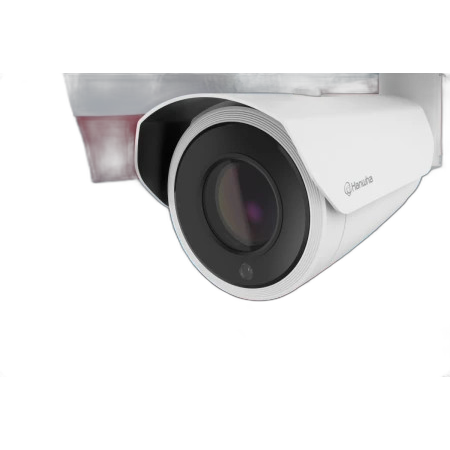
Hanwha TNO-6071E2F-C Explosion-Proof Fixed Camera
Overview
The Hanwha TNO-6071E2F-C is a fixed explosion-proof camera built for the most demanding hazardous-area surveillance deployments — petrochemical facilities, grain elevators, mining operations, and other Class I Division 1 environments where ignition risk from flammable gases or vapors is constant. This is not a general-purpose hardened camera wearing an armored shell; the TNO-6071E2F-C carries cLCus C1/D1 and cLC CSA certifications, meaning it has been independently tested and listed for operation inside zones where explosive atmospheres are present under normal conditions. If your AHJ requires a C1D1 listing, this is the camera to specify.
The TNO-6071E2F-C (often searched as TNO 6071E2F C) connects via single-mode fiber — the right call in environments where copper runs are impractical, ground loop interference is a concern, or cable distances exceed what copper PoE can deliver. Paired with a 2.8–9mm varifocal lens, it gives installers meaningful flexibility to dial in field of view at commissioning without swapping optics.
Key Features
- cLCus Class I Division 1 + cLC CSA Certification: C1D1 covers locations where ignitable concentrations of flammable gases or vapors exist continuously or intermittently under normal operating conditions. This listing is what your process safety engineer and AHJ need to see before installation can proceed — not every explosion-proof camera carries both cLCus and cLC CSA marks. Verify your jurisdiction's accepted listing bodies before spec'ing.
- IP66/IP67/IP68 Ingress Protection: IP66 blocks high-pressure water jets; IP67 handles temporary immersion to 1 meter; IP68 extends to continuous submersion at defined depth. In a refinery wash-down environment or a facility subject to flooding, all three matter. You are not trading down to IP65 just to get hazardous-area certification — this unit holds the full stack.
- -60°C to +40°C Operating Temperature: The lower bound of -60°C is exceptional — most hardened cameras stop at -40°C. That extra 20 degrees of cold tolerance matters in outdoor arctic installations or cold-climate processing plants where ambient can dip below -50°C before wind chill. The +40°C upper limit is moderate; in high-ambient environments (engine rooms, roof-mounted rigs in summer), confirm the installation environment won't exceed this ceiling.
- 2.8–9mm Varifocal Lens: The varifocal range lets the installing technician adjust coverage from a wide scene view down to a narrower corridor or equipment-focused angle without pulling a different lens. In explosion-proof deployments where re-entry to the hazardous area after commissioning is controlled or delayed, getting the angle right on first pass is important — this range gives reasonable margin.
- Single-Mode Fiber Connectivity: Single-mode fiber eliminates the copper distance limitation (typically 100m for Ethernet), removes ground-loop risk in high-voltage industrial environments, and avoids the electromagnetic interference common near heavy machinery and switching equipment. Plan fiber termination and media conversion infrastructure at the control room end before finalizing the bill of materials — the camera end is fiber-native, so your media converter or fiber-capable switch needs to match.
- 110VAC Power: The TNO-6071E2F-C runs on 110VAC rather than PoE, which separates power planning from the fiber data path. In industrial installations with existing AC power distribution to equipment enclosures, this is straightforward. If your installation is greenfield and you were planning a PoE-driven system, budget for local AC power drops at each camera location.
- White Housing: The white enclosure finish reduces solar heat absorption in outdoor installations, which can meaningfully lower internal operating temperature in direct-sun exposures — a practical benefit when the upper operating limit is +40°C.
Integration & Compatibility
The TNO-6071E2F-C belongs to the Hanwha surveillance camera line, which integrates with Hanwha's Wisenet WAVE VMS and supports ONVIF-based third-party VMS platforms for broader ecosystem flexibility. For hazardous-area projects, coordinate with your VMS team early — fiber-connected cameras require media converters or fiber-capable network switches upstream, and the VMS topology needs to account for that infrastructure. Pair this camera with a compatible network video recorder that supports fiber-fed inputs or has sufficient SFP port capacity. For facilities deploying multiple industrial outdoor IP cameras across a hazardous zone, standardizing on single-mode fiber infrastructure simplifies long-term maintenance and future expansion.
Because this unit draws 110VAC rather than PoE, it does not appear on your PoE switch power budget — a planning note worth capturing in your design documents to avoid confusion during commissioning.
Frequently Asked Questions
Q: What hazardous-area classification does the TNO-6071E2F-C carry?
A: The TNO-6071E2F-C is certified cLCus Class I Division 1 (C1D1) and cLC CSA. C1D1 covers locations where flammable gases or vapors are present under normal operating conditions — the most demanding North American hazardous-area classification for camera installations.
Q: Does the TNO-6071E2F-C use PoE or a separate power supply?
A: It runs on 110VAC, not PoE. You will need a local AC power source at each camera location. The data connection is separate, carried over single-mode fiber.
Q: What does single-mode fiber connectivity mean for installation planning?
A: Single-mode fiber supports long cable runs well beyond the 100m limit of copper Ethernet, resists EMI from industrial equipment, and eliminates ground-loop concerns. You will need a media converter or fiber-capable managed switch at the network aggregation point to bridge to your IP network.
Q: What is the operating temperature range of the TNO-6071E2F-C?
A: -60°C to +40°C. The -60°C lower limit covers arctic or extreme cold-climate industrial environments. Note the +40°C upper limit — verify that installation locations (including solar-exposed enclosures) do not exceed this ambient ceiling.
Q: What ingress protection rating does this camera have?
A: IP66/IP67/IP68 — covering high-pressure water jets, temporary immersion, and sustained submersion respectively. This makes it suitable for wash-down environments and installations subject to standing water or flooding.
Q: Can the lens angle be adjusted after installation?
A: Yes. The 2.8–9mm varifocal lens allows field-of-view adjustment at commissioning. Given the controlled-access nature of hazardous-area installations, setting the angle correctly during initial commissioning is strongly recommended to avoid re-entry to the hazardous zone for adjustments.
The TNO-6071E2F-C is one of the few fixed cameras I would specify without hesitation for a C1D1 zone — the dual cLCus and cLC CSA listings remove the certification ambiguity that delays permit approval on hazardous-area projects, and the -60°C lower operating limit means this unit covers outdoor installations in northern Alberta or Alaska where most explosion-proof cameras hit their cold floor and stop.
Technical Highlights:
- C1D1 + CSA Dual Listing: Carrying both cLCus and cLC CSA means this camera satisfies AHJ requirements across US and Canadian jurisdictions without sourcing two different models for a cross-border facility.
- IP66/IP67/IP68 Triple Rating: Most explosion-proof housings earn IP66. The additional IP67 and IP68 ratings matter in facilities subject to wash-down cycles or periodic flooding — common in food processing adjacent to petrochemical or in below-grade equipment pits.
- Single-Mode Fiber Native: Running fiber rather than copper in a C1D1 zone removes the intrinsic safety calculation burden from the data cable entirely. The 2.8–9mm varifocal gives the installer one lens that handles both tight equipment monitoring and broader area coverage without a second SKU on the BOM.
Deployment Considerations:
- The 110VAC power requirement means your electrical contractor needs to pull conduit and terminate AC power at each camera location — budget that into the installation scope early, as it is often underestimated on fiber-first network designs where integrators default to assuming PoE.
- The +40°C upper operating limit is the spec to watch. In direct-sun outdoor installations or enclosed equipment housings with poor ventilation, ambient can exceed this — shade the enclosure or specify a sun shield if the installation site is exposed.
This camera is the right call for a refinery or chemical processing facility running a multi-camera perimeter and process-area surveillance system where C1D1 listing, fiber infrastructure, and arctic-grade cold tolerance all appear on the project specification simultaneously — that combination eliminates most competing models from contention.