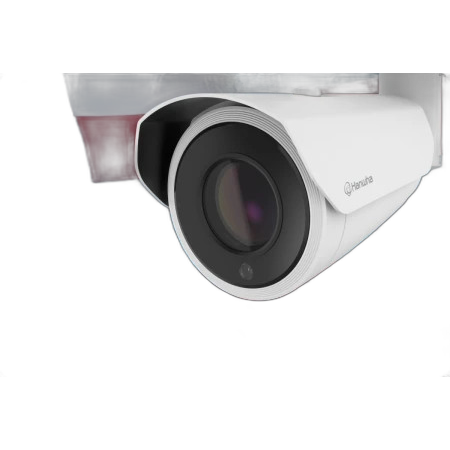
Hanwha TNO-6071E1W-C Explosion-Proof Fixed Camera
Overview
The Hanwha TNO-6071E1W-C is a fixed explosion-proof surveillance camera engineered for hazardous-area deployments where standard IP cameras simply cannot be installed — oil refineries, chemical processing plants, petrochemical terminals, mining operations, and grain handling facilities. The triple-rated IP66/IP67/IP68 enclosure combined with a certified explosion-proof housing means this camera is built to contain any ignition event while operating continuously in environments with flammable gases, vapors, or dusts. If your site classification requires ATEX, IECEx, or equivalent hazardous-area certification on every piece of installed equipment, the TNO-6071E1W-C is the starting point for that conversation with your Hanwha Vision camera deployment.
Key Features
- Triple IP Rating (IP66/IP67/IP68): IP66 blocks high-pressure water jets, IP67 covers temporary submersion, and IP68 extends to continuous submersion beyond 1 meter — meaning this housing handles not just weather but wash-down operations, flooding risk zones, and hose-down cleaning protocols common in petrochemical facilities.
- Extreme Cold-Weather Operation (-60°C to +40°C): A -60°C lower limit is not a spec you see on standard explosion-proof cameras. This range covers Arctic-grade outdoor installations, cold-storage facilities, and LNG terminal environments where standard cameras fail within the first winter season.
- 2.8–9mm Varifocal Lens with Optical Zoom: The varifocal range lets you dial in the coverage angle during commissioning without swapping lenses — useful in explosion-proof installations where re-opening a certified housing to change optics is costly and time-consuming. Optical zoom preserves image quality across the focal range.
- 24VAC Power: Powered by 24VAC rather than PoE, which aligns with industrial power distribution infrastructure common in process plants. Plan for a dedicated 24VAC transformer circuit; standard PoE switch infrastructure does not apply here. See our PoE switch selection if your broader deployment includes non-hazardous-area cameras on the same network.
- True Day/Night Operation: Mechanical IR-cut filter delivers accurate color during daylight and switches to monochrome sensitivity after dark — critical for maintaining usable footage in facilities that operate around the clock.
- White Housing: The white enclosure aids visual inspection in industrial environments, making the camera easier to spot during facility audits and maintenance walkthroughs. It also reflects heat in high-ambient-temperature exterior installations.
Integration & Compatibility
The TNO-6071E1W-C integrates into Hanwha's Wisenet ecosystem and is compatible with major VMS platforms via ONVIF. For multi-camera hazardous-area deployments, pair with a network video recorder sized to your channel count — visit our NVR category for compatible options. Consult your AHJ and site safety engineer before finalizing camera placement in classified zones; the camera's explosion-proof rating must match the zone classification (Zone 1/2 gas or Zone 21/22 dust) for your specific site.
Frequently Asked Questions
Q: What power supply does the TNO-6071E1W-C require?
A: The TNO-6071E1W-C runs on 24VAC. It does not support PoE. A dedicated 24VAC transformer circuit is required — standard PoE switches cannot power this camera.
Q: What does the IP66/IP67/IP68 triple rating mean for this camera?
A: IP66 protects against high-pressure water jets, IP67 allows temporary submersion up to 1 meter, and IP68 covers continuous submersion beyond 1 meter. This makes the camera suitable for wash-down environments, flood-risk zones, and marine-adjacent installations.
Q: What is the operating temperature range of the TNO-6071E1W-C?
A: The camera operates from -60°C to +40°C (-76°F to +104°F). This extreme low-end rating makes it suitable for Arctic outdoor installations and LNG terminal environments where standard cameras cannot survive sustained cold.
Q: Is the TNO-6071E1W-C compatible with third-party VMS platforms?
A: The camera integrates with Hanwha's Wisenet ecosystem. For third-party VMS compatibility (Milestone, Genetec, etc.), confirm ONVIF profile support with your integrator prior to deployment — particularly important in hazardous-area projects where post-installation changes are costly.
Q: Can the lens be adjusted after the camera is installed in a hazardous area?
A: The 2.8–9mm varifocal lens should be set and locked during initial commissioning before the camera is sealed and installed in its certified housing. Re-opening an explosion-proof enclosure in a live classified zone requires following your site's hot-work and permit-to-work procedures.
The spec that defines this camera's deployment class is the -60°C lower operating limit on the TNO-6071E1W-C. Most explosion-proof cameras bottom out at -40°C, which is already extreme — but -60°C opens up LNG terminals, Arctic pipeline monitoring, and cold-climate offshore platforms that a standard hazardous-area camera simply cannot serve.
Technical Highlights:
- IP66/IP67/IP68 Triple Rating: All three ratings simultaneously — not just the highest. This matters in facilities where wash-down (IP66), temporary flood events (IP67), and trench or below-grade installations (IP68) can all occur on the same site.
- 2.8–9mm Varifocal Optic: A 3.2× optical zoom range inside a fixed explosion-proof housing gives commissioning engineers enough flexibility to frame the scene correctly on initial install — minimizing the need to re-enter the housing post-certification.
- 24VAC Power Architecture: Industrial process facilities run 24VAC distribution as a standard — the TNO-6071E1W-C slots into that infrastructure without a PoE injector or switch upgrade. That said, your IT team needs to know upfront that this camera sits outside the PoE switch budget entirely.
Deployment Considerations:
- Verify the camera's hazardous-area certification code against your site's zone and gas group classification before procurement — explosion-proof ratings are zone- and gas-group-specific, and the wrong classification is a compliance failure regardless of how capable the camera is.
- The +40°C upper limit is the constraint to watch in direct-sun southern-climate installations. If your enclosure surface temperature in peak summer exceeds that, you need a sunshield or a shaded mounting position.
The TNO-6071E1W-C is the right specification for a permanent fixed-angle surveillance point in a classified hazardous area where extreme cold, wash-down cycles, and 24VAC plant infrastructure are all in play — particularly LNG terminals, Arctic fuel storage, and petrochemical processing facilities operating year-round in harsh climates.