
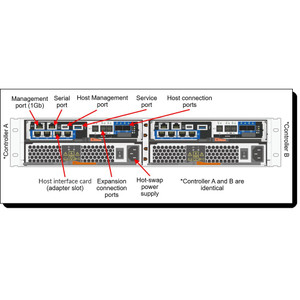

Product images are provided for reference and may not represent the exact model, configuration, or included
components.
Build Your Complete System
Manufacturer-verified compatible cameras, recorders, mounts, accessories, and licenses for this product. Adjust quantities and add the entire bundle to your cart in one click.
Item
Qty
Status
Price
Mounts & Accessories recommended
Recorders, NVRs & Storage recommended
Licenses & Software where applicable
Services & Training optional
No Bots, Just Experts
Questions about this product? Free pre-sales support from a senior specialist — product questions, compatibility checks, BOM quotes, price confirmation — typically answered within one business day. Need camera placement or system design work? Engineering time is $175 per hour (qty 1 = 1 hour). Hardware buyers get up to one hour ($175) credited back on their order.
Description

Lenovo 7Y701008NA 2U12 LFF Dual-Controller Hybrid Storage Array
Overview
The Lenovo ThinkSystem DE2000H 2U12 LFF storage array — ordered via part number 7Y701008NA for North America — is a dual active-active controller block storage platform built for mid-range SAN environments where drive density, resiliency, and straightforward scale-out matter more than flash-only pricing. At 2U in a standard rack, it accepts up to 12 large-form-factor drives and supports expansion to three external enclosures (DE120S or DE240S), pushing raw usable capacity to 864TB across 48 LFF HDDs. If your workload is mixed or archive-heavy and you're not ready to pay for an all-flash footprint, this platform is worth a close look in the hybrid storage array category.
Key Features
- Dual Active-Active Controllers with Automatic Load Balancing: Both controllers process I/O simultaneously rather than one sitting idle in standby. That means you get full use of all available controller resources under normal conditions — not just during a failover event. Cache mirroring keeps 64GB (32GB per controller) of write cache synchronized between the two, so a controller failure doesn't cause a cache-data loss event.
- Flash-Backed Cache Protection: The cache protection system includes a battery for destaging to flash on power loss. In a storage array, this is the difference between a clean shutdown and corrupted in-flight writes — critical in environments without robust UPS infrastructure.
- RAID 0, 1, 3, 5, 6, 10 plus Dynamic Disk Pools: DDP (Dynamic Disk Pool) is the operationally simpler alternative to traditional RAID groups — it distributes parity and spare capacity across all drives in the pool, which shortens rebuild times significantly on large-capacity LFF HDDs. RAID 3 is available via CLI only if you need it for specific workloads.
- Up to 864TB Raw Capacity in 2U (expandable to ~2.6PB with SFF config): With 48x 18TB LFF HDDs across the base 2U12 enclosure and up to three expansion enclosures, this chassis handles substantial unstructured data growth without requiring additional rack space for a second controller shelf. The 7Y701008NA base chassis starts the count before any expansion units are added.
- Three Expansion Enclosure Support (DE120S or DE240S, mixable): You can add up to three external enclosures — and you can mix DE120S and DE240S units within that limit. This matters for shops that want to add smaller increments of capacity rather than committing to a full 240-drive expansion in one purchase.
- Redundant 913W Hot-Swap Power Supplies (Platinum AC): Two hot-swap PSUs at 913W each, 100–240V input range. The Platinum efficiency rating means lower heat output and power draw at typical load percentages — relevant if you're calculating per-rack power budgets. Hot-swap means you can replace a failed PSU without a maintenance window.
- Hot-Swap Controllers, I/O Modules, Drives, PSUs, and SFP+ Transceivers: Every major component that fails in production is field-replaceable without powering down the array. For 24/7 environments — surveillance storage, active archives, continuous manufacturing data — this eliminates the scheduled downtime that fixed-component arrays require.
- Out-of-Band Management via Dedicated 1GbE Port per Controller: Each controller has its own RJ-45 management port, completely separate from the data path. You can reach the array for configuration and monitoring even when the SAN fabric is congested or down. Serial console ports (RJ-45 and Micro-USB) provide a further fallback.
- Role-Based Access Control (RBAC) and LDAP Authentication: RBAC lets you separate storage admin, read-only monitoring, and operator roles without sharing a single admin credential across teams. LDAP integration means you can tie the array into your existing Active Directory or OpenLDAP structure rather than managing a separate local user database.
- Standard Snapshots (up to 128 targets), Thin Provisioning, and Volume Copy Included: These data services are in the base license — no additional software purchase required. Snapshots give you recovery points for VMs, databases, or surveillance footage repositories. Thin provisioning (DDP-only) lets you over-provision logical volumes and grow physical allocation as data actually lands.
- Optional Asynchronous Mirroring and Extended Snapshot Targets (up to 512): When you need site-level replication or more granular snapshot schedules across a larger number of volumes, these capabilities are available as licensed additions without hardware changes.
- Software Maintenance Included in Base Warranty: Firmware updates and software maintenance are bundled with the base warranty and any extensions. You're not buying a separate software subscription to keep the array patched — the cost is predictable over the warranty term.
Integration and Compatibility
The DE2000H platform supports Microsoft Windows Server, Red Hat Enterprise Linux, SUSE Linux Enterprise Server, and VMware vSphere as validated host operating systems — covering the dominant hypervisors and bare-metal OS environments in enterprise and mid-market SAN deployments. Management interfaces include a web-based System Manager GUI, a standalone SAN Manager GUI, SSH CLI, serial console CLI, SMI-S Provider for integration with storage management frameworks, and SNMP/email/syslog alerting for integration with existing monitoring stacks. Optional Lenovo XClarity integration allows the array to be managed alongside ThinkSystem servers in a unified management plane — useful in Lenovo-centric data center environments. The array's security stack covers SSL/SSH transport, user-level security, RBAC, and LDAP — enough to satisfy most enterprise security baselines without additional configuration overlays. For environments requiring data-at-rest encryption, the platform supports encryption through optional FIPS-validated drives; the software capability is present in the base image, but encryption requires the appropriate drive SKUs.
Frequently Asked Questions
Q: What is the maximum raw storage capacity of the 7Y701008NA 2U12 LFF chassis with expansion enclosures?
A: The 2U12 LFF base chassis supports up to 12 LFF drives. With three DE120S or DE240S expansion enclosures added, the combined system supports up to 48x 18TB LFF HDDs for a total raw capacity of 864TB. If you configure the equivalent 2U24 SFF variant with SSDs, the platform can reach up to 1.47 PB across 96x 15.36TB SFF SSDs.
Q: Does the DE2000H use active-passive or active-active controllers?
A: Active-active with automatic load balancing. Both controllers process I/O simultaneously, and cache mirroring keeps up to 64GB of write cache (32GB per controller) synchronized between them. Neither controller sits idle during normal operation.
Q: Is data-at-rest encryption supported?
A: Yes, encryption is a supported software feature, but it requires optional FIPS-validated drives. The software capability is included in the base image — you need to specify the appropriate FIPS drive SKUs at order time to enable encryption at rest.
Q: What management interfaces does the DE2000H support?
A: The array includes a web-based System Manager GUI, standalone SAN Manager GUI, SSH CLI, serial console CLI (RJ-45 and Micro-USB), SMI-S Provider, and SNMP/email/syslog alerting. Optional Lenovo XClarity integration is also available for unified server and storage management.
Q: What RAID levels are available and is Dynamic Disk Pool supported?
A: Supported RAID levels are 0, 1, 3, 5, 6, and 10. Dynamic Disk Pool (DDP) is also supported and is required for thin provisioning. Note that RAID 3 is configurable only through the CLI, not the GUI.
Q: What is the warranty on the 7Y701008NA?
A: The 7Y701008NA carries a 3-year manufacturer warranty. Software maintenance — including firmware updates — is included in the base warranty and any Lenovo warranty extensions.
Eden Phillips
The DE2000H 2U12 LFF — purchased as 7Y701008NA for North American deployments — stands out to me specifically because of how the dual active-active controller architecture handles cache: 32GB per controller with mirroring between them means you're not gambling write-cache integrity on a single controller's battery. Flash-backed destaging is the failsafe beneath that, which matters in co-lo environments where PDU-level power events aren't always clean.
Technical Highlights:
- 64GB Mirrored Write Cache: 32GB per controller, mirrored across both — cache data survives a single controller failure without loss, and you're running full cache capacity in normal operation, not half.
- Dynamic Disk Pool Rebuild Performance: On 18TB LFF HDDs, traditional RAID rebuild times can stretch into days and leave adjacent drives at elevated failure risk the entire time. DDP distributes spare capacity across all drives in the pool, dramatically shortening the rebuild window.
- Three-Enclosure Expansion with Mixed DE120S/DE240S: You can stage capacity additions — start with DE120S for a smaller increment, add DE240S later — without being locked into uniform enclosure types across the expansion shelf chain.
Deployment Considerations:
- Encryption requires FIPS-qualified drive SKUs — the software feature is enabled in the base image, but specifying standard drives at order time means you cannot enable encryption later without a drive replacement. Get this right before the order ships.
- RAID 3 is CLI-only — it does not appear in the System Manager GUI. If your team relies on GUI-driven configuration for day-to-day operations, plan to document the CLI procedure before commissioning any RAID 3 volume groups.
This platform fits well in surveillance storage back-ends and active archive tiers where you need LFF drive density in a compact 2U footprint — particularly where the combination of DDP rebuild speed and active-active controller resilience is more operationally valuable than all-flash throughput at a significantly higher price point.
Specifications
Product Type:
Hybrid Storage Array
Warranty:
3 Year
Ir Lowlight:
940nm (invisible)
Mount Type:
Rack
Dimensions:
2U24 SFF enclosure:Height: 85 mm (3.4 in.)Width: 449 mm (17.7 in.)Depth: 553 mm (21.8 in.)2U12 LFF enclosure:Height: 85 mm (3.4 in.)Width: 447 mm (17.6 in.)Depth: 483 mm (19.0 in.)
Compare with similar

Lenovo 2U12 Chassis - 7Y701008NA
$21,398.99

Send Laura a Message
Senior Specialist · Typically replies within 1 business dayBuild Your Complete System
Manufacturer-verified compatible cameras, recorders, mounts, accessories, and licenses for this product. Adjust quantities and add the entire bundle to your cart in one click.
Item
Qty
Status
Price
Mounts & Accessories recommended
Recorders, NVRs & Storage recommended
Licenses & Software where applicable
Services & Training optional
RELATED PRODUCTS
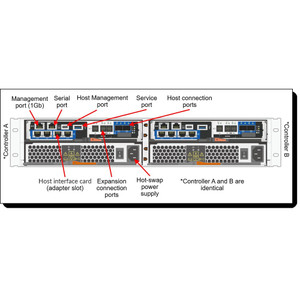

Lenovo 2U12 Chas - 7Y70A00YWW
Controller enclosure for the ThinkSystem DE2000H hybrid storage array — a 2U, 12-bay large-form-factor (LFF) chassis designed to anchor entry-level
Usually Ships in 2-3 Weeks
Free shipping over $499
$21,854.99
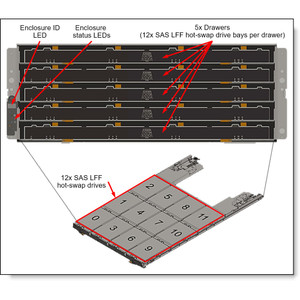
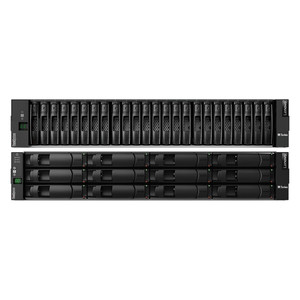
Lenovo Thinksystem DE 120S 2U12 EXP - 7Y63A000WW
2U, 12-bay large form factor (LFF) expansion enclosure designed for the ThinkSystem DE Series storage platform
Usually Ships in 2-3 Weeks
Free shipping over $499
$8,839.00
$8,838.99
Save $0.01
Looking for more Lenovo products? Shop the full Lenovo catalog →
System Design, Deployment & Technical Support
Support services and planning resources for commercial surveillance, access control, and infrastructure deployments.
Fixed scope • Fixed price
System Design Assistance
- Get help validating product compatibility
- Coverage requirements
- Storage planning and deployment architecture before you buy.
Deployment & Configuration Support
- Access fixed-scope support for rollout planning
- User setup guidance
- Migration and system standardization across single-site or multi-site deployments
Guides, Tools & Calculators
- PoE requirements
- Storage retention
- Camera selection and deployment methodology