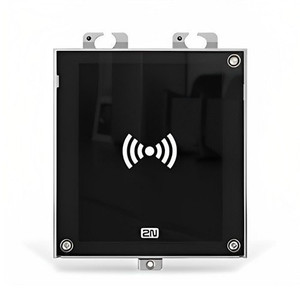
2N 02775-001 AU2.0 Multi-Technology RFID Access Control Reader
The 2N 02775-001 is a consolidated RFID access control reader purpose-built for enterprises running mixed-credential infrastructure. Instead of deploying separate 125kHz and 13.56MHz readers at each access point, the AU2.0 handles both legacy low-frequency cards and modern high-frequency smart cards plus NFC mobile credentials from a single reader footprint. This consolidation directly reduces reader hardware costs, simplifies cabling runs (fewer wall penetrations), and cuts installation labor across multi-door deployments.
Key Features
- Multi-Technology RFID Support (125kHz LF, 13.56MHz HF, NFC): Single reader processes low-frequency legacy badges, ISO/IEC 14443A compliant high-frequency cards, and NFC-enabled mobile devices. Eliminates reader redundancy in facilities managing credential transitions or supporting BYOD access scenarios. Deploy one reader per door instead of two, reducing both hardware spend and ongoing maintenance burden.
- Integrated Numeric Keyboard: Built-in PIN entry provides fallback authentication without requiring a separate keypad device. If the wireless RFID signal path fails or a credential is lost, personnel can authenticate using PIN alone—genuine operational resilience, not auxiliary functionality. Meets dual-factor access requirements common in healthcare, financial services, and government facilities.
- Hardware-Level Security (Anti-Cloning Protection): Encryption and secure communication protocols prevent credential interception and replay attacks. Critical for regulated environments where credential compromise carries direct compliance liability. Protects both the reader-to-controller link and the credential itself from unauthorized duplication.
- PICard Credential Format Support: Direct compatibility with PICard secure encoding simplifies integration if your infrastructure already runs Axis access control systems or third-party physical access control systems (PACS) platforms that recognize PICard credential structure. Reduces firmware customization and controller configuration overhead.
- ONVIF Protocol Compatibility: Integrates into broader access control systems via standard ONVIF communication, avoiding vendor lock-in. Works with third-party PACS platforms and Axis-native deployments without custom middleware or protocol translation layers.
- Compact Form Factor: Designed for standard door-frame installations and retrofit scenarios. Fits existing strike plate spacing and enclosure mounting patterns without structural modification, important when upgrading access control in occupied facilities where construction downtime carries operational cost.
Integration and Compatibility
The 02775-001 functions as a standalone reader or integrates into enterprise access control architectures via ONVIF and Axis PACS platforms. The combination of wireless credential reading plus hardwired PIN input means authentication doesn't depend on any single method—if the card reader antenna fails, PIN entry remains available. When planning enterprise security architecture around availability and fault tolerance, this dual-path design matters: you eliminate single points of failure that could lock personnel out of critical areas.
Deployment Scenarios
Deploy the AU2.0 in office buildings and corporate campuses transitioning from legacy 125kHz badge systems to NFC/HF infrastructure. Existing readers remain operational; new readers support both old and new credentials during the migration window. Data centers, secure labs, and regulated facilities benefit from integrated PIN+card authentication—compliance frameworks like SOC 2 and ISO 27001 frequently require layered access controls at sensitive boundaries. Facilities managing post-acquisition credential consolidation or supporting contractor/visitor access with temporary NFC-enabled credentials see immediate ROI by eliminating reader proliferation.
When to Choose a Different Approach
If your deployment is single-credential only—all 125kHz legacy or all 13.56MHz modern—a single-technology reader from the 2N family may reduce cost and eliminate unused capability. If your facility requires outdoor-rated readers in harsh weather, direct rain exposure, or high-vibration industrial environments, verify environmental specifications and IP/IK ratings before committing. The AU2.0 design assumes credential-based primary authentication with PIN as fallback; if PIN-only access without RFID is your primary requirement, a dedicated PIN pad or numeric keypad reader may be more appropriate.
Frequently Asked Questions
Q: Does the 2N 02775-001 work with existing Axis PACS deployments?
A: Yes. The reader supports PICard credential format and integrates via ONVIF protocol, enabling direct integration into Axis access control infrastructure without additional middleware or firmware modifications.
Q: Can the AU2.0 authenticate using PIN alone if the RFID antenna fails?
A: Yes. The integrated keyboard allows PIN-only authentication as a fallback method, ensuring access remains available even if the card reader component fails.
Q: What credential types does the 02775-001 support?
A: The reader handles 125kHz low-frequency cards (legacy badges), 13.56MHz high-frequency smart cards (ISO/IEC 14443A), and NFC-enabled mobile devices. This multi-technology support eliminates the need for separate readers per credential type.
Q: Is the 2N 02775-001 suitable for outdoor installations?
A: Environmental specifications and IP/IK ratings should be verified before deploying in outdoor or high-vibration industrial environments. Consult the datasheet or contact the manufacturer for specific environmental suitability details.
Q: Does the AU2.0 support ONVIF-compliant third-party PACS platforms?
A: Yes. ONVIF protocol support enables integration with third-party physical access control systems that recognize the ONVIF standard, reducing vendor dependency.
Q: What is the hardware encryption method used in the 02775-001?
A: The reader employs hardware-level encryption and secure communication protocols to protect against credential cloning and man-in-the-middle attacks. Specific cryptographic methods are detailed in the manufacturer's security documentation.
Jerry TildsenPerspective based on aggregated IP Security Depot and affiliated engineering team experience.
The 2N 02775-001 solves a real deployment headache: multi-credential access control without hardware redundancy. Most enterprises I work with either have legacy 125kHz infrastructure they can't rip out or are migrating to NFC—this reader handles both simultaneously, eliminating the need to run parallel readers at every door. The integrated PIN keyboard is not window dressing; it's genuine operational resilience that keeps the door accessible even if the wireless credential path fails.
Technical Highlights:
- Multi-Technology RFID (125kHz + 13.56MHz + NFC): One reader handles three credential ecosystems, cutting per-door hardware cost roughly in half compared to deploying separate readers. For a 100-door facility, that's material savings in both capital and ongoing maintenance.
- Integrated PIN Keyboard: Fallback authentication means you're not dependent on the wireless path. Credential lost? Antenna failure? Personnel still authenticate using PIN. That redundancy matters in secure facilities where access denial has operational consequences.
- Hardware-Level Encryption + Anti-Cloning: Protects the reader-to-controller link and the credential itself from duplication and replay attacks. Non-negotiable for healthcare, finance, and government deployments where credential compromise is a compliance liability.
- PICard + ONVIF Support: Integrates cleanly into Axis PACS and third-party ONVIF-compliant platforms without custom firmware or middleware. Reduces integration engineering overhead and avoids vendor lock-in.
Deployment Considerations:
- Multi-technology consolidation works best in mixed-credential environments or facilities undergoing credential migration. Single-credential deployments don't leverage the full value.
- Verify environmental specifications (IP/IK ratings) before outdoor or industrial installation. The evidence doesn't specify rugged environmental ratings, so confirm suitability for harsh conditions before committing.
- PIN-entry speed can impact throughput at high-traffic access points. If your facility has high-volume personnel flow, ensure PIN as fallback, not primary method, to avoid bottlenecks.
Position the 02775-001 in enterprise office and secure facility deployments where credential diversity, operational resilience, and hardware consolidation directly justify the investment. Data centers managing SOC 2/ISO 27001 compliance benefit from the dual-factor design (card + PIN). Campus environments supporting BYOD NFC access alongside legacy badge infrastructure see immediate ROI.