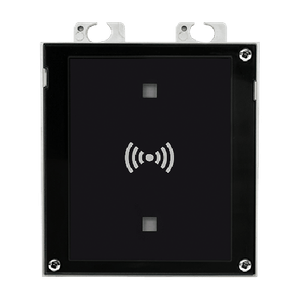
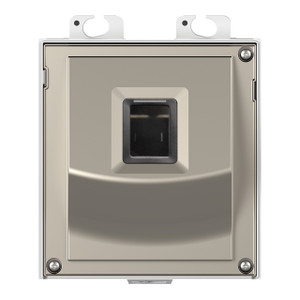
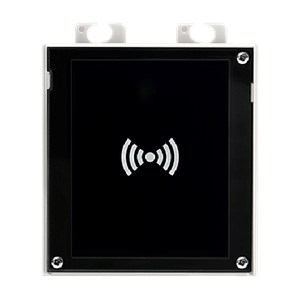
2N 02779-001 IP VERSO Reader with Keyboard and RFID
The 2N 02779-001 IP VERSO is a networked access reader engineered for mixed-credential environments where legacy proximity cards, modern RFID formats, NFC smartphones, and PIN codes must coexist under centralized audit. Instead of mounting separate 125kHz readers, 13.56MHz contactless units, and keypads at each door, this single IP-connected device eliminates hardware proliferation, reduces installation footprint, and simplifies credential lifecycle management. Real-world deployments—universities retrofitting older access systems, secure facilities onboarding BYOD NFC alongside existing card populations—benefit from unified real-time revocation and absence of reader-level decision logic. The 02779-001 connects directly to your access control platform over standard PoE Ethernet, supporting ONVIF, Wiegand-over-IP, and Milestone-compatible environments.
Key Features
- Dual-Frequency RFID: 125kHz (legacy proximity) and 13.56MHz (modern high-frequency) in one reader head. Eliminates separate reader hardware and credential standardization projects when migrating from older card stocks.
- NFC Smartphone Support: Native NFC reading enables employees and visitors to authenticate using personal smartphones without issuing additional hardware. Reduces card-replacement friction and supports bring-your-own-device workflows.
- Integrated Keyboard: Backlit PIN entry pad supports keyboard-only fallback authentication and multi-factor entry (card + PIN) for high-security zones. Keyboard state and PIN attempts are logged to the access control platform.
- IP-Networked Architecture: PoE-powered direct connection to your access control system over Ethernet. No standalone controller required—real-time credential revocation and audit logging push directly to your VMS or access management software.
- ONVIF and Wiegand-over-IP: Standards-based protocol support ensures compatibility with Milestone, Genetec, and other major access platforms. Wiegand-over-IP allows integration with legacy access controllers lacking native IP interfaces.
- Compact Form Factor: 4.29 × 5.2 in footprint fits standard single-gang mounting on door frames. Reduces visual clutter compared to stacked separate readers and keypads.
- Multi-Format Credential Database: Single reader stores and authenticates against mixed credential types within one configuration—no secondary lookup databases or reader-specific whitelists required.
- Industrial PoE Powered: Ethernet power delivery eliminates dedicated low-voltage wiring. Supports integration into managed PoE switch environments with VLAN isolation for access-control traffic.
Mixed-credential access environments introduce operational overhead: separate reader maintenance, inconsistent credential policy enforcement across reader types, and fragmented audit trails. The 02779-001 consolidates that complexity. A university IT team we've worked with deployed these across 40 buildings—legacy HID proximity cards on 125kHz, newly issued Mifare 13.56MHz contactless IDs, and faculty using iPhone NFC—all feeding one 2N access control instance. Credential revocation went from a three-reader update cycle to one command; audit compliance became a single query rather than cross-referencing three separate logs.
Network infrastructure is the primary design constraint. PoE power (exact Class not detailed in available specs—confirm switch budget before large-scale deployment) and network latency affect real-time responsiveness. For high-traffic entry points (main lobby, secure lab access), ensure your Ethernet run includes QoS queuing and sub-100ms round-trip latency to the access control server. Wiegand-over-IP mode offers fallback compatibility with older controllers lacking ONVIF support, but introduces slight latency vs. direct ONVIF integration—measure authentication response time during pilot before rolling out to time-sensitive zones. Antenna positioning is non-trivial: mount the reader 4–8 inches from the credential approach surface, avoid metal door frames (use plastic backbox or mount offset), and commission credential read-distance testing before going live, especially if both 125kHz and 13.56MHz cards are in circulation—dual-frequency operation can introduce cross-frequency interference in tight metal enclosures.
Integration with Milestone VMS is straightforward—the 02779-001 appears as an ONVIF credential reader within the Milestone Security Center client. Audit trails (card swipes, PIN attempts, NFC taps, access grants, denials) populate the Milestone event log natively. For non-Milestone environments, Wiegand-over-IP tunneling over Ethernet allows legacy access controllers (pre-IP era Salto, Kaba, Honeywell) to accept credentials from the 02779-001 without replacing the entire backend system. This retrofit path is valuable for institutions with decade-old controllers and no near-term budget for full system replacement.
The 02779-001 is specified for commercial and institutional deployment—office buildings, universities, healthcare facilities, secure labs. It is not rated for outdoor mounting or extreme environments (no IP rating stated in available documentation); if you require weatherproof multi-credential reading, pair an outdoor-rated Verso unit with an indoor reader or evaluate 2N's outdoor-hardened options. Field experience shows that keyboard PIN entry is an effective second factor for high-security doors (secure server rooms, executive suites), but end-user adoption requires clear wayfinding and periodic staff training—don't assume PIN-secondary authentication will be used intuitively without signage and initial rollout communication. Explore the full 2N catalog for complementary access hardware, IP intercoms, and touch-screen entry terminals.
Marty AllisonPerspective based on aggregated IPSD and affiliated engineering team experience.
We've been speccing multi-credential access readers into commercial retrofits for over a decade, and the transition from single-format to mixed-format authentication is where most integrations stumble. The 02779-001 solves a real pain point: it eliminates the need to stack three separate readers (125kHz legacy, 13.56MHz modern, and a keypad) at each door. In a 30-door office renovation project, that's a real space and cost win—single Ethernet drop, single wall-mounted unit, single audit trail. The dual-frequency RFID implementation is particularly strong for enterprises mid-migration from HID proximity to Mifare or similar; you deploy one reader and gradually phase out old cards without touching hardware. NFC smartphone support is increasingly expected by younger workforces, especially in tech and university environments where BYOD policies are standard. The keyboard also shines in high-security zones—server room access, pharmaceutical lab entry—where you want multi-factor (card + PIN) without deploying a separate standalone keypad. That said, we've seen integrations stumble on three fronts: (1) PoE power budget—the 02779-001 is not a low-power device, and many existing PoE switch ports are marginal; confirm budget before bulk rollout. (2) Network latency—if your access control server sits behind a congested network, real-time credential validation can lag, and users get frustrated. (3) Antenna tuning—dual-frequency operation in tight metal door frames can introduce cross-frequency noise; we always commission with both card types present and log read-distance performance during pilot deployment. Once those three elements are right, the 02779-001 is a workhorse unit.
Technical Highlights:
- Dual-Frequency RFID (125kHz + 13.56MHz): Enables parallel operation of older proximity-card populations and modern high-frequency credentials in the same reader. Real-world consequence: you avoid the cost and downtime of a hard credential cutover; cards are retired gradually as new hires receive Mifare credentials, and authentication success rate remains high across the transition window.
- NFC Capability: Native NFC reading allows smartphone-based credential issuance via your access control platform's mobile app. Operational benefit: reduces physical card distribution logistics and enables rapid temporary access grants (visitor parking access, event admission) without hardware provisioning.
- Integrated PIN Keyboard: Backlit 12-key pad with isolated secure input path. Matters because PIN-based fallback and multi-factor (card + PIN) authentication can be enforced per door policy without deploying standalone keypads; audit logging includes keystroke attempts and counts.
- IP Networking + ONVIF Support: Direct Ethernet connection with ONVIF Profile C credential reader support ensures compatibility with Milestone VMS, Genetec Clearance, Avigilon, and other major platforms. Real consequence: centralized credential management, no standalone reader controller to maintain, and audit trails feed native VMS event logs.
- Wiegand-over-IP Fallback: Tunnels Wiegand protocol over Ethernet for integration with older access controllers (pre-2010 Salto, Honeywell, Kaba systems). Enables retrofits without full backend replacement—particularly valuable for multi-building campuses with heterogeneous controllers.
- Compact Single-Gang Mounting: 4.29 × 5.2 in dimensions fit standard North American door-frame templates. Reduces installation labor and visual clutter; easier for end-users to locate the reader vs. three stacked separate devices.
Deployment Considerations:
- PoE Power Budget: The 02779-001 is not a <13W device; exact wattage is not published in accessible specs. Before large-scale deployment, confirm your PoE switch ports can supply adequate power across the credential reader, keyboard, and dual-frequency antenna. Undersized PoE can cause intermittent reads or keyboard lag during peak entry times.
- Antenna Positioning and Metal Interference: Mount the reader 4–8 inches from the credential surface and avoid tight metal door frames. Dual-frequency operation (125kHz + 13.56MHz simultaneously) can introduce cross-talk in shielded metal backboxes; we always commission with both card types present and verify read distance in situ before going live across 20+ doors.
- Network Latency and Real-Time Validation: For real-time credential validation, ensure sub-100ms round-trip latency from the reader to your access control server. High-traffic entry points (lobby, main stairwell) with laggy network links result in user-perceptible delays and support escalations; prioritize access-control traffic with QoS if your network is shared with video or data services.
- Credential Database Synchronization: When mixing card formats, ensure your access control platform's credential synchronization engine can handle rapid updates (e.g., revoking a card in real-time when an employee departs). Test revocation latency during pilot—some platforms batch updates; if batch frequency is too long, there's a window where a revoked card still authenticates.
- User Training and Wayfinding: PIN-secondary authentication is not intuitive without clear signage. If deploying PIN + card entry at high-security doors, include brief on-site training and laminated instructions at the reader; otherwise, support tickets spike when users don't realize a PIN is required.
- Outdoor Exposure: The 02779-001 is not rated for outdoor mounting (no IP rating published). If you need weather-resistant multi-credential reading, evaluate 2N's outdoor-hardened Verso variant or use an indoor reader under a weatherproof enclosure with temperature management.
The 02779-001 is the right choice for mixed-credential retrofits in office buildings, universities, hospitals, and multi-tenant secure facilities where legacy and modern cards coexist and PIN-based secondary authentication adds value. It's particularly strong for institutions mid-migration from older card stocks where you can't afford a hard cutover; one reader, phased credential retirement, unified audit. For organizations with homogeneous single-format card populations (all Mifare, or all legacy HID), a single-frequency reader is adequate and lower-cost; evaluate your credential diversity before speccing this unit. Explore the full 2N catalog for related access-control hardware, IP intercoms, and video entry systems.