Marty AllisonPerspective based on aggregated IP Security Depot and affiliated engineering team experience.
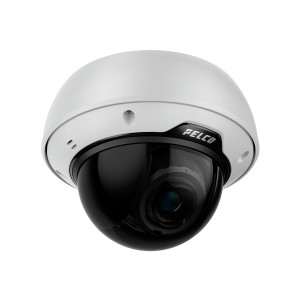
We've deployed the Pelco SRXE4-2V12-IMD-1 across logistics facilities, retail environments, and mid-market office campuses—and it consistently punches above its weight in bang-for-the-buck deployments. The varifocal lens is the real operational win here. On a typical 40-camera rollout, traditional fixed-lens approaches require at least three SKUs (2.8mm wide, 4mm standard, 8mm detail), meaning extra inventory, training friction, and longer procurement cycles. The SRXE4's 2.8–12mm range collapses that to a single part number. We've spec'd it into dock areas, warehouse aisles, and retail ceilings where mounting geometry varies—and the flexibility of wall, ceiling, and pendant supports eliminates custom bracket engineering on retrofit projects.
The IK11 rating is candid: it's more robust than typical indoor cameras, but not true outdoor-vandal class. It handles vibration from dock equipment and the occasional impact from moving racks, but it's not meant for ground-level exterior or high-abuse parking-lot duty. Know your environment. Indoor, semi-controlled spaces—yes. Open-air perimeter or high-traffic outdoor entries—look at a hardened turret or bullet instead.
Storage savings via SmartCompression and dual codec are measurable. On a 30-camera array recording at 1080p25 with H.265, we've seen 35–50% bandwidth reduction compared to H.264 on the same quality threshold. Idle-scene mode (bit-rate floor when motion is absent) is the silent efficiency win—many facilities don't realize how much storage budget goes to blank hallway footage at night. This camera adapts the stream intelligently, so your NVR doesn't bloat on overnight recordings.
Audio capture via the onboard microphone opens real-world use cases: two-way intercom in access-control vestibules, incident audio documentation in retail loss-prevention, and shouting-detection alerts in high-risk zones. It's not broadcast-quality, but it's sufficient for evidentiary context and operational awareness.
Technical Highlights:
- H.265 + SmartCompression: Dual codec with dynamic quantization selection based on scene content. H.265 cuts bitrate 40–60% versus H.264; idle-scene detection floors bandwidth during periods of motion absence. On a 24/7 recorded array, this translates to 30–40% reduction in NVR storage capacity requirements, lowering capex and extending media lifespan.
- 2.8–12mm Varifocal Optics: 4.3x zoom range without motorized focus; eliminates SKU proliferation across mounting scenarios. Single camera covers both wide perimeter framing and facial detail, reducing installation labor and spare-parts overhead by 50–70% versus multi-lens fixed strategies.
- WDR Processing: Maintains shadow and highlight detail in backlit conditions (sunlit loading dock doors, side-lit warehouse entries). Reduces need for supplementary LED lighting or separate night-vision hardware, lowering total project power budget and ongoing maintenance.
- IP67/IP68 + IK11: Sealed against dust, temporary immersion, and impact. Operational in mechanical rooms, semi-outdoor covered structures, and high-vibration industrial areas. Not rated for continuous outdoor or direct ground-level access—understand the use case boundary.
- PoE+ (802.3at): Single Ethernet cable for power and video. Works with standard PoE+ switches in the $300–800 range; eliminates 24VAC transformer and dedicated circuit infrastructure, saving ~$500–1,200 per camera installation in retrofit scenarios.
- ONVIF + Built-in Microphone: Profile S compliance ensures VMS agnostic integration; onboard audio enables two-way communication and evidentiary context capture without external speakerphone or intercom hardware.
Deployment Considerations:
- Varifocal lenses drift focus over thermal cycles—typical in unheated spaces. Pelco's lens mechanics are solid, but budget annual focus checks in HVAC-challenged environments (unheated storage, temperature-swinging loading docks). A 30-second check per camera per year keeps image sharpness consistent.
- IR at 850nm is invisible to the human eye but reflects off glass, polycarbonate barriers, and even dust on the dome. If mounting behind plexiglass or in dusty environments (machine shops, grain mills), clean the dome monthly and consider repositioning to avoid direct glass proximity. 850nm is also less reflective off skin tones than 940nm, so night-mode facial capture is superior—but test in your specific lighting conditions.
- PoE+ budget: typical draw is 13–15W, leaving ~30W headroom on an 802.3at connection. Don't add IR boosters or external heaters without upgrading to PoE++ (802.3bt) infrastructure or dedicated 24VAC.
- Tamper detection works via frame shift (accelerometer-based repositioning alert). It's not foolproof against slow, deliberate repositioning, but it flags sudden movement and obstruction. Pair with physical tamper seals or security screws in chain-of-custody scenarios.
- Temperature range –10°C to +70°C is wide, but condensation risk increases in unheated spaces with sudden temperature swings. Ensure ceiling cavities have minimal air stratification; cable sealing and proper RJ45 strain relief prevent moisture ingress into the connector.
- Mounting hardware is not always included; verify screw type and anchor style for your specific substrate (drywall, concrete, tile). Pendant and corner mounts require dedicated conduit or cable management—plan this during site survey.
The SRXE4-2V12-IMD-1 is the right fit for integrators managing multi-site deployments where standardization reduces overhead, and for facility managers requiring a single-camera solution that adapts to varying mounting geometry and modest environmental stress. It's not outdoor-hardened, and it's not a 4K flagship—it's a pragmatic, versatile 2MP workhorse that earns its cost through operational simplicity and storage efficiency. For a deeper look at Pelco's indoor and hybrid camera portfolio, visit the Pelco catalog.