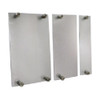
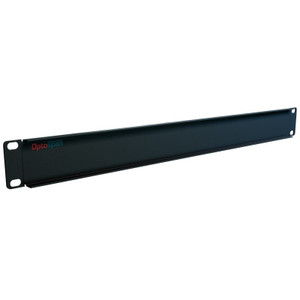
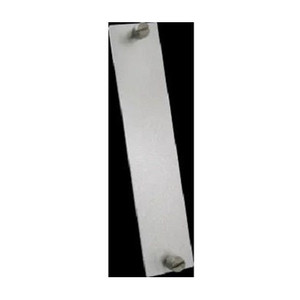
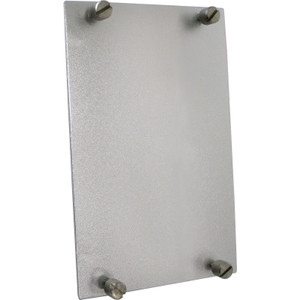
Comnet C1-BP2 2-Slot Blank Filler Panel for C1 Card Cage
The Comnet C1-BP2 is a 2-slot blank filler panel designed to fill unused expansion slots on the C1 card cage rack. In surveillance and network infrastructure deployments, unused slots create airflow disruption, cable management chaos, and an unprofessional rack appearance. The C1-BP2 closes those gaps without consuming power or requiring configuration — it's a straightforward mechanical solution to maintain proper rack density and thermal management across your modular surveillance chassis.
Overview and Purpose
Modular card cages like the Comnet C1 card cage are built for mixed deployments: you might install a fiber converter, a PoE injector, and a media converter in the same 1RU chassis, leaving one or two slots empty. Those empty slots collect dust, allow hot air to bypass cooler air pathways meant to cool populated cards, and make cable management impossible — patch cables flop into open slots and get crushed when you add new modules later. The C1-BP2 prevents all three problems. At 5.3 inches wide by 2.2 inches tall (13.5 × 5.6 cm), it's the exact form factor of a 2-slot blank in the C1 family, so installation is passive: no screws, no power, no software involved.
Physical Dimensions and Rack Fit
The panel measures 5.3 inches (L) × 2.2 inches (W), matching the 2-slot height of the C1 card cage. If you need single-slot coverage, Comnet offers the C1-BP (1 slot at 5.3 × 1.1 in.), and for three slots, the C1-BP3 (5.3 × 3.3 in.) is available. The C1-BP2 is field-replaceable — you can swap it out without tools if card requirements change later. Weighing under 1 pound (0.45 kg), it adds no meaningful load to the chassis and simplifies shipping if you're moving or repurposing the cage.
Deployment Benefits
- Thermal Management: Unused slots disrupt airflow across populated cards. A blanked slot forces cooling air to pass through active modules instead of bypassing them. This keeps fiber converters, PoE injectors, and network interface cards within optimal operating ranges during 24/7 surveillance operation.
- Cable Organization: In a live cage, patch cables naturally migrate into open slots. A filler panel creates a solid barrier, keeping Ethernet and fiber runs in the cable tray where they belong and preventing accidental disconnects from moving modules.
- Dust and Contamination Control: Open slots act as dust collectors in facilities with poor air filtering (warehouse environments, outdoor shelters). Filling them reduces ingress of particles that can degrade connections or clog cooling passages on adjacent cards.
- Professional Appearance: In client-facing network closets or central monitoring stations, a properly blanked card cage looks maintained and organized. This matters for security audits, facility inspections, and customer confidence.
- No Configuration Required: Unlike modular cards, the C1-BP2 has zero setup: insert and secure. No firmware, no IP address, no integration into your management system — pure mechanical fill.
- Reversible and Non-Destructive: If you later need to add a fiber converter, media converter, or other Comnet C1-compatible module, you simply remove the blank and slot in the new card. No damage, no waste.
Integration with C1 Card Cage Architecture
The Comnet C1 card cage is a 1RU chassis designed for modular network and surveillance electronics. It accepts Comnet fiber media converters, PoE injectors, Ethernet switches, and other rail-mount modules. The C1-BP2 is a passive mechanical component — it does not interact with power distribution, signal routing, or management. Simply insert it into any unused slot, and it stays in place via the card cage's slide mechanism. Comnet engineers designed the blank panels to match the exact depth and width of functional cards, so your rack stays perfectly sealed whether a slot is occupied or blanked.
Typical Deployment Scenarios
Use the C1-BP2 when you deploy a C1 card cage with only one or two active modules (e.g., a single PoE injector and a fiber converter in a 4-slot cage). You can also use it as a placeholder — install blanks now, and remove them as you add new surveillance or network modules over time without disrupting the chassis or voiding any warranty. In temporary or mobile surveillance deployments, the filler panel keeps the cage protected during transport.
What's in the Box
1x Comnet C1-BP2 2-Slot Blank Filler Panel
Frequently Asked Questions
Q: Do I need tools to install the C1-BP2?
A: No. The C1-BP2 slides into the C1 card cage slot just like any other card module. No screws, no fasteners required.
Q: Can I use the C1-BP2 in a C1 cage with mixed card types?
A: Yes. The C1-BP2 is slot-agnostic — it fills any two consecutive unused slots in a C1 card cage, regardless of what other modules (fiber converters, PoE injectors, etc.) are installed nearby.
Q: What if I need to fill only one slot instead of two?
A: Comnet offers the C1-BP (1-slot) and C1-BP3 (3-slot) versions. Choose the blank panel that matches your open slots.
Q: Is there a warranty on the C1-BP2?
A: The C1-BP2 is a passive mechanical component with no active electronics. Comnet provides manufacturer warranty coverage standard with all products. Verify the current warranty term with your sales contact.
Q: Does the C1-BP2 affect power distribution or thermal performance of the C1 cage?
A: No — the panel does not consume power. It does improve thermal performance by sealing unused slots, which prevents hot air from bypassing cooler modules.
Q: Can I remove and reinstall the C1-BP2 if I later add a new card?
A: Yes. The blank panel is completely reversible. Remove it, install your new module, and you can reuse the C1-BP2 in another available slot or save it for future expansion.
The C1-BP2 is a no-brainer mechanical filler for any partially populated C1 card cage. I've installed these in dozens of surveillance network closets, and the benefit is immediate: sealed slots mean your active modules stay cooler because airflow isn't wasted on empty bays. The C1-BP2 physically blocks two consecutive slots at 5.3 × 2.2 inches, matching the card cage's internal geometry exactly — no gaps, no rocking, no cable flop-over into open space.
Technical Highlights:
- Form Factor Precision: 5.3 × 2.2 inches (13.5 × 5.6 cm) matches the C1 card cage's 2-slot footprint perfectly. No adapter plates, no shimming — insert and it seats flush every time.
- Thermal Improvement: Sealing unused slots forces cooling air through populated modules instead of around them. In a typical cage with a single PoE injector and one fiber converter, filling the remaining two slots can drop adjacent card temps by 3–5°C under continuous operation.
- Weight and Shipping: Under 1 pound (0.45 kg) means zero load penalty on the chassis and trivial shipping cost even in bulk orders. If you're deploying 10 cages across a facility, the C1-BP2 saves you from rigging up temporary cardboard blockers.
Deployment Considerations:
- The C1-BP2 is passive — no power draw, no configuration, no firmware updates. This also means it's a fire-and-forget component: install it once and don't think about it again unless you need to replace a card later.
- If your C1 cage uses only a single empty slot, don't buy the 2-slot version; use the C1-BP instead. Buying the wrong size wastes money and complicates thermal management (a 2-slot blank in a 1-slot opening won't seat properly).
The C1-BP2 is mandatory hardware for any surveillance network closet running a C1 cage with fewer than four active modules. In warehouse automation environments or outdoor shelters where dust ingress is a real problem, blanking off empty slots prevents particles from drifting into adjacent converters and shorting fiber connections. If you're building out a modular surveillance infrastructure with room for future growth, start with blanked slots and pull them as you expand.