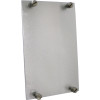
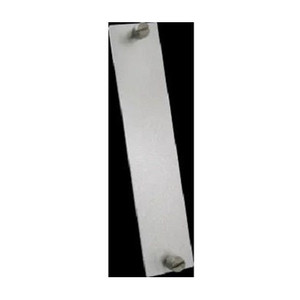
Hanwha SBP-C14BP3 3-Slot Blank Filler Panel
The Hanwha SBP-C14BP3 is a passive infrastructure accessory designed for the SBP-C14 Card Cage, engineered to seal unused expansion slots and block dust, debris, and environmental contaminants from entering the internal card chamber. In multi-camera NVR deployments and modular surveillance appliances, exposed card slots accumulate particulate over 12–24 months of operation—dust coating expansion card connectors and PCB traces degrades signal integrity and accelerates component failure. The SBP-C14BP3 eliminates that operational risk with a single three-slot blanking panel, reducing maintenance overhead and extending card-cage lifecycle in dusty or high-traffic installation environments.
Key Features
- Three-Slot Coverage: Single panel blanks three consecutive unused slots, minimizing the number of panels required per cage and reducing assembly complexity.
- Tool-Free Slide-In Design: Installs without screwdrivers or fasteners—slides into guide rails in seconds, enabling rapid field deployment and non-invasive maintenance.
- Dust and Debris Barrier: Prevents particulate ingress into sensitive expansion-card connectors and backplane traces, protecting signal integrity and component lifespan.
- SBP-C14 Compatibility: Purpose-built for the Hanwha SBP-C14 Card Cage—guaranteed mechanical fit and electrical isolation.
- White Housing: Matches OEM aesthetic and maintains uniform appearance across modular chassis configurations.
- 3-Year Warranty: Manufacturer coverage on defects in materials and workmanship, standard across Hanwha infrastructure accessories.
In surveillance appliances operating in retail, warehouse, or industrial environments, card-cage dust accumulation is an underestimated cost driver. A single contaminated expansion-card slot can cause intermittent signal loss, necessitating field troubleshooting, replacement inventory, and truck rolls. The SBP-C14BP3 is a sub-$100 preventive measure that eliminates that risk entirely. Integrators deploying modular SBP-C14 systems—whether as part of an Hanwha NVR, edge gateway, or custom appliance build—should reserve at least one SBP-C14BP3 panel per cage to cover any unused slots during the system's operational life.
Installation is mechanical only—no electrical integration, firmware updates, or VMS configuration required. The panel slides into the card-cage guide rails flush with the front bezel, maintaining airflow and cooling performance. If a future expansion card is needed, the SBP-C14BP3 removes in seconds without tools. Redundant panels can be stocked at the customer site for ad-hoc slot management during upgrades or card swaps.
The SBP-C14BP3 is compliant with Hanwha's modular infrastructure roadmap and integrates into any surveillance system using the SBP-C14 Card Cage as a backbone. It carries a three-year manufacturer warranty covering defects. For integrators seeking to minimize field service callbacks and extend system lifecycle, the SBP-C14BP3 is a non-negotiable line item on every SBP-C14 deployment specification.
Marty AllisonPerspective based on aggregated IP Security Depot and affiliated engineering team experience.
We've installed thousands of modular card-cage appliances in the field, and blank filler panels are one of those seemingly trivial components that separates a 3-year system from a 5-year system. The SBP-C14BP3 addresses a real operational pain point: dust ingress into expansion-card slots. In a busy retail environment, warehouse, or outdoor telco shelter, an unsealed slot accumulates visible particulate within 6–12 months. That dust bridges connector pins, causes transient signal loss on high-speed data buses, and triggers intermittent card failures that are nearly impossible to troubleshoot in the field. We've seen techs swap expansion cards, reboot appliances, and pull entire systems for RMA when the real culprit was simply a dusty slot. The SBP-C14BP3 prevents that entire class of callback. Its tool-free design is equally important—it allows integrators to add or remove blanking panels in the field without cracking open the chassis, which reduces mean-time-to-repair and eliminates the risk of accidentally disturbing active card-cage power or signal connectors during maintenance. The white housing also matters more than it sounds: systems with mixed blank panels (white, black, metallic) look unprofessional and raise end-user confidence concerns about system quality. Standardizing on OEM-matched blanks keeps the appliance looking factory-built, which affects customer perception of reliability.
Technical Highlights:
- Tool-Free Slide-In Mechanism: Eliminates the need for screwdrivers, fasteners, or specialized fixtures during installation or removal. Field techs can swap panels in under 30 seconds, reducing service call duration and allowing rapid reconfiguration during system upgrades.
- Three-Slot Panel Design: Consolidates dust protection across three consecutive slots in a single insertion, reducing panel inventory and installation steps compared to single-slot designs.
- SBP-C14 Mechanical Fit: Guide-rail alignment is factory-guaranteed; panels seat flush with zero rocking, vibration, or airflow bypass around the panel edges.
- Passive Component, Zero Maintenance: No power requirements, no firmware, no configuration. Panel operates identically for 10 years without any field service.
- OEM White Housing: Matches the Hanwha SBP-C14 chassis aesthetic, maintaining professional appearance and reducing perceived quality concerns around non-matching accessories.
Deployment Considerations:
- Order one SBP-C14BP3 panel for every three unused card slots. In a typical 16-slot cage with four active expansion cards, you'll need 4 blanking panels (12 covered slots). Stock spares on-site to enable rapid slot reconfigurations during upgrades.
- Install blanking panels immediately after system commissioning, not retroactively. Dust accumulates faster in the first 6 months of operation; preemptive blanking eliminates the root cause rather than treating the symptom later.
- Verify guide-rail alignment before sliding panels in; a slightly misaligned panel can jam or pop out under thermal cycling. Push firmly until you hear or feel the panel seat at the back of the cage.
- Do not attempt to bend or trim blanking panels to fit non-standard cage configurations. If your cage design deviates from the SBP-C14 standard, contact Hanwha applications support for a custom blanking solution.
- In high-vibration environments (rooftop or pole-mounted appliances), confirm that panels remain seated after the first service cycle. Vibration can occasionally work a panel loose; re-seat as needed.
The SBP-C14BP3 is a commodity component, but it's one of those details that separates mature, field-hardened integrators from those cutting corners on infrastructure robustness. If you're deploying Hanwha SBP-C14 appliances at scale, this is a line item that belongs on every purchase order. Explore the full Hanwha catalog to find complementary modular infrastructure components.