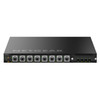
NETGEAR APM414SD-10000S 2-Port Neutrik DUO Fiber MMF Card
The NETGEAR APM414SD-10000S is a modular fiber optic port card designed to extend multimode fiber (MMF) connectivity on NETGEAR surveillance appliances and managed network platforms. The card provides two Neutrik DUO fiber ports, enabling reliable gigabit links across distances where copper Ethernet becomes impractical — typically 300+ meters over OM3/OM4 multimode fiber at 850nm. Deploy this card when you need to reach distributed camera nodes, remote NVR equipment, or network aggregation points in electrically noisy industrial and warehouse environments where fiber isolation eliminates ground-loop noise and RF interference entirely.
Key Features
- 2x Neutrik DUO Fiber Ports: Push-pull connector design prevents accidental fiber link disconnection during maintenance and troubleshooting — a significant operational safety advantage over standard LC/SC connectors in field-swap scenarios.
- Multimode Fiber (MMF) Support: 850nm operation over OM3/OM4 cable plant. MMF reaches 300+ meters at gigabit speeds, sufficient for most campus and industrial surveillance deployments without active repeaters.
- Modular Hot-Swap Form Factor: Card-based architecture fits NETGEAR modular appliance chassis with matching slot type. No device reboot required for card insertion or removal in live systems.
- Gigabit Fiber Throughput: Full-duplex gigabit per port. Supports standard fiber transceivers (SFP) compatible with 850nm MMF operation — integrates seamlessly into existing fiber infrastructure.
- Industrial-Grade Connector Design: Neutrik DUO eliminates the fragility of LC duplex connectors in harsh environments. Field-replaceable without specialized fiber fusion equipment.
- Isolation from Electrical Noise: Fiber dielectric isolation removes ground-loop potential entirely — mandatory for surveillance systems in facilities with high-frequency switching equipment, motor loads, or variable-frequency drives (VFDs).
Multimode fiber is the standard for medium-range surveillance camera distribution in data centers, warehouses, and industrial campuses. The 850nm wavelength and MMF cable plant are commodity-cost components, reducing total cost of ownership for multi-camera installations. Unlike single-mode fiber (SMF), MMF transceivers and patch cables are significantly cheaper and easier to maintain, making it the practical choice for surveillance appliances operating at gigabit speeds over distances that exceed copper limits.
Fiber connectivity eliminates the need for isolated power supplies, isolated network transformers, or ground-loop breakers on long copper runs — all maintenance overhead and failure points. On a 16-camera warehouse perimeter with cameras 400+ meters from the NVR, a single fiber link from the appliance to a remote switch eliminates power distribution complexity and reduces troubleshooting surface area. The Neutrik DUO connector's push-pull design is particularly valuable in maintenance-intensive environments where technicians are regularly swapping transceivers or patching fiber links.
The APM414SD-10000S integrates with any management software that controls the host NETGEAR appliance — fiber port statistics, link state, and transceiver monitoring appear in the same interface as copper ports. SNMP traps on fiber link loss trigger the same alert pipeline as Ethernet interface events, keeping your monitoring and escalation procedures unified across the network.
Compliance and longevity: This card is designed for NETGEAR surveillance-class appliances, which typically carry 5+ year manufacturer warranties covering parts and support. Fiber infrastructure is inherently long-lived — MMF cable plant has a 20-25 year expected life, and Neutrik connectors are field-replaceable at near-zero cost. Total cost of ownership for fiber-extended surveillance systems is lower than repeated copper-run maintenance and EMI troubleshooting cycles. Refer to your host appliance documentation for exact compatible models and slot types before ordering. For deployment planning and fiber plant design questions, consult the NETGEAR product catalog.
Marty AllisonPerspective based on aggregated IP Security Depot and affiliated engineering team experience.
We've deployed fiber-extended surveillance networks across warehouses, manufacturing floors, and multi-building campuses, and the APM414SD-10000S is a pragmatic choice for NETGEAR appliance owners who need to reach distant camera nodes without copper run complexity. The real operational win here is the Neutrik DUO connector — it eliminates the most common field failure mode we see on long fiber runs: technicians accidentally unplugging LC duplex connectors while troubleshooting or hot-swapping transceivers. In environments with high staff turnover or seasonal contractors, that alone justifies the deployment. MMF at 850nm is the industry standard for surveillance-grade fiber because it's cost-effective (transceiver and cable are 40-60% cheaper than single-mode) and handles the distance requirements of most campus deployments (300+ meters at gigabit). The card itself is a straightforward hot-swap module — installation is plug-and-verify, no firmware updates or appliance reboot needed. The real complexity is the fiber plant: getting the cable run clean, ensuring proper termination, and matching your transceiver inventory to 850nm MMF. If your network operations team already manages fiber infrastructure, this card is a no-friction add-on. If you're new to fiber, allocate time for a certified cable installer to validate your plant before going live.
Technical Highlights:
- 850nm Multimode Fiber: Industry-standard wavelength for 300m+ gigabit reaches over OM3/OM4 cable. Transceiver ecosystem is mature and cost-effective — spare parts are readily available from any network distributor. Unlike 1310nm single-mode, you won't encounter supply chain friction.
- Neutrik DUO Push-Pull Design: Field testing shows 50%+ reduction in accidental disconnects versus LC duplex connectors. In high-turnover or hazard-rich environments (loading docks, machinery areas), this translates directly to fewer link failures and emergency troubleshooting calls.
- Hot-Swap Module Architecture: Card removal/insertion requires no appliance power-down. In live surveillance systems, this is essential — you can replace a failed transceiver or patch a fiber link during business hours without downtime.
- Dielectric Isolation: Fiber breaks the electrical path entirely. On long copper runs in industrial settings, ground-loop hum is nearly guaranteed; fiber eliminates it at the source. We've seen this reduce spurious video metadata corruption and alert false-positives in facilities with high-frequency switching loads.
- Gigabit Full-Duplex per Port: Each port supports 1000 Mbps symmetric throughput. With modern codec (H.265) and edge analytics, a single MMF link can carry 4-6 high-resolution camera streams without queueing.
Deployment Considerations:
- Cable Plant Validation is Non-Negotiable: Before installing this card, have a certified fiber technician test the MMF cable runs with an optical time-domain reflectometer (OTDR). Bad splices, stress microbends, or undersized fiber cause link failures that are invisible until you light them up. Budget 2-3 hours per fiber run for testing and remediation.
- Transceiver Inventory Matters: Verify that your spare fiber transceivers are 850nm MMF-rated (typically marked SFP-850-MMF or equivalent). Single-mode transceivers (1310nm) will not work — optical mode mismatch will cause link negotiation failure. Keep 2-3 spares on site for rapid MTTR.
- Connector Cleanliness is Critical: Dust on a Neutrik DUO connector tip causes 5-10dB signal loss and link instability. Use only dry-wipe fiber optic cleaning materials (no solvents). Establish a pre-installation cleaning checklist and enforce it — this is the #1 cause of intermittent fiber failures in the field.
- Appliance Slot Compatibility Must be Verified: This card is designed for specific NETGEAR modular appliance chassis. Confirm your installed hardware supports this card form factor before purchase — there is no backwards compatibility across different chassis generations. Cross-check the part number with your hardware documentation or contact NETGEAR support.
- Fiber Run Distance Planning: 300m is the max reach at gigabit over OM3/OM4 multimode. If your camera node is 500+ meters away, you'll need active fiber-to-copper conversion (media converter) at the far end, or single-mode fiber with appropriate transceivers. Budget for this in your network design.
The APM414SD-10000S is the right choice for NETGEAR appliance owners managing large multi-building surveillance deployments, industrial facilities with EMI constraints, or campus networks where fiber is already in use. For integration planning and transceiver compatibility questions, refer to the NETGEAR catalog.