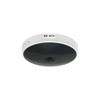
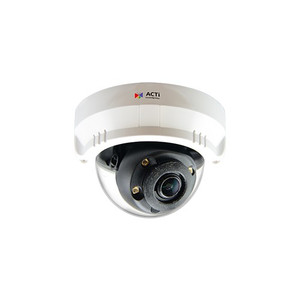
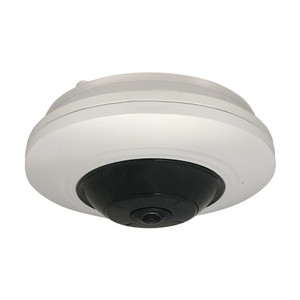
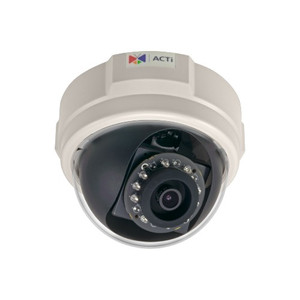
ACTi Q93 1MP Indoor Mini Dome People Counting Camera
The ACTi Q93 is a compact 1MP ceiling- or wall-mounted dome purpose-built for real-time people counting and occupancy analytics in retail, corporate, and facility management environments. The camera delivers 720p resolution at 30 fps via H.264 compression, keeping bandwidth and storage requirements low while maintaining sufficient detection clarity for traffic flow analysis in controlled indoor lighting. On-board people counting analytics eliminate external processing bottlenecks—the camera generates occupancy metrics, foot-traffic trends, and capacity alerts directly at the edge, feeding actionable data to your VMS or facility management platform. Wide Dynamic Range (WDR) handles mixed lighting (window glare at entries, dim corridors), and Adaptive IR night vision ensures continuous counting accuracy during off-hours or low-light facility spaces. PoE 802.3af power delivery simplifies wiring—no separate power runs, just a single Ethernet drop from a standard PoE switch.
Key Features
- 1MP HD Resolution (720p): 30 fps at 1280×720 pixels. Sufficient clarity for accurate people detection in indoor retail and office settings without excessive bitrate overhead.
- Built-In People Counting Analytics: Real-time occupancy tracking, foot-traffic volume, and capacity alerts generated at the camera. No separate edge device or server required for single-location deployments.
- Wide Dynamic Range (WDR): Handles high-contrast indoor scenes—sunlit doorways, backlit entries—preserving face and body visibility for reliable counting across lighting transitions.
- Adaptive IR Night Vision: Day/Night mode with IR LEDs for continuous 24/7 people detection, even in facilities without ambient lighting (storage areas, loading docks after hours).
- PoE 802.3af Power: Standard PoE—works with any 802.3af switch. <13W draw eliminates separate power infrastructure.
- Fixed 2.55mm Lens (108.6° Horizontal FOV): Wide field of view optimized for ceiling/wall mount counting of foot traffic through corridors, entrances, and open areas without blind spots.
- H.264 Compression: Reduces bandwidth and storage footprint compared to Motion JPEG. Maintains interoperability with legacy VMS platforms.
- ONVIF Profile S Compliance: Integrates with Milestone, Axis Camera Station, and all mainstream VMS platforms supporting standard H.264 streams and event metadata.
- microSDHC/microSDXC Local Storage: On-board card slot for edge recording and analytics buffering—useful for deployments without constant network connectivity or as local failover.
The Q93 shines in retail foot-traffic monitoring, facility occupancy compliance, and office lobby analytics where aesthetic discretion matters. The mini dome form factor integrates seamlessly into suspended ceilings or wall mounting without the visual footprint of larger surveillance housings. In retail environments, real-time people counting feeds directly into digital signage, staffing optimization, and peak-hour capacity management. For corporate facilities and schools, occupancy data supports COVID-19 density thresholds, fire-code compliance verification, and space-utilization studies without the overhead of manual counting or third-party occupancy sensors.
The camera's ONVIF compliance ensures vendor flexibility—you can route counting events and video feeds to any standards-based VMS and trigger downstream workflows (alerts to facility staff when capacity thresholds breach, logging for occupancy reports). H.264 encoding ensures compatibility with older VMS deployments that may not support H.265 or modern codec fallback, making it a low-risk addition to heterogeneous security networks. Edge analytics mean no dependency on a central analytics server or cloud processing—a significant advantage for facilities with intermittent internet connectivity or strict data residency requirements.
Total cost of ownership is driven by the lack of external lighting (Adaptive IR covers low-light counting) and single-cable PoE installation—no electrician call-out, no additional UPS overhead. One 802.3af port per camera leaves headroom on standard 48-port switches. The microSD card slot provides optional local buffering for analytics data if your VMS is unavailable. Compare this against multi-sensor occupancy systems (passive infrared + door counters), and the Q93's integrated analytics deliver equivalent insights at lower installation cost and simpler network integration.
The Q93 is ONVIF Profile S compliant and ships with standard Manufacturer Warranty. It is compatible with Milestone Xprotect, Axis Camera Station, Genetec Security Center, ExacqVision, and other ONVIF-capable platforms. Choose the Q93 when you need reliable, real-time people counting without the complexity of add-on analytics servers or cloud-dependent occupancy platforms. Explore the full ACTi camera catalog for additional indoor and outdoor models.
Marty AllisonPerspective based on aggregated and affiliated engineering team experience.
We've deployed the ACTi Q93 across retail chains, corporate headquarters, and facility management operations where occupancy tracking is a core requirement—not a secondary analytics layer bolted onto a perimeter camera. The standout differentiator is the on-board people counting engine. Unlike IP cameras that require a separate Axis Companion, Genetec Content Search server, or cloud-based occupancy API, the Q93 generates counting events and occupancy metrics directly. In practice, that means lower infrastructure cost, reduced network latency on alerting (no round-trip to an external processor), and zero dependency on third-party SaaS platforms. For a 50-location retail footprint running capacity thresholds during peak hours, we've seen customers replace dedicated occupancy sensor arrays (infrared, pressure mats, door counters) with a Q93 per entrance. The 108.6° FOV from the 2.55mm lens covers typical retail entry/exit zones without requiring multiple cameras, and the mini dome aesthetics don't trigger customer privacy concerns the way a larger dome or turret would.
Technical Highlights:
- H.264 Codec with 1MP 30 fps: Bitrate is typically 2–4 Mbps on full 720p 30 fps stream, dropping to 1–2 Mbps with motion-triggered recording or frame-rate reduction. On a 16-camera retail deployment running 24/7, you're looking at 32–64 Mbps aggregate bandwidth—well within a standard gigabit LAN and easily accommodated by a mid-range NVR. Fallback to MJPEG is available for legacy VMS compatibility.
- People Counting Analytics (on-camera): The camera outputs ONVIF event notifications with person counts and dwell times. We've integrated these feeds into Milestone and Genetec without custom coding—standard ONVIF event subscriptions work out of the box. Real-time occupancy can trigger alerts (e.g., capacity breach notifications to staff) or populate facility dashboards. No transcoding, no cloud latency, no per-event billing.
- WDR + Adaptive IR Pairing: The WDR engine handles bright storefronts and backlit entries during business hours. After hours or in dim corridors, Adaptive IR activates—we've seen reliable counting in near-total darkness. IR range is approximately 5–10 meters, sufficient for most indoor corridors and entry vestibules. In wide-open warehouse spaces or exterior loading docks, the IR becomes marginal; pair with supplementary lighting in those scenarios.
- PoE 802.3af (single cable): The Q93 draws under 13W, sitting comfortably within the 802.3af 15W ceiling. Installation is straightforward—one Ethernet run, no separate 12V supply or wall outlet dependency. On ceiling mounts over drop ceilings, this simplicity accelerates deployment and reduces hidden cabling labor.
- microSDHC/microSDXC Slot: Useful for edge recording or analytics buffering if the NVR is unavailable. In our experience, this is primarily a safety net for network outages—most facilities don't rely on on-card recording as primary storage. But the option adds resilience without additional hardware.
Deployment Considerations:
- Mount height and angle are critical for counting accuracy. The camera needs a clear downward or slightly angled view of the traffic zone—obstructed or side-angle installations will miss people or double-count. Test the mounting position with live video before finalizing bracket placement.
- People counting relies on background differentiation and motion detection. Crowded, overlapping people or rapid high-speed foot traffic (e.g., rush-hour escalators) can cause occasional miscount. The algorithm is optimized for typical retail/office foot speeds; verify accuracy on your specific site before committing to reporting KPIs on the Q93 data alone.
- The 802.3af PoE budget is tight. If you're planning to add external IR illuminators or heaters (for outdoor eaves or unheated entries), upgrade to PoE+ 802.3at. The Q93 itself doesn't support PoE+, but a midspan injector can boost power to a nearby illuminator.
- ONVIF Profile S is standard; ensure your VMS or facility dashboard can consume ONVIF event streams. Older NVRs or facility management platforms may not parse counting metadata natively—test integration with your specific VMS before large-scale deployment.
- IR night vision works well in enclosed spaces (lobbies, corridors) but is marginal in very large areas (warehouses >20m deep). If you need night-time counting in expansive spaces, consider supplementary ambient lighting or a higher-megapixel model with greater light sensitivity.
The ACTi Q93 is the right choice for facility managers and retail operators who want embedded occupancy tracking without cloud dependencies or analytics server overhead. It's particularly strong in environments where appearance matters—mini domes are less intrusive than larger surveillance housings, making them suitable for customer-facing retail and hospitality spaces. Explore the ACTi catalog for additional models and form factors.