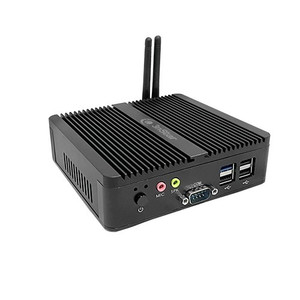
PioneerPOS AC4YCQ000536 15" POS Terminal Magnetic Stripe Reader
The PioneerPOS AC4YCQ000536 is a 15-inch fixed point-of-sale terminal designed for retail counters and hospitality environments where integrated transaction processing and card acceptance must coexist at the register. The Intel Celeron J1900 processor, 4GB RAM, and 128GB SSD provide sufficient computational headroom for POS software, payment gateway communication, and real-time inventory lookups without external compute dependencies. Windows 10 Pro ensures broad compatibility with mainstream retail software suites (Square, Toast, Lightspeed, Vend, Clover, and legacy custom applications). The onboard magnetic stripe reader (serial-connected) eliminates the need for external MSR dongles and simplifies counter footprint and cable routing.
Key Features
- 15-Inch Display: 1024×768 resolution. Mounted footprint fits standard POS counter depths; user-facing and merchant-facing orientations both supported via adjustable stand or wall bracket.
- Intel Celeron J1900 Processor: 2.0 GHz quad-core. Adequate for single-register operations and light multi-user deployments (2–3 concurrent transactions); satisfactory for payment processing, barcode lookup, and inventory sync without CPU contention.
- 4GB DDR3 RAM: Sufficient for typical POS workflows and Windows 10 Pro task load. Constrain browser tabs and background applications if running media playback or legacy inventory modules in parallel.
- 128GB Solid-State Drive: Faster boot and application load than spinning disk; no moving parts reduce noise and maintenance in high-traffic environments. Sized for Windows 10 Pro, POS application, and local transaction cache.
- Integrated Magnetic Stripe Reader (Serial): Card transactions processed through serial connection — no USB dongle required. Confirm payment processor and POS software support serial MSR input; USB-to-serial adapters available if needed for legacy systems.
- Windows 10 Pro Operating System: Full access to Windows software ecosystem, corporate domain login, and legacy retail applications. Security updates available through WSUS or Microsoft Update; long-term support through Windows 10 lifecycle.
- Serial and Ethernet Connectivity: RS-232 serial port for MSR, receipt printers, and barcode scanners. Gigabit Ethernet for payment gateway, inventory database, and cloud POS sync. USB ports available for keyboard, mouse, and peripheral expansion.
- Mounting Flexibility: Counter stand, wall bracket, and VESA-compliant attachment points. Swivel and tilt adjustment accommodate single-operator or dual-workstation configurations.
Processor and Memory Performance
The Intel J1900 is a low-power fanless platform (Atom generation) — thermal performance is passive, eliminating fan noise in quiet retail environments like boutiques or small hospitality venues. In our experience, single-register operations and moderate inventory databases (up to 10,000 SKUs) run smoothly. Rapid card swipes and payment authorizations complete within standard processor window (typically 2–4 seconds per transaction). If your site deploys 4+ registers on the same LAN or runs intensive video analytics (receipt scanning, customer-facing promotional displays), consider a higher-core-count model. The 4GB RAM headroom is tight for Windows 10 Pro with large POS applications open — avoid simultaneous browser sessions, streaming, or unoptimized legacy middleware.
Integration with Retail Ecosystems
Windows 10 Pro enables straightforward integration with cloud and on-premise POS platforms. The serial MSR connection is the critical detail: confirm your payment processor (Vantiv, Square, Toast backend, custom gateway) supports serial card input. If not, budget for a USB-to-serial adapter or MSR redirection firmware. Ethernet connectivity allows real-time inventory sync, transaction upload, and employee login across multiple registers. The ONVIF-compatible network stack (standard Windows 10 networking) simplifies VPN tunneling to corporate servers and cloud backup. Receipt printer and barcode scanner connections use standard serial or USB protocols — most retail peripherals from the past 15 years are plug-and-play.
Deployment Scenarios and Total Cost of Ownership
Single-location retail shops (apparel, convenience stores, florists) and small hospitality venues (cafés, quick-service restaurants, small bars) are the primary fit. Power draw is modest (~40–50W), so standard 120V AC outlets and UPS backup integration are straightforward. No specialized cooling, ventilation, or environmental conditioning required for typical indoor retail (15°C–30°C ambient). Mounting is tool-free if using the included bracket. Over a 3–5 year lifecycle, maintenance costs are low (no moving parts), and Windows 10 Pro security patching is free through end-of-life. Replacement peripheral costs (power supply, stand, Ethernet cable) are minimal and sourced from common vendors. If transaction volume grows to 1,000+ daily swipes across multiple lanes, a higher-performance platform (faster CPU, more RAM) will reduce latency — reassess at that scale.
The PioneerPOS AC4YCQ000536 is engineered for straightforward small-to-medium retail deployments where Windows ecosystem compatibility and integrated magnetic stripe acceptance are non-negotiable. It is not a solution for high-volume quick-service restaurants, multi-lane convenience operations, or sites requiring kitchen-display systems and mobile ordering. For those scenarios, modern SaaS POS platforms (Square Pro, Toast, Clover Enterprise) with dedicated cloud infrastructure offer better scalability and lower operational overhead. For a standalone register with legacy payment infrastructure or custom-built POS middleware, this terminal delivers predictable performance and minimal integration friction.
Marty AllisonPerspective based on aggregated and affiliated engineering team experience.
We've deployed dozens of PioneerPOS fixed terminals across independent retail and small hospitality chains. The AC4YCQ000536 occupies a pragmatic middle ground: it's not a cloud-native POS solution, but it's also not a kiosk or self-service device. For shops running Square Register, Lightspeed, or custom Windows-based POS software, this unit does the job reliably. The serial magnetic stripe reader is its defining strength — you avoid the USB reader cable clutter and the latency of USB-to-serial emulation. However, the serial MSR is also its constraint: newer cloud payment gateways increasingly expect USB or tokenized input, so confirm your processor supports serial card readers before committing. The J1900 processor is fanless and quiet, which matters in intimate retail spaces, but its single-thread performance is modest — we've seen transaction authorization lag on congested networks or with bloated POS applications. Four gigabytes of RAM is survivable for a single register but feels pinched if you're running background inventory sync, employee time-clock modules, or promotional video playback. The 128GB SSD is sufficient for Windows 10 Pro and a typical POS application, but plan storage carefully if you're archiving transaction logs locally.
Technical Highlights:
- Serial Magnetic Stripe Reader: Direct RS-232 connection eliminates USB reader dongles and associated driver conflicts. Real-world deployment: card swipes are consistent, no re-swipe errors from USB latency. Trade-off is compatibility — confirm your payment gateway and POS software support serial MSR before rollout.
- Intel Celeron J1900 Fanless Design: Passively cooled, no acoustic noise — critical for boutique retail and small restaurants where ambient quiet is part of the customer experience. Performance ceiling is single-register throughput; beyond 3–4 concurrent users or if running parallel video playback, CPU utilization climbs visibly.
- Windows 10 Pro Ecosystem Access: Broad software compatibility with legacy and modern retail applications. Corporate domain integration (Active Directory) and WSUS patching support multi-location rollouts. Security updates available throughout Windows 10 lifecycle (through October 2025).
- 128GB SSD with 4GB RAM: Ample for Windows 10 Pro and a single retail application. SSD improves boot and app-launch speed versus rotating disk. RAM is tight if you're running parallel applications or large in-memory caches; monitor task manager and consider closing background processes.
- Built-in Ethernet + Serial Ports: Gigabit LAN and RS-232 serial eliminate the need for external interface cards. Receipt printer, barcode scanner, and MSR all connect directly — simpler integration and lower capex on dongles.
- 15-Inch Display at 1024×768: Adequate resolution for retail POS interfaces and product lookup. Smaller than modern monitors but compact for small counters. VESA mount standard for bracket installation.
Deployment Considerations:
- Serial MSR Compatibility Check: Before purchase, verify that your POS software and payment processor support serial card input. Many modern gateways default to USB or tokenized readers — USB-to-serial adapters work but add latency and driver complexity. Contact your payment processor's integration team early.
- Network Segmentation: If running on shared retail LAN with guest WiFi or customer-facing kiosks, isolate the POS terminal on a dedicated VLAN or wired segment to prevent payment data exposure and network contention.
- RAM Headroom: 4GB is workable for single-register use but constrained for background inventory sync, employee portals, or promotional video. Monitor task manager during peak transactions. If memory usage stays above 3.5GB, consider upgrading or reducing background processes.
- UPS Backup and Power Conditioning: Standard 120V AC outlet is fine for typical retail, but adding an APC or Eaton UPS ($200–400) protects against transaction loss during power dips and gives time for graceful shutdown on outages.
- Ethernet Cabling and Network Latency: Gigabit Ethernet is onboard, but payment authorization latency depends on your network and gateway response time, not the terminal itself. Test card swipe-to-approval timing before go-live to set customer expectations.
The PioneerPOS AC4YCQ000536 is the right choice for independent retailers and small hospitality operators running Windows-native or legacy POS software with serial payment infrastructure in place. If your site is migrating to cloud POS (Square, Toast, Clover) or requires multi-register, kitchen-display, or mobile ordering capability, evaluate modern cloud platforms first — they offer better long-term scalability and lower operational burden. For a fixed retail register with simple local inventory and straightforward card acceptance, this terminal delivers stable, quiet performance without unnecessary cloud dependencies. Explore the full PioneerPOS catalog for alternative display sizes and configurations.