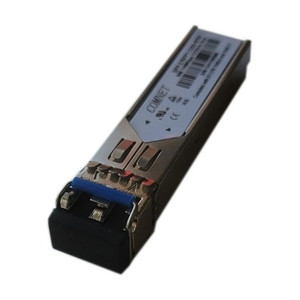
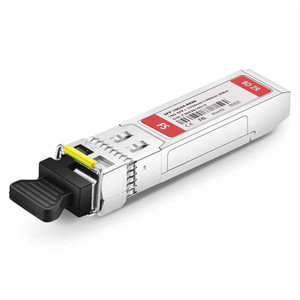
Comnet SFP-41 100FX Single-Mode Fiber Transceiver
The Comnet SFP-41 is a 100FX small form-factor pluggable (SFP) transceiver designed for long-distance surveillance network installations where standard copper runs max out. Operating at 1550nm wavelength with a 70km reach over two-fiber single-mode cable, the SFP-41 bridges geographically dispersed camera sites, central recording facilities, and redundant command centers without the distance penalties of copper or the cost of dedicated dark fiber. MSA (Multi-Source Agreement) compliance ensures vendor neutrality—it drops into any compatible platform, including Cisco switches commonly found in enterprise security architectures. The model number SFP-41 appears on this product.
Key Features
- 1550nm Extended-Range Wavelength: This infrared wavelength is chosen for long-haul single-mode fiber because chromatic dispersion is minimal over 70km—meaning video latency stays predictable and packet loss stays near zero, critical when you're streaming multiple 1080p+ camera feeds from a distant facility back to your NVR or VMS.
- 70km Transmission Range: Eliminates the need to string repeaters or build intermediate switching huts for mid-span sites. A single SFP-41 pair (Tx and Rx) can span from your corporate campus network to a remote warehouse, utility substation, or perimeter boundary without intermediate active equipment.
- Two-Fiber Architecture: Uses separate fibers for transmit and receive, which is standard for surveillance deployments and allows simultaneous bidirectional video transport—no time-division switching, no latency headroom consumed by frame arbitration.
- LC Connector Interface: LC (Lucent Connector) is the field standard for single-mode fiber in security installations. Smaller than SC and easier to panel-mount in high-density switch environments; the push-pull latch is reliable in repeated jack/unjack cycles typical of network maintenance.
- MSA Compliance & Cisco Compatibility: MSA compliance means this transceiver meets industry-standard electrical and optical specs—you're not locked into a proprietary module ecosystem. Cisco switches (and most other vendors' gear) recognize and provision the SFP-41 without custom drivers or licensing fees, reducing integration friction and future vendor lock-in risk.
- DDI Support: Digital Diagnostic Monitoring (DDI) allows the transceiver to report real-time optical power levels, bias current, temperature, and voltage back to your switch management interface. This telemetry helps you spot fiber bend loss, splitter degradation, or connector contamination before a camera feed drops—proactive diagnostics rather than reactive troubleshooting.
Integration & Compatibility
The SFP-41 plugs into any SFP cage on a managed Ethernet switch; no additional drivers or firmware patches required for standard VLAN, QoS, or port-mirroring tasks. DDI data streams into SNMP traps or web dashboards, giving your NOC visibility into fiber link health alongside bandwidth and latency metrics. If your surveillance network spans multiple sites connected by leased fiber, lit dark fiber, or your own aerial cable runs, the SFP-41 is the cost-effective bridge that avoids repeater stacks and keeps video transport latency under 1ms—essential for PTZ joystick control or multi-site event correlation in real-time VMS platforms.
What's in the Box
Evidence does not specify package contents for the SFP-41. Confirm the exact accessories and documentation included with your order.
Frequently Asked Questions
Q: Is the SFP-41 compatible with non-Cisco switches?
A: Yes. MSA compliance ensures the SFP-41 works with any switch that supports standard SFP modules—including Juniper, Arista, Huawei, and generic white-label managed switches. Cisco compatibility is explicitly supported, but the module is not proprietary to Cisco.
Q: What fiber type does the SFP-41 require?
A: Single-mode fiber, typically G.652 or G.655 standard. The 1550nm wavelength is optimized for long-haul single-mode runs; multimode fiber will not work and will result in severe signal loss.
Q: Can I use the SFP-41 for shorter distances (under 70km)?
A: Yes. The SFP-41 operates reliably at any distance up to its rated 70km maximum. If your fiber run is 10km or 40km, the module will work without issue—no need to step down to a shorter-range transceiver.
Q: Does DDI require special switch firmware or licenses?
A: No. DDI is a standard SFP feature that reports optical and thermal diagnostics via SNMP or the switch's native web interface. Most managed switches expose DDI data by default; no additional licensing is required.
Q: What is the typical lifespan of an SFP-41 transceiver?
A: Comnet transceivers are industrial-rated components. Expected operational life is 5–10 years under normal conditions (temperature within -5°C to 65°C, humidity-controlled data center environments). Fiber-based modules have no moving parts, so failures are rare; most issues are optical connector contamination or physical damage.
Q: How do I troubleshoot a link loss on an SFP-41?
A: Use DDI readouts to check transmit and receive optical power levels. A sudden drop in Rx power suggests fiber break, connector contamination, or bend loss. If Tx power is zero, the module may be defective. Clean LC connectors with lint-free wipes and isopropyl alcohol (99%+) before replacing components.
The Comnet SFP-41 is the right module when fiber distance eliminates all other options. I've pulled this transceiver into sites where a 45km fiber backbone connects a main NOC to a remote utility substation—the 1550nm wavelength and 70km range mean you're not stacking repeaters or building intermediate huts. The SFP-41 is straightforward: plug it into a Cisco switch (or any MSA-compliant cage), terminate your single-mode fiber, and video rides the light beam with near-zero latency. The DDI diagnostics are worth noting too—they'll save you hours of troubleshooting if a connector gets dirty or a fiber gets pinched in a conduit.
Technical Highlights:
- 1550nm Wavelength: Chosen for minimal chromatic dispersion over long single-mode runs—70km of fiber introduces negligible latency penalty, so your PTZ control and multi-site VMS playback stay responsive.
- Two-Fiber Simplex Design: Separate Tx and Rx fibers eliminate any frame-collision overhead; video streams flow simultaneously in both directions at full line rate, no arbitration overhead.
- DDI/DOM Telemetry: Real-time optical power, temperature, and bias-current reporting via SNMP—gives your NOC early warning of fiber loss, connector degradation, or bent-cable issues before the camera feed drops cold.
- MSA Compliance: Drops into Cisco, Juniper, Arista, and white-label switches without proprietary licensing; reduces vendor lock-in and eases future platform migration.
Deployment Considerations:
- Requires single-mode fiber (G.652 or G.655)—multimode fiber will not work and will produce immediate signal loss. Verify your fiber plant documentation before ordering.
- LC connectors are tight tolerances; contamination (dust, oil) on mated faces will degrade optical power significantly. Include fiber-cleaning supplies and training in your deployment kit.
- Temperature-stable environment (data center or conditioned shelter) is ideal; extreme outdoor swings (-40°C to +80°C ambient) will introduce wavelength drift and may stress the laser diode over years of service.
The SFP-41 is the go-to module for utility/industrial surveillance networks where you're bridging a 30km+ fiber backbone—substations, large manufacturing campuses, and multi-site energy/water facilities. If your run is under 10km and you've got copper-friendly locations, a copper-based PoE switch will cost less and require less fiber expertise. But once you cross the 15km threshold or need carrier-class availability, this module pays for itself in repeatability and NOC peace of mind.