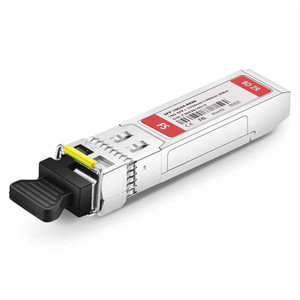
Comnet SFP-38 100Fx 1310nm 2km LC MSA Compliant SFP Transceiver
Overview
The Comnet SFP-38 is a 100Fx SFP transceiver operating at 1310nm wavelength over single-mode fiber, delivering 2km point-to-point transmission range with MSA compliance and Cisco platform compatibility. Built for surveillance and industrial network backhaul, the SFP-38 addresses the core challenge in distributed camera deployments: moving video traffic reliably across long distances without adding latency, jitter, or signal degradation that would degrade live-view responsiveness or recording integrity. The 1310nm wavelength is the standard long-distance window for fiber-optic infrastructure, and MSA (Multi-Source Agreement) compliance means you can source transceivers from multiple vendors without vendor lock-in — a critical operational advantage in large deployments where spare inventory must be maintained and interchangeability is non-negotiable.
Key Features
- 100Fx Standard: 100 Mbps over multimode or single-mode fiber, sufficient for 4–6 synchronized HD camera streams or 2–3 4K streams without compression loss, depending on scene complexity and frame rate. The Comnet SFP-38 handles sustained surveillance traffic without buffer overrun or dropped packets.
- 1310nm Wavelength: Near-infrared transmission window optimized for long-distance propagation with minimal attenuation. At 2km range, this wavelength performs better than 850nm in real-world outdoor plant (dust, humidity, temperature swings) where surveillance fiber runs are exposed.
- 2km Transmission Range: Covers typical surveillance backbone distances — parking lots to guard house, warehouse perimeter to NVR room, multi-building campus sites — without requiring intermediate regeneration or active inline equipment. Each additional kilometer would require a higher-cost transceiver; 2km hits the cost/distance sweet spot for most tier-2 and tier-3 surveillance networks.
- LC Duplex Connector: Industry-standard small-form-factor connector, widely stocked and field-replaceable. LC is the default for modern surveillance fiber runs and minimizes connector-mismatch risk on large installations where technicians manage hundreds of patch cables.
- 2 Fiber (Simplex) Operation: Uses two separate strands — one transmit, one receive — for full-duplex communication. This is the standard duplex mode for surveillance; avoids the complexity and latency penalty of single-strand half-duplex protocols.
- MSA Compliance & Cisco Compatibility: Multi-Source Agreement compliance means plug-and-play interoperability with standard network infrastructure. Supports DDI (Digital Diagnostics Interface) for real-time monitoring of optical signal strength, temperature, and transceiver health — invaluable for proactive identification of fiber faults, connector degradation, or wavelength drift before cameras go dark.
Integration & Compatibility
The SFP-38 is a standard hot-swappable SFP module, compatible with Cisco Catalyst switches, Comnet managed Ethernet switches, and any standard SFP cage that follows MSA pinout conventions. In surveillance networks, the transceiver sits in the uplink port of an edge PoE switch (typically at a camera cluster or remote IDF) and connects to an SFP port on the core or building backbone switch. DDI support enables SNMP trap generation on signal loss, making it integrable with network monitoring platforms (Cisco Prime, Comnet Lighthouse, or generic SNMP collectors) for alarm escalation if the fiber link degrades. No additional configuration required beyond standard SFP provisioning — optical parameters are auto-negotiated.
What's in the Box
The SFP-38 ships as a bare transceiver module. Fiber jumpers (LC-to-LC single-mode patch cables rated for 1310nm and 2km+ distance) and mounting hardware (SFP cage retainers, if not already installed in your switch) must be sourced separately and matched to your specific infrastructure layout.
Frequently Asked Questions
Q: Does the SFP-38 require a specific fiber type, or can I use any single-mode fiber?
A: The SFP-38 operates over standard single-mode fiber (SMF-28 or equivalent G.652D). Confirm that your installed fiber plant is single-mode and rated for 1310nm operation; multimode fiber will cause severe attenuation and likely link failure. Have the fiber plant documented and tested by a qualified fiber technician before deployment.
Q: What does DDI (Digital Diagnostics Interface) do, and will my switch support it?
A: DDI provides real-time telemetry: received optical power (dBm), transmit bias current, temperature, and laser wavelength drift. Most managed switches (Cisco, Comnet, Ubiquiti) expose DDI data via SNMP, letting you set alarm thresholds in a monitoring system. Check your switch datasheet for SNMP SFP diagnostics support — many do, but some budget models don't.
Q: Is the SFP-38 compatible with my existing Cisco network, or do I need Comnet-branded switches?
A: MSA compliance means the SFP-38 works in any standard SFP cage on Cisco, Juniper, Arista, or Comnet platforms. Cisco does not require vendor-specific transceiver codes for basic operation, though some Cisco software versions may generate informational warnings about non-Cisco modules — these do not affect functionality.
Q: What happens if I need to extend coverage beyond 2km?
A: A single SFP-38 cannot be extended beyond 2km without active regeneration (placing a media converter or switch in the middle of the run). If you need longer range, consult a fiber network engineer about higher-power transceivers or intermediate repeater placement; 2km is the practical limit for this module.
Q: Can I use the SFP-38 for multimode fiber runs?
A: No. The SFP-38 is optimized for single-mode fiber only. Multimode fiber will terminate the link or severely degrade signal quality. Verify your fiber plant type before ordering.
I deploy the Comnet SFP-38 in distributed surveillance networks where camera clusters sit 1–2km away from a central NVR or recording facility. The 1310nm wavelength and 2km range specification are not arbitrary — they reflect real-world fiber plant design, where you're bridging a parking structure to a guard house or connecting a warehouse perimeter loop back to a central equipment room. The SFP-38 handles this distance without active repeaters, reducing infrastructure cost and complexity.
Technical Highlights:
- 1310nm long-distance window: At 1310nm, single-mode fiber exhibits minimal chromatic dispersion and attenuation over 2km — you get cleaner signal at the receiver end than 850nm would deliver over the same distance. In dusty or humid outdoor plant, this difference is measurable in link margin.
- DDI real-time diagnostics: The SFP-38 exports optical power level, transmit bias, and temperature via SNMP. This is crucial: you can set thresholds in your NMS to alert when received power drops below nominal (indicating dirty connectors, fiber microbends, or wavelength drift) before the link actually fails. Proactive fiber maintenance beats reactive troubleshooting in surveillance networks where downtime means lost evidence.
- MSA compliance eliminates vendor lock-in: Unlike proprietary Cisco or Arista transceivers, the SFP-38 can be swapped for any other MSA-compliant 1310nm 2km module from a different vendor. In large deployments with dozens of these modules, the ability to source spares without waiting for one vendor's lead times is operationally valuable.
Deployment Considerations:
- Verify your fiber plant is single-mode before ordering. Accidentally installing an SFP-38 in a multimode run will result in a dead link and time-consuming troubleshooting. Fiber documentation and a pre-deployment site survey are non-negotiable.
- The 2km limit is hard. If your run exceeds 2km, you'll need intermediate regeneration (a managed switch or media converter in the field), which adds cost and power draw. Plan your camera clustering strategy around this distance boundary — it often drives the placement of intermediate switch locations.
Deploy the SFP-38 as the backbone transceiver in multi-site surveillance networks (parking lots, campuses, industrial perimeters) where single-mode fiber is already installed or planned. The cost savings and reliability gains over active equipment in the middle of long runs make this the right choice for tier-2 and tier-3 surveillance infrastructure projects.