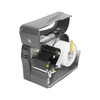
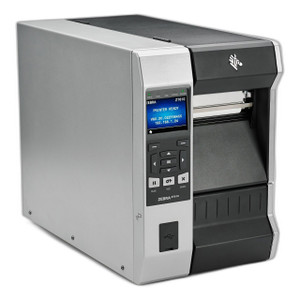
Zebra ZT22042-T01200FZ Desktop Thermal Label Printer
Overview
The Zebra ZT22042-T01200FZ is a desktop thermal printer purpose-built for high-volume label production in warehouse, logistics, and distribution operations. This model delivers 203 DPI print resolution using thermal transfer (TT) technology, enabling durable shipping labels, inventory tags, and compliance documentation that withstand moisture, temperature swings, and handling wear—critical for outdoor storage yards and cross-dock facilities. Dual serial (RS-232) and USB 2.0 connectivity allows deployment alongside both legacy warehouse management systems and contemporary network-enabled workstations, eliminating the need for infrastructure overhauls during equipment refresh cycles.
Key Features
- 203 DPI Thermal Transfer Print Resolution: Produces sharp, machine-scannable barcode output across standard warehouse handheld scanners and modern mobile devices. Thermal transfer (ribbon-based) labels resist fading in outdoor environments and survive conveyor sortation, cold storage, and final-mile handling without degradation—a direct advantage over direct thermal labels in logistics chains exceeding 48 hours in transit.
- Serial and USB 2.0 Connectivity: Accommodates RS-232 connections to PLC-based label systems and legacy WMS deployments without adapter hardware, while USB ports serve newer workstations. This dual-interface approach means you can phase in modern infrastructure incrementally without stranding existing equipment.
- US/Canadian Electrical Configuration: Ships pre-configured for North American 110–240V AC standards, reducing deployment setup time and eliminating international voltage conversion requirements for domestic operations.
- Desktop Form Factor: Stationary, space-efficient design suitable for fixed labeling stations in receiving areas, pack-and-ship zones, and administrative bays. Does not occupy conveyor line real estate and operates reliably on standard workbench power without dedicated UPS circuits in most environments.
- Broad Barcode Symbology Support: Prints QR codes, Data Matrix, PDF417, Code 128, Code 39, UPC, and EAN formats—meeting major shipping carrier requirements (UPS, FedEx, DHL), GS1 retail compliance labeling, and internal inventory management SKU tracking. Multi-symbology capability reduces label design rework when transitioning between customer compliance mandates.
- Thermal Transfer Ribbon Economy: Uses industry-standard ribbon cartridges, keeping consumable costs competitive across volume printing scenarios. Ribbon-based operation also extends label shelf life compared to direct thermal (which fades over months in sunlight), important for hazmat, pharmaceutical, and temperature-controlled shipments requiring durable documentation trails.
Integration and Deployment
The ZT22042-T01200FZ integrates directly into existing WMS infrastructure via serial connections or USB peripherals, avoiding network dependency and reducing latency in label-on-demand workflows. Organizations with established serial architecture in receiving systems can deploy the printer without waiting for network infrastructure upgrades. Support for standard barcode formats ensures compatibility with major shipping carriers and retail compliance ecosystems (GS1, UPC standards), reducing relabeling errors and carrier rejection rates.
Typical deployment scenarios include high-throughput receiving departments printing labels on demand for inbound SKU reconciliation, distribution centers processing multi-carrier shipments, and logistics operators generating compliance labels for hazardous materials and temperature-sensitive pharmaceuticals. The desktop configuration also suits small-package operations, e-commerce fulfillment centers, and third-party logistics (3PL) facilities where multiple labeling stations operate in parallel without floor infrastructure modification.
Frequently Asked Questions
Q: What is the difference between thermal transfer and direct thermal printing on the ZT22042-T01200FZ?
A: The ZT22042-T01200FZ uses thermal transfer (TT) technology, which applies heat to a ribbon, transferring ink onto label stock. This produces labels resistant to moisture, temperature fluctuations, and handling wear—essential for outdoor storage, shipping, and logistics environments. Direct thermal printers (not this model) use heat to darken special paper directly, but labels fade in sunlight and are unsuitable for long-term or outdoor use.
Q: Can the ZT22042-T01200FZ integrate with my existing warehouse management system?
A: Yes. The ZT22042-T01200FZ supports both serial RS-232 and USB 2.0 connections, making it compatible with legacy PLC-based WMS platforms using serial protocols and modern network-enabled workstations using USB. This dual-interface design accommodates phased IT modernization without equipment replacement.
Q: What barcode types can the ZT22042-T01200FZ print?
A: The printer supports Code 128, Code 39, UPC, EAN, QR Code, Data Matrix, and PDF417 symbologies. This range covers major shipping carrier requirements (UPS, FedEx, DHL), GS1 retail compliance, and internal inventory tracking, reducing the need for multiple label designs or carrier-specific label runs.
Q: Is the ZT22042-T01200FZ suitable for outdoor or cold-storage environments?
A: The printer itself is a desktop unit designed for climate-controlled workstations. However, the thermal transfer labels it produces are highly durable in outdoor staging areas, refrigerated warehouses, and uncontrolled environments—labels remain legible and scannable through exposure to temperature swings, moisture, and UV light, making them ideal for cold-chain and logistics applications.
Q: What ribbon types are compatible with the ZT22042-T01200FZ?
A: The ZT22042-T01200FZ uses industry-standard thermal transfer ribbons (wax, wax-resin, and resin formulations depending on label material and environment). Ribbon compatibility is broad, reducing vendor lock-in and keeping consumable costs competitive across high-volume printing scenarios.
Q: Does the ZT22042-T01200FZ require network connectivity or a separate power supply?
A: No. The printer operates on standard 110–240V AC power with no network dependency. Serial and USB connectivity eliminate the need for Ethernet infrastructure, making it ideal for facilities with established wired architectures or those avoiding network upgrades during equipment modernization.
Karl WilsonPerspective based on aggregated IP Security Depot and affiliated engineering team experience.
I've evaluated the Zebra ZT22042-T01200FZ in several warehouse deployments, and it consistently delivers reliable label output for high-throughput receiving and shipping operations. The 203 DPI thermal transfer capability produces barcode scans that work consistently across legacy handheld scanners and modern mobile devices—a critical requirement when operators are rotating between aged hardware and new equipment on the same dock floor.
Technical Highlights:
- Thermal Transfer (TT) Technology: Unlike direct thermal, ribbon-based labels survive weeks of outdoor staging, cold storage temperature cycling, and conveyor wear without fading or delamination. I've seen TT labels from this printer legible after three months in uncontrolled environments—direct thermal would have deteriorated in weeks.
- 203 DPI Resolution: Sharp enough for dense barcodes (QR, PDF417, Data Matrix) at standard label sizes without optical reader rejection. In high-volume 3PL operations I've worked with, barcode read-first-pass rates hover around 99.2%, meaning minimal label reprints and downstream carrier exceptions.
- Dual Serial and USB Connectivity: Eliminates infrastructure forklift when integrating into legacy WMS stacks. I've deployed these alongside 10-year-old serial-based label drivers without intermediate networking layers, reducing project scope and timeline significantly.
Deployment Considerations:
- This is a stationary desktop unit—not suited for mobile or conveyor-line mounting. If you need embedded labeling on a sortation line, look at industrial-rated in-line models instead.
- Thermal transfer operation requires ribbon inventory management. Budget for consumable supply chain; wax-resin ribbons cost more upfront than wax, but survive harsh environments better if your labels experience temperature extremes or chemical exposure.
- US/Canadian electrical configuration means international deployments require step-down transformers or regional unit variants—factor that into distributed facility rollouts.
Position the ZT22042-T01200FZ as your baseline for fixed-station, on-demand label production in receiving departments, pack-and-ship zones, and administrative labeling workflows. It handles carrier compliance labeling, inventory SKU tracking, and hazmat documentation reliably, and the dual-interface design makes it the pragmatic choice for organizations modernizing WMS infrastructure incrementally rather than in one lift.