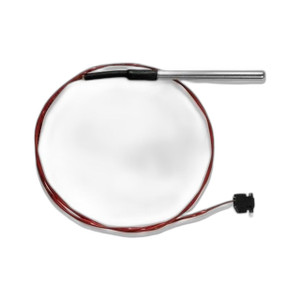
Winland EA400-12 Four-Zone Environmental Monitor
Overview
The Winland EA400-12 is a purpose-built four-zone environmental monitoring controller designed for distributed sensor deployments in security and building management contexts. Operating at 14VDC with TCP/IP connectivity, the EA400-12 accepts input from four independent environmental sensors and routes alerts based on configurable thresholds for each zone. This architecture allows you to monitor separate rooms, climate zones, or equipment areas from a single controller, with each zone independently configured and escalated — eliminating the need to deploy multiple standalone monitors across a facility.
Key Features
- Four Independent Monitoring Zones: Each zone supports independent sensor input and threshold configuration. This means you can set one temperature alarm at 85°F for a server room while simultaneously monitoring humidity in a vault at a completely different threshold — all from one device. Facilities with multiple critical spaces reduce deployment complexity and cabling overhead versus four separate single-zone monitors.
- TCP/IP Network Connectivity: Real-time alert transmission over standard Ethernet allows alerts to reach your security management platform, mobile app, or email without serial cables or proprietary closed networks. Network-based architecture integrates with existing VMS, access control, and SIEM infrastructures without bridge devices.
- 14VDC Operating Voltage: Stable DC power input matches security-grade power supplies and UPS systems already specified in access control and surveillance rack deployments. This eliminates the need for separate AC-to-DC conversion or dual power architectures in the same facility.
- HID and NFC/13.56MHz Credential Reader Support: Authorized personnel can acknowledge alerts or adjust zone thresholds via proximity card or mobile credentials without secondary authentication interfaces. If your facility already deploys HID readers for door access, you extend that same credential infrastructure to environmental monitoring — reducing credential management overhead.
- Multi-Zone Alert Prioritization and Escalation: Configure severity levels and escalation workflows per zone. Critical temperature deviations in a server room can trigger immediate phone notifications while humidity warnings in a non-critical storage area generate only email logs. This differentiated routing prevents alert fatigue and ensures response resources align with actual risk.
- Centralized Configuration and Monitoring Dashboard: Single point of visibility across all four zones simplifies operations for facilities with distributed monitoring points. Campus environments or multi-building complexes benefit from consolidated alerts and threshold management versus managing four separate devices.
Integration & Compatibility
The EA400-12 operates within standard security network topologies via TCP/IP, making it compatible with mainstream VMS platforms, access control systems, and building automation controllers that accept HTTP/REST or standard alert protocols. Its support for HID and NFC/13.56MHz credentials positions integration within mature access control ecosystems — you leverage existing reader infrastructure and credential databases rather than deploying a separate authentication layer.
The 14VDC power requirement aligns with industrial security power supplies and UPS systems common in access control and surveillance installations, reducing the need for additional electrical infrastructure. Integration with network monitoring dashboards or environmental monitoring platforms enables real-time visibility across all four zones, with alert routing to mobile devices, email, or third-party alerting services depending on your management platform's capabilities.
Deployment Considerations
Plan network bandwidth allocation for continuous TCP/IP monitoring, particularly if sensors sample at high frequency or alert thresholds change dynamically. Proximity reader placement should account for typical credential read distances (typically 6–12 inches for HID) and avoid RF interference from adjacent wireless systems or high-powered RF emitters.
The four-zone architecture requires advance site planning to ensure each monitored location or condition maps to a single zone. Facilities with more than four distinct environmental monitoring points will require multiple EA400-12 units or supplementary single-zone monitors. Power supply sizing must accommodate the 14VDC requirement plus downstream reader and sensor loads; UPS protection is strongly recommended for critical monitoring applications to maintain zone visibility during main power loss.
Frequently Asked Questions
Q: Can the EA400-12 monitor more than four environmental conditions simultaneously?
A: No — the EA400-12 is a four-zone controller. Each zone accepts one sensor input. Facilities requiring monitoring of more than four environmental conditions or locations must deploy multiple EA400-12 units in parallel or select a higher-capacity environmental controller.
Q: Does the EA400-12 work with existing HID access control systems?
A: Yes. The EA400-12 supports HID and NFC/13.56MHz proximity readers. If your facility already deploys HID reader infrastructure for access control, you can integrate the EA400-12 into the same credential ecosystem and allow card holders to acknowledge alerts or adjust thresholds without issuing separate credentials.
Q: What happens to monitoring if the network connection drops?
A: The EA400-12 requires TCP/IP connectivity for alert transmission and remote configuration. If the network is unavailable, the controller will continue to monitor zone conditions locally, but alerts will not be transmitted to remote platforms or mobile devices. Local alerting (audible alarm, local relay closure) may be available depending on configuration; verify with your integrator.
Q: What is the power consumption of the EA400-12?
A: The controller operates at 14VDC. Total power consumption depends on the number of connected sensors and readers. Verify actual wattage requirements with the device datasheet or your integration engineer to ensure your power supply and UPS are appropriately sized.
Q: Can I use the EA400-12 indoors and outdoors?
A: The EA400-12 is a network controller intended for installation in secure indoor environments (server rooms, secure closets, electrical cabinets). Environmental sensors and proximity readers connected to the EA400-12 may have their own environmental ratings; verify the specifications of downstream devices if outdoor or harsh-environment sensor placement is required.
Q: Does the EA400-12 integrate with Milestone or other VMS platforms?
A: The EA400-12 communicates via TCP/IP and standard alert protocols. Compatibility depends on whether your VMS platform supports the specific protocol implemented by Winland (HTTP/REST, syslog, or proprietary Winland integration). Confirm integration requirements with your VMS vendor or systems integrator before purchase.
Ted PerryPerspective based on aggregated IP Security Depot and affiliated engineering team experience.
I've evaluated the Winland EA400-12 in several security integrations where distributed environmental monitoring was required alongside existing access control deployments. The four-zone architecture is straightforward — each zone takes one sensor input and routes alerts independently. What makes it practical is the 14VDC power spec and TCP/IP connectivity; you're not introducing a third power standard or network protocol into the installation, which simplifies UPS sizing and VMS integration considerably.
Technical Highlights:
- Four Independent Zones with Configurable Thresholds: Each zone triggers alerts only when its specific threshold is crossed, eliminating unnecessary escalations. In a facility with both server rooms and general storage, you can set aggressive temperature alarms for the server room (say, 85°F) while the storage area tolerates wider swings — all managed from one controller rather than four separate monitors.
- HID and NFC/13.56MHz Credential Integration: Personnel already carrying access control cards can acknowledge alerts at the EA400-12 via proximity reader without secondary authentication. This reduces credential clutter and operational friction, particularly useful in high-security environments where physical card issuance is already controlled.
- TCP/IP Alert Routing: Real-time transmission to your VMS, email gateway, or mobile alerting service means you're not dependent on serial cables or proprietary closed networks. Alert escalation can vary by zone severity — critical deviations trigger phone calls; warnings generate email logs.
Deployment Considerations:
- The four-zone limit is not flexible — verify your facility has four or fewer distinct environmental monitoring points before committing. Multi-building campuses often require multiple units.
- Network availability is not optional. If the Ethernet link drops, remote alerting stops. UPS protection on both the controller and your network switch is essential for critical applications.
- Proximity reader placement is critical. HID readers require line-of-sight and operate effectively at 6–12 inches; RF interference from wireless networks or industrial equipment can degrade read reliability. Test placement during commissioning.
The EA400-12 is a sound choice for mid-sized facilities (offices, data centers, secure warehouses) where you have four or fewer discrete environmental zones and want centralized monitoring without introducing new power or network standards. It's not overkill for a single-room application — that justifies a simpler single-zone monitor — but it's cost-effective when you're monitoring a server room, vault, records storage, and equipment closet from one cabinet.