Viking Electronics K-1270-IP-EWP VoIP Entry Phone with Proximity Reader and Enhanced Weather Protection
Overview
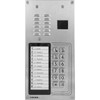
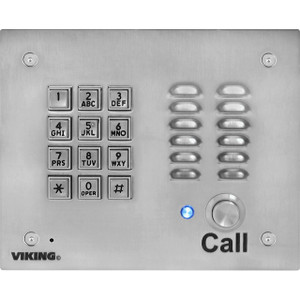
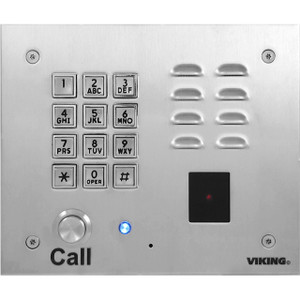
The Viking Electronics K-1270-IP-EWP is a 12-button VoIP apartment entry phone system that combines a built-in 125 KHz 26-bit Wiegand proximity card reader with enhanced weather protection — making it the right choice when standard weather resistance isn't enough and you need a system that holds up in exposed, high-moisture, or coastal environments. Flush-mount it using the included rough-in box, or surface-mount with the optional VE-5x10 enclosure. Either way, the K-1270-IP-EWP delivers a complete entry management solution without requiring a separate reader panel.
Key Features
- 14-Gauge Louvered 316 Stainless Steel Faceplate: Grade 316 stainless resists chloride corrosion — relevant in coastal installations where grade 304 pits within a season. The 14-gauge thickness and louvered design also add mechanical rigidity, so repeated impacts from carts or foot traffic don't deform the panel over time.
- Enhanced Weather Protection (EWP): The EWP designation means more than a gasket. This unit ships with foam rubber gaskets and boots, sealed connections, gel-filled butt connectors, and urethane or thermal plastic potted circuitry. That combination blocks water ingress paths that standard weather-resistant designs leave exposed — important for units mounted in rain-shadow-free locations or in freeze-thaw climates where condensation cycles are relentless.
- Built-In 125 KHz 26-Bit Wiegand Proximity Card Reader: The Wiegand output is the industry-standard interface, so this reader pairs directly with the access control panels you're already running — no converter, no protocol translation. 26-bit format is supported by virtually every commercial ACS on the market, which keeps your credential infrastructure consolidated.
- 12-Button Auto Dialer with Built-In Directory: Twelve assignable tenant buttons handle most mid-size residential entry deployments without requiring a separate directory panel. Visitors press a button; the system dials the tenant over VoIP. That means the call rides your IP network — no dedicated phone line, no analog trunk to provision.
- Permanent Laser-Etched Labeling: Laser etching doesn't fade, peel, or wash out in UV exposure or caustic cleaning environments. For property managers who clean facade panels with harsh chemicals, this matters — adhesive labels are a maintenance liability.
- Flexible Mounting Options: The included rough-in box enables flush mounting into a wall cavity — cleaner look, harder to pry off. For retrofit installs where cutting into the wall isn't feasible, the optional VE-5x10 surface enclosure accommodates the same unit. Choose based on your substrate and security posture, not on what the hardware forces.
- VoIP Integration: Running the entry system over your IP network means centralized management, no separate wiring infrastructure for intercom cabling, and the ability to ring tenant phones — IP desk phones, softphones, or mobile apps — depending on how your PBX is configured.
Integration & Compatibility
The 26-bit Wiegand output on the Viking Electronics entry phone line connects to standard access control panels without additional hardware. Because the system operates over VoIP, it integrates with SIP-compatible PBX platforms — verify SIP compliance and codec support against your specific PBX before deployment. The flush-mount rough-in box is included; the VE-5x10 surface enclosure is sold separately and should be specified at the time of order if a surface-mount installation is planned. For broader context on selecting entry systems for multi-tenant buildings, review a commercial access control buying guide before finalizing your hardware list.
Frequently Asked Questions
Q: What is the difference between the K-1270-IP-EWP and the standard K-1270-IP?
A: The EWP (Enhanced Weather Protection) version adds foam rubber gaskets and boots, sealed connections, gel-filled butt connectors, and urethane or thermal plastic potted circuitry. The standard model has basic weather resistance; the EWP version is engineered for more demanding outdoor exposure including coastal, high-humidity, and freeze-thaw environments.
Q: What type of proximity cards work with the built-in reader?
A: The reader operates at 125 KHz and outputs 26-bit Wiegand data. Standard 125 KHz proximity credentials — HID Prox, EM4100-compatible, and similar 26-bit Wiegand cards and fobs — are compatible. It does not support 13.56 MHz smart card formats such as MIFARE or DESFire.
Q: Does the K-1270-IP-EWP include a rough-in box for flush mounting?
A: Yes, a rough-in box for flush mounting is included. For surface mounting, the optional VE-5x10 enclosure is available separately.
Q: What access control panels does the Wiegand output support?
A: The 26-bit Wiegand interface is the dominant standard in commercial access control and is supported by virtually all major ACS brands. Verify the specific input voltage and Wiegand format requirements of your panel, but 26-bit is broadly compatible without protocol translation.
Q: Is this a SIP-based VoIP system?
A: The K-1270-IP-EWP operates over IP using VoIP. For specific SIP compatibility with your PBX or call manager, consult the Viking Electronics documentation for the E-10/20/30/32-IP series, as protocol details are addressed in the full product datasheet.
The detail that sets the K-1270-IP-EWP apart from a standard IP entry phone is the EWP package — specifically the combination of gel-filled butt connectors and urethane or thermal plastic potted circuitry. That's not cosmetic weatherproofing; it's the same approach used in direct-burial and marine wiring to block capillary water migration into terminations. On a building facade that faces prevailing rain or sits near salt air, that's the difference between a five-year and a two-year service interval.
Technical Highlights:
- 316 Stainless Faceplate (14 Gauge): Grade 316 adds molybdenum to the alloy, which is what makes it chloride-resistant. Spec 304 on a coastal property and you'll be replacing the faceplate within 18–24 months. 14-gauge thickness also means it won't flex under impact — relevant in high-traffic corridors where loading docks or service entrances see cart impacts regularly.
- 125 KHz 26-Bit Wiegand Reader: Integrated, not bolted on. One enclosure for the dialer, directory, and credential reader means one conduit run and one mounting footprint. The 26-bit Wiegand output wires directly to the access control panel's reader port — standard across HID, Lenel, Software House, and most other commercial ACS platforms.
- Dual Mounting Architecture: The included rough-in box makes flush mounting a first-class option, not an afterthought. That matters for security posture — a flush-mounted unit has no exposed mounting hardware to attack. Surface mount via VE-5x10 is the right call for masonry or retrofit where wall penetration isn't feasible.
Deployment Considerations:
- The VE-5x10 surface enclosure is optional and sold separately — confirm it's on the purchase order at the same time as the unit if surface mounting is the plan. Ordering it after the fact creates a schedule gap on install day.
- VoIP integration requires a compatible PBX or SIP call manager on the network. Confirm codec and SIP compliance before commissioning — Viking's E-series documentation covers supported configurations, and mismatched SIP profiles are the most common commissioning delay on IP entry systems.
This unit is the right specification for covered-but-exposed entry points on mid-size multifamily properties — building lobbies with no overhang, parking garage pedestrian gates, or any entry where a standard weather-resistant panel has failed prematurely. It is not the specification for indoor-only or fully sheltered installations where the EWP premium doesn't recover its cost.