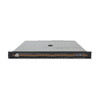
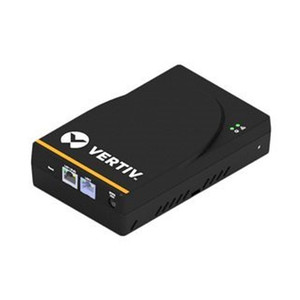
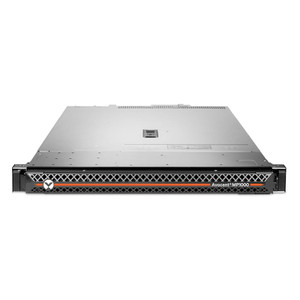
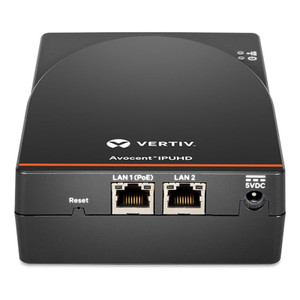
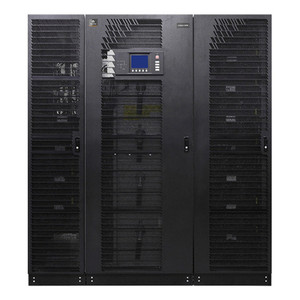
Vertiv ADX-2YSLV-MP1000 Dual-PSU Digital Infrastructure Management Appliance
Overview
The Vertiv ADX-2YSLV-MP1000 is a rack-mount digital infrastructure appliance built for environments where availability cannot be compromised. Pairing redundant 350W power supplies with a dedicated management port, dual 1G network interfaces, USB 3.0, and a legacy DB9 serial connection, it covers the connectivity spectrum that enterprise data center and security infrastructure teams actually encounter in the field. If you are managing a mixed estate of modern IP devices alongside older serial-attached hardware, the ADX-2YSLV-MP1000 addresses that without forcing an ancillary serial converter into your rack.
Browse the broader Vertiv catalog to see how this appliance fits into a larger Vertiv infrastructure stack, or explore complementary network switches for upstream connectivity planning.
Key Features
- Dual 350W Redundant Power Supplies: Two independent 350W supplies mean a single PSU failure does not take the appliance offline — critical in 24/7 security operations centers and always-on data center environments where unplanned downtime carries real cost. Maintenance or swap-out of a failed unit can happen without a service window.
- 2 x 1G Network Interfaces: Dual Gigabit ports let you segment management traffic from production data traffic, or configure bonding/failover depending on your upstream switch capabilities. For security integrators managing out-of-band access, dedicated management networking reduces the risk of a production network event cutting off console access to the appliance.
- 2 x USB 3.0 Ports: USB 3.0 throughput (up to 5 Gbps theoretical) makes these ports practical for local firmware updates, log extraction to external media, or attaching peripherals — faster than the USB 2.0 ports common on older infrastructure appliances.
- Dedicated Management Port (1 x Management): A discrete out-of-band management interface keeps administrative access isolated from data plane interfaces. In practice this means you can reach the appliance for configuration and diagnostics even if the primary network links are congested or offline.
- DB9 Serial Port (RS-232): Legacy serial connectivity is increasingly rare on modern appliances, but it remains the connection type for a broad installed base of UPS units, environmental monitors, console servers, and older PDUs. Having a native DB9 port eliminates the need for an external USB-to-serial adapter and the driver compatibility headaches that come with it.
- VGA Output: Direct local console access via VGA is a fallback that matters when network-based KVM or remote access tools are unavailable — during initial commissioning, network misconfigurations, or recovery scenarios. No KVM-over-IP required for local troubleshooting.
- Three Internal Fans: A three-fan cooling array supports the thermal load of dual PSUs and active compute components. Distributing airflow across three units (rather than one or two) also provides a degree of cooling redundancy — a single fan failure is less likely to result in a thermal shutdown than on a single-fan design.
- 10–35°C Operating Temperature Range: This covers standard raised-floor and enclosed-rack data center conditions (50–95°F). Not rated for outdoor or extended industrial temperature ranges, so plan accordingly if the target environment approaches the upper boundary without dedicated CRAC coverage.
- 10–80% Relative Humidity (29°C Max Dew Point): The humidity envelope accommodates most controlled equipment room environments. The 29°C dew point ceiling is the relevant constraint in humid climates — condensation risk, not just RH percentage, is what the dew point spec actually governs.
Integration and Compatibility
The ADX-2YSLV-MP1000 is positioned within the digital infrastructure product line for enterprise and security-adjacent IT environments. The combination of dual 1G ports and an out-of-band management interface makes it compatible with standard network architectures that separate in-band and out-of-band management planes. The DB9 serial port provides direct integration with serial-console infrastructure such as console servers from Vertiv or third-party vendors. For power protection planning, review UPS solutions that pair with this class of appliance for upstream power conditioning. Refer to the manufacturer datasheet for the full agency approval list, as Vertiv documents regional certifications at the SKU level and the complete certification set is not reproduced here.
Security operations teams deploying this appliance alongside IP camera recorders, network video management servers, or access control head-end systems should plan for the 3.5-inch rack height (1U) and verify that upstream PoE switch and patch panel layouts accommodate the dual-NIC cabling run without congestion at the rear of the rack. See our rack infrastructure guide for cable management considerations specific to dense security head-end builds.
Frequently Asked Questions
Q: Does the ADX-2YSLV-MP1000 support hot-swap of the redundant power supplies?
A: The appliance ships with dual 350W power supplies configured for redundancy. Hot-swap capability is consistent with Vertiv's ADX platform design for continuous availability environments, but confirm the specific hot-swap procedure in the manufacturer's installation guide for this SKU before performing a live swap.
Q: What is the rack unit height of the ADX-2YSLV-MP1000?
A: The listed dimension is 3.5 inches, which corresponds to a 2U rack profile. Verify actual rack unit requirements against the manufacturer datasheet before reserving rack space.
Q: What operating temperature range does the ADX-2YSLV-MP1000 support?
A: The operating temperature range is 10–35°C (50–95°F) with a humidity range of 10–80% RH and a maximum dew point of 29°C. This is a standard controlled data center envelope — not rated for outdoor or wide-industrial temperature ranges.
Q: Does the ADX-2YSLV-MP1000 include a VGA output for local console access?
A: Yes. A VGA connector is included, providing direct local display output for initial setup, recovery, or troubleshooting scenarios where network-based remote access is unavailable.
Q: What serial interface does the ADX-2YSLV-MP1000 provide for legacy device connectivity?
A: The appliance includes one DB9 serial port, suitable for RS-232 connections to UPS units, environmental monitors, console servers, and other serial-attached infrastructure equipment.
Q: What USB standard do the ports on the ADX-2YSLV-MP1000 support?
A: Both USB ports are USB 3.0, supporting theoretical throughput up to 5 Gbps — faster than USB 2.0 for firmware staging, log transfer, or peripheral attachment tasks.
The detail that stands out to me on the ADX-2YSLV-MP1000 is the combination of a discrete out-of-band management port alongside dual 1G data interfaces — that is a connectivity architecture you typically see specified for appliances where losing management access during a network event is not an acceptable outcome. In security head-end builds, that distinction matters more than most buyers realize until they are troubleshooting a misconfigured interface remotely at 2 AM.
Technical Highlights:
- Dual 350W Redundant PSUs: Each supply is independently rated at 350W, so the platform maintains full power budget under a single-PSU failure — no derating, no graceful degradation required for a swap.
- USB 3.0 (x2): At 5 Gbps theoretical throughput, these ports are actually useful for staging large firmware images or pulling diagnostic logs to external media quickly — not the bottleneck that USB 2.0 ports become on comparable appliances.
- 10–35°C Operating Envelope with 29°C Dew Point Ceiling: The dew point specification is the constraint that matters in humid facilities — 80% RH at 20°C is fine; 80% RH at 30°C is not. Validate against your facility's worst-case psychrometric conditions, not just the RH number.
Deployment Considerations:
- The DB9 serial port is a practical asset in mixed-vintage security infrastructure where older UPS or environmental sensor hardware predates USB console support — budget for a null-modem cable if your console server uses the same DB9 pinout.
- Storage temperature is rated down to -40°C but the operating floor is only 10°C — if this appliance ships to a cold-climate site and the equipment room is not pre-heated before power-on, verify the ambient is above 10°C before commissioning.
The ADX-2YSLV-MP1000 is a well-matched fit for security operations centers and enterprise head-end rooms that consolidate IP video management servers, access control panels, and legacy serial-attached infrastructure in the same rack — specifically where the out-of-band management port can be wired to a dedicated management VLAN separate from the production surveillance network.