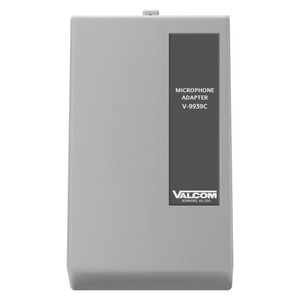
Valcom VRCPA RingCentral Paging Adapter
The Valcom VRCPA is a SIP-enabled paging adapter designed to integrate RingCentral cloud phone systems directly with public address and paging infrastructure. This accessory eliminates the need for parallel infrastructure or legacy gateway hardware by establishing a bridge between RingCentral users and facility-wide announcement systems.
Core Integration Capability
The VRCPA connects to the RingCentral cloud telephony platform and integrates with standard paging and PA systems over SIP. This means RingCentral users can initiate pages and announcements from their existing phone environment without requiring separate dialing conventions, redundant systems, or additional gateways. If your facility operates both RingCentral for unified communications and a traditional PA system, the VRCPA removes the manual workaround — users simply select a paging destination from their RingCentral interface and transmit directly.
Deployment Scenarios
This adapter is purpose-built for environments where RingCentral has been standardized as the primary phone system. Typical deployments include:
- Warehouses and distribution centers: RingCentral users trigger facility-wide announcements or zone-based pages without leaving their phone application, reducing response times for safety alerts or operational coordination.
- Multi-tenant office buildings: Integrate RingCentral tenants with a shared PA infrastructure, allowing each tenant's users to page independently while maintaining a unified announcement backbone.
- Healthcare and hospitality: Staff pages and overhead announcements flow from RingCentral, keeping communications centralized and logged within the phone system's call records.
- Light manufacturing and logistics: Supervisors can page specific areas or departments directly from their RingCentral desk phone or mobile app.
Compatibility and Connectivity
The VRCPA is engineered specifically for RingCentral environments and connects to the RingCentral cloud platform via standard internet connectivity. It then integrates with existing PA hardware — both new systems and legacy analog or digital setups — provided they support SIP signaling or standard PBX interfaces. Installation requires standard network connectivity and integration with the target PA system's input (typically via relay outputs, line-level audio input, or SIP endpoints, depending on the PA vendor's architecture). Confirm compatibility with your PA system's integration method before deployment.
Key Considerations
The VRCPA is an accessory — it does not generate or record audio independently. Its role is protocol translation and signaling between RingCentral and PA infrastructure. Performance and responsiveness depend on network latency between your RingCentral instance and the adapter's location, as well as the PA system's ability to accept and process SIP triggers or relay commands. If your PA system requires analog audio feeds or has no native SIP support, additional interface hardware may be necessary. Consult the Valcom product documentation and your PA vendor's integration guides to confirm endpoint compatibility before purchase.
Why This Model
If you operate RingCentral and need PA integration without dedicated gateway appliances or workarounds, the VRCPA is a direct solution. It assumes RingCentral is your standard and your PA system can accept SIP or relay-based triggers. It is not a universal bridge for non-RingCentral phone systems — other platforms require different adapters. Choose the VRCPA only if RingCentral is your phone standard and your PA infrastructure supports standard integration protocols.
Frequently Asked Questions
Q: Does the VRCPA work with non-RingCentral phone systems?
A: No. The VRCPA is designed specifically for RingCentral integration. Other phone platforms (3CX, Avaya, Cisco, etc.) require different adapters or gateway solutions.
Q: What types of PA systems can the VRCPA integrate with?
A: The VRCPA integrates with PA systems that support SIP signaling or relay-based trigger inputs. Verify your PA vendor's documentation for compatible integration methods before deployment.
Q: Does the VRCPA require a separate internet connection?
A: The VRCPA communicates with RingCentral over your standard network connection. It does not require a dedicated line, but it must have reliable network access to the RingCentral platform.
Q: Can I use the VRCPA with an analog PA system?
A: Possibly, but it depends on the analog system's integration interface. If your system accepts relay closures or line-level audio input, integration may be feasible. Consult the Valcom documentation and your PA vendor for specific adapter or interface requirements.
Q: Is any special configuration required on the RingCentral side?
A: Yes. The VRCPA must be provisioned within your RingCentral tenant and assigned to specific users or departments. Work with RingCentral support or your integrator to configure paging permissions and routing rules.
Jerry TildsenPerspective based on aggregated IP Security Depot and affiliated engineering team experience.
The VRCPA solves a real integration problem: RingCentral users need a direct path to PA infrastructure without forcing operators to pick up a handset and dial a separate number. This SIP-based bridge eliminates that friction. If you're standardized on RingCentral and your PA system supports SIP signaling, the VRCPA is a lean addition to your comms stack.
Technical Highlights:
- SIP protocol bridge: Translates RingCentral signaling to PA-compatible triggers, so paging originates from the RingCentral interface without extra dialing or credentials.
- RingCentral-native: Provisioned within your existing RingCentral tenant; no separate gateway management interface or redundant account system.
- Integration flexibility: Works with both new and legacy PA systems, provided they expose SIP endpoints or relay input contacts for triggering.
Deployment Considerations:
- Network latency between your RingCentral cloud instance and the adapter's site affects page response time — place the VRCPA on a clean, low-latency segment if paging speed is critical.
- The VRCPA does not handle audio amplification or speaker distribution; it is strictly a signaling bridge. Your PA system must already have audio infrastructure in place.
- PA systems with proprietary or closed integration interfaces may require a third-party interface card or relay converter; verify integration compatibility with your PA vendor before committing.
Best fit: Facilities with RingCentral as a strategic phone platform and a need for unified paging without legacy PBX gateway overhead. Avoid if your PA system is analog-only with no integration interfaces or if you operate multiple non-RingCentral phone systems that must share the same paging path.