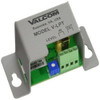
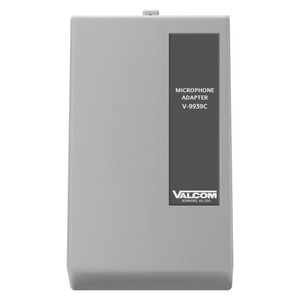
Valcom V-LPT One-Way Paging Adapter
Overview
The Valcom V-LPT is an impedance matching and level conversion module designed to condition audio signals in distributed paging installations. It bridges talkback outputs from hands-free endpoints to downstream audio systems, ensuring proper signal levels and impedance alignment across multi-zone voice communication networks. The V-LPT (often searched as V LPT) solves a common integration problem: audio sources and destination equipment rarely have matching impedance or signal levels out of the box, which can result in distortion, signal loss, or complete failure in long-run installations.
Key Features
- Impedance Matching Conversion: Converts high-impedance talkback outputs to levels appropriate for standard audio distribution circuits — eliminates the need for field-level adjustments or manual tone compensation that wastes deployment time.
- One-Way Signal Path: Purpose-built for simplex audio routing, so you know exactly what the signal flow is — no confusion about duplex capability or unexpected feedback loops in emergency systems.
- Audio Input Support: Accepts audio signals from hands-free talkback circuits and voice sources, meaning you can integrate existing equipment without replacing working endpoints.
- Wall-Mount Form Factor: Compact wall installation fits into equipment rooms, mechanical spaces, and control rooms without consuming rack real estate — saves space and installation labor compared to larger modules.
- Valcom System Integration: Designed to work within the broader Valcom paging catalog, so you can plan multi-zone deployments knowing this adapter will slot into your existing architecture without compatibility surprises.
- Compatible Audio Endpoints: Works with standard audio distribution systems in educational facilities, office buildings, healthcare environments, and multi-tenant facilities where standardized signal routing is non-negotiable.
Integration & Compatibility
The V-LPT functions as a transparent bridge between talkback circuits and distributed paging zones. It integrates into existing voice communication systems where signal conditioning is required — particularly in installations spanning multiple floors or buildings where cable runs introduce attenuation or impedance mismatches. Because it is a passive or buffered interface (depending on power availability), it does not impose strict format requirements on upstream or downstream equipment, making it a flexible retrofit option for legacy systems undergoing expansion.
Installation is straightforward: mount the unit to a wall or equipment enclosure using standard fasteners, connect the audio input from your talkback source, and route the conditioned output to your paging amplifier or audio mixer. The modular approach means you can deploy multiple V-LPT units across a large facility, each handling a specific talkback zone or subsystem.
Typical Deployment Scenarios
Educational campuses frequently use the V-LPT to route announcements from administrative talkback stations through zone-based paging amplifiers — the impedance matching prevents audio quality degradation across long speaker runs. Healthcare facilities deploy it in nurse call systems to condition audio from hands-free stations to overhead paging, ensuring emergency announcements are clear and full-level. Multi-tenant office buildings use the V-LPT to isolate talkback circuits by tenant or floor, preventing cross-zone audio bleed and maintaining confidentiality.
Why Choose the V-LPT
If your paging installation involves multiple talkback sources, long audio cable runs, or a mix of equipment from different eras, impedance mismatch and signal level inconsistency are real problems. The V-LPT addresses both in a single wall-mount module. It is far cheaper and faster to deploy than redesigning your cabling, replacing endpoints, or adding amplification stages. It also eliminates vendor lock-in — as long as your audio endpoints output standard audio levels, the V-LPT will condition them for your paging distribution system.
When to Choose a Different Approach
If your paging system already includes built-in impedance matching on its talkback inputs, or if all equipment is from the same manufacturer and certified to work together, you may not need the V-LPT. Additionally, if your application requires two-way audio or duplex communication, a dedicated audio codec or hands-free bridge may be more appropriate than a one-way adapter. Consult your system integrator or Valcom technical support to confirm whether signal conditioning is necessary in your architecture.
Frequently Asked Questions
Q: Can the V-LPT handle both microphone and line-level inputs?
A: The V-LPT is designed for hands-free talkback outputs, which are typically line-level signals. If you have low-level microphone inputs, you will need a microphone preamplifier before the V-LPT to bring the signal into the proper range.
Q: Does the V-LPT require power?
A: The V-LPT operates as a passive impedance matching module. No external power supply is required for basic operation, which simplifies installation and eliminates a potential failure point.
Q: Can I daisy-chain multiple V-LPT units?
A: Yes, you can connect multiple V-LPT adapters in series if each one is properly matched to the impedance of the next stage. However, this approach introduces cumulative signal loss, so it is best used for short runs or low-impedance systems. Consult the datasheet or Valcom technical support for impedance specifications.
Q: Is the V-LPT suitable for emergency notification systems?
A: Yes. The V-LPT is often deployed in life safety paging systems because it ensures consistent, predictable audio routing without active electronics that can fail. Its passive design makes it inherently reliable.
Q: How is the V-LPT mounted?
A: The V-LPT is wall-mounted using standard fasteners. It is compact enough to fit inside equipment enclosures, cable trays, or control room racks adjacent to amplifiers and mixers.
Q: What if I need impedance matching for multiple zones?
A: Deploy one V-LPT unit per talkback source or zone. This modular approach allows you to condition each audio path independently, ensuring clean signal distribution across your entire facility.
Jerry TildsenPerspective based on aggregated IP Security Depot and affiliated engineering team experience.
The Valcom V-LPT is a purposefully boring piece of engineering—and that is exactly why it works. In paging system integration, audio signal problems almost always trace back to impedance mismatch or level creep across distributed zones. The V-LPT solves this with a simple, passive design that requires no power, introduces no latency, and creates no new failure modes.
Technical Highlights:
- Passive Impedance Matching: Converts high-impedance talkback outputs to standard audio distribution levels without active amplification or compression — preserves signal fidelity and eliminates the need for tone adjustments at each zone.
- One-Way Signal Path: Simplex-only design prevents feedback loops and cross-talk in multi-zone paging networks — critical in healthcare and educational environments where audio clarity and isolation are compliance requirements.
- Wall-Mount Form Factor: Eliminates the need for rack space, power distribution, or cabling infrastructure dedicated to conditioning — reduces total cost of ownership in distributed deployments across large facilities.
Deployment Considerations:
- Verify impedance specs of both your talkback source and paging amplifier before purchase — impedance mismatch is the root cause, and the V-LPT is the symptom fix, not a substitute for proper planning.
- If your system uses very long cable runs (100+ feet) to paging amps, the V-LPT alone may not be sufficient; you may need active buffering or amplification stages downstream — consult your system architect.
Deploy the V-LPT in any multi-zone paging installation where talkback sources and distribution equipment are from different manufacturers or eras. It pays for itself in labor savings alone by eliminating field-level adjustments and tone compensation tuning.