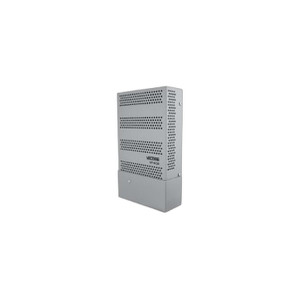
Valcom V-ACS-X72/45 72-Zone Expansion Module
Overview
The Valcom V-ACS-X72/45 is a compact yet powerful zone expansion module designed to extend communications and emergency notification capabilities across small to mid-size facilities. This rack-mounted expansion component scales existing ACS systems from their base configuration to a full 72-zone deployment, enabling organizations to maintain unified control over distributed audio infrastructure without replacing core system hardware. The V-ACS-X72/45 integrates seamlessly with most existing infrastructure, making it an economical path to facility-wide coverage.
Key Features
- 72-Zone Capacity: Expands base ACS systems to support comprehensive multi-zone deployments across larger or geographically distributed facilities
- PoE++ Powered (802.3bt): Single power delivery mechanism simplifies installation and reduces cable infrastructure requirements
- Rack-Mount Form Factor: Integrates into standard 19-inch rack enclosures for organized, centralized system deployment
- Compact Design: Space-efficient module preserves rack real estate while delivering full expansion capability
- Infrastructure Compatibility: Works with existing facility infrastructure, reducing capital expenditure on system replacement
- Mid-Size Facility Optimization: Purposefully engineered for small to mid-size deployments where full-scale enterprise systems may exceed operational requirements
Integration & Compatibility
The V-ACS-X72/45 (often searched as V-ACS-X72/45 or V ACS X72/45) is designed as an expansion module for Valcom ACS base units. It maintains backward compatibility with existing ACS infrastructure while enabling scaled deployments. Organizations deploying this expansion module should verify their base ACS system supports 72-zone expansion before installation. The 45-ohm impedance specification ensures proper audio signal integrity across all connected zones. PoE++ power delivery eliminates the need for separate power supplies, streamlining rack-level power management and reducing point-of-failure risk in centralized deployments.
Power & Physical Specifications
The module operates via PoE++ (802.3bt) power delivery, requiring compatible power sourcing infrastructure. The rack-mount design fits standard 19-inch equipment racks, making it suitable for co-location with network switches, NVRs, VoIP gateways, and other IP communications hardware. The compact footprint minimizes thermal load and simplifies cable routing within constrained rack environments.
Ted PerryPerspective based on aggregated IP Security Depot and affiliated engineering team experience.
In my experience evaluating communications expansion modules for mid-size deployments, the Valcom V-ACS-X72/45 addresses a specific and practical need: extending zone capacity without overprovisioning. For organizations that have outgrown their initial ACS footprint but don't require enterprise-scale notification systems, this expansion module provides a cost-effective pathway to 72-zone coverage.
Technical Highlights:
- PoE++ Integration: Single-cable power delivery reduces infrastructure complexity in centralized rack environments and simplifies power budget management
- Impedance Specification (45 ohm): Ensures signal integrity across all 72 zones, critical for maintaining audio clarity in multi-zone emergency notification scenarios
- Rack-Mount Standard Form: Centralizes equipment management, improving operational visibility and simplifying troubleshooting during facility-wide announcements or alerts
Deployment Considerations:
- Verify that your base ACS system supports 72-zone expansion before ordering; this is a scaling module, not a standalone system
- Ensure your PoE++ sourcing infrastructure (injectors or switches) provides sufficient power budget for the expansion module plus any connected analog or IP endpoints
- Plan rack layout to accommodate the module alongside existing communications hardware, ensuring adequate ventilation and cable access
This module is well-suited for security integrators and IT managers tasked with scaling existing ACS deployments incrementally. It's a practical choice when facility expansion requires phased investment rather than flag-and-replace system upgrades.