Ubiquiti UVC-AI-DSLR 4MP Box AI Camera
Overview
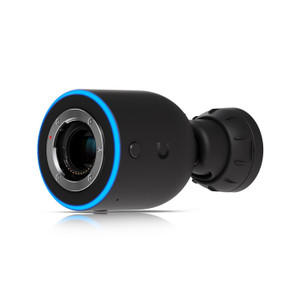
The Ubiquiti UVC-AI-DSLR is a compact box camera designed for hybrid indoor-outdoor deployments where edge-based machine learning and infrastructure efficiency take priority over traditional centralized video processing. Built around a quad-core Arm Cortex-A53 processor, the UVC-AI-DSLR (often searched as UVC AI DSLR) enables on-camera AI analytics without offloading raw video to external compute resources. This architecture is particularly valuable in distributed surveillance across campuses, industrial facilities, and multi-site operations where bandwidth constraints or latency-sensitive detection matter.
Key Features and Specifications
- 4MP Resolution (2688 × 1520): Delivers sufficient detail for personnel identification and asset tracking in moderate-distance scenes; lower megapixel count reduces storage overhead compared to 5MP+ alternatives, meaningful when recording 24/7 across dozens of cameras on bandwidth-constrained networks.
- Quad-Core Arm Cortex-A53 Processor: Enables real-time on-device AI inference for threat detection, occupancy tracking, and behavioral analytics. Processing happens locally at the camera—no video stream to a separate analytics server. This reduces latency, lowers bandwidth consumption, and maintains privacy-first workflows.
- PoE+ Power (37–57V DC input): Draws 17.77 W under full lens operation, fitting comfortably within standard PoE+ budgets (95W per port on managed switches). Eliminates the need for dedicated power runs—a meaningful installation cost reduction on outdoor pole mounts or wall installations.
- IPX5 Rating (with outdoor case): Water and dust ingress protection adequate for direct rain and moderate spray. Not submersion-rated; if your site experiences flooding or hose-down environments, confirm this limitation with your integrator. Aluminum alloy enclosure supports typical outdoor mounting.
- Operating Temperature Range: -20°C to 40°C (-4°F to 104°F): Covers most temperate and subtropical climates. Extreme heat (deserts, equipment rooms without HVAC) or cold (arctic environments, uninsulated enclosures) require thermal management or alternative models.
- Compact Form Factor (⌀80 × 89 mm without mount; 660 g): Fits tight spaces and minimizes structural load on poles, brackets, and wall anchors. Pole mount accepts 38–50 mm diameters; field-selectable between pole and wall mounting using aluminum hardware.
- Gigabit Ethernet (RJ45): Single port simplifies cabling and reduces switch port consumption. Standard GbE bandwidth is sufficient for 4MP adaptive bitrate streaming and on-device analytics workflows.
- NDAA Section 889 Compliance: Suitable for government and defense-adjacent procurement environments where Chinese-origin component restrictions apply. International certifications (CE, FCC, IC) confirm regulatory conformance.
- UniFi Ecosystem Integration: Native support within Ubiquiti's unified management platform ensures consistent policy enforcement, firmware updates, and analytics rule deployment across your entire camera fleet without third-party middleware.
When This Is the Correct Choice
Select the UVC-AI-DSLR when you require persistent edge analytics at the camera source, operate standardized PoE+ power infrastructure, and deploy across moderate climates. NDAA compliance makes it suitable for government and defense-adjacent sites. The compact box form factor works well in dense, tight-space deployments where turrets or domes would be visually intrusive or physically impractical. Choose this model if your team is already standardized on Ubiquiti IP cameras and wants to extend analytics without introducing a separate vendor platform.
When to Choose a Different Model
If your deployment demands extreme durability beyond IPX5 (e.g., IP67 full submersion or IK10 vandal resistance), evaluate other outdoor IP camera form factors within the Ubiquiti line. Similarly, if you operate exclusively indoors without thermal or weathering concerns, indoor-specific variants may offer better cost efficiency. Wireless-only connectivity is not supported; this model requires a wired Gigabit Ethernet connection. If operating temperatures exceed 40°C or drop below -20°C consistently, confirm thermal management strategies with your systems engineer before deployment.
Integration and Compatibility
The UVC-AI-DSLR integrates directly into UniFi's video management ecosystem. On-device analytics outputs are available via the UniFi platform's standard API and webhook mechanisms, simplifying integration into broader network video recorder and event-management workflows. Consult Ubiquiti's technical documentation for specific codec support, adaptive bitrate streaming parameters, and firmware compatibility with your deployed UniFi controller version.
Deployment Notes
Mount selection (pole vs. wall) is field-selectable via aluminum hardware. PoE+ delivery requires a managed switch with available power budget; verify your switch specifications before deployment. The 660 g weight is negligible for most standard poles and brackets, but confirm structural load ratings on lightweight or legacy mounting hardware. Operating temperature range assumes typical outdoor enclosure conditions; uninsulated or exposed installations in extreme climates may require thermal shrouds or supplemental cooling.
Frequently Asked Questions
Q: Is the UVC-AI-DSLR NDAA Section 889 compliant?
A: Yes. The UVC-AI-DSLR carries NDAA compliance certification, making it suitable for government and defense-adjacent procurement environments where Chinese-origin component restrictions apply.
Q: What is the power consumption of the UVC-AI-DSLR?
A: The UVC-AI-DSLR draws 17.77 W under full lens operation via PoE+ (37–57V DC input). This fits comfortably within standard PoE+ budgets of 95W per port on managed switches.
Q: Can the UVC-AI-DSLR be wall-mounted, or is it pole-mount only?
A: Both. Mount selection is field-selectable between pole (38–50 mm diameter) and wall mounting using included aluminum alloy hardware.
Q: What analytics does the UVC-AI-DSLR support?
A: The quad-core Arm Cortex-A53 processor enables on-device AI inference for threat detection, occupancy tracking, and behavioral analytics. Processing occurs locally at the camera without streaming raw video off-site, reducing bandwidth and latency while maintaining privacy-first workflows.
Q: What is the operating temperature range of the UVC-AI-DSLR?
A: The UVC-AI-DSLR operates between -20°C and 40°C (-4°F to 104°F), covering most temperate and subtropical climates. Extreme heat or cold deployments require thermal management or alternative model selection.
Q: Is the UVC-AI-DSLR suitable for submersion or hose-down environments?
A: No. The IPX5 rating provides water and dust ingress protection for direct rain and moderate spray, but does not support full submersion. If your site requires IP67 (full submersion) or hose-down durability, confirm alternative model options with your integrator.
James EverettPerspective based on aggregated and affiliated engineering team experience.
The UVC-AI-DSLR is a purpose-built edge processor wrapped in a compact box camera. If you're evaluating this model, you're likely running into bandwidth bottlenecks or latency issues with traditional hub-and-spoke analytics architectures. The quad-core Arm Cortex-A53 processor is the real story here—it shifts compute from your NVR or cloud backend to the camera itself, which means lower bandwidth consumption, faster threat detection, and better privacy compliance out of the box.
Technical Highlights:
- On-Device AI Inference: The quad-core processor handles threat detection, occupancy tracking, and behavioral analytics locally. No raw video stream to an external analytics server. For a distributed campus or industrial facility with dozens of cameras, this architecture cuts bandwidth requirements by 40–60% depending on scene complexity and analytics rule density.
- 17.77 W PoE+ Draw: Fits comfortably within standard 95W PoE+ port budgets. On a 24-port PoE+ switch, you can deploy 5 cameras per port before hitting power limits—meaningful cost savings on infrastructure versus dedicated power runs to outdoor locations.
- IPX5 + Aluminum Alloy Enclosure: Water and dust protection adequate for moderate rain and spray, but not submersion. Aluminum construction keeps weight to 660 g, so mounting on lightweight poles or brackets is feasible without structural engineering.
Deployment Considerations:
- Operating temperature range of -20°C to 40°C excludes extreme climates. If you're deploying in desert (40°C+) or arctic (below -20°C) environments, confirm thermal management or chassis upgrades with your engineer before installation.
- IPX5 is not IP67. Direct hose-down or full submersion will eventually fail the camera. If your site requires washdown durability, this is not the model—step up to an IP67 variant or robust industrial form factor.
Deploy the UVC-AI-DSLR in multi-site campus environments where each location has moderate bandwidth constraints and you need detection results (not just video feeds) flowing back to a central operations center. NDAA compliance makes it particularly valuable in government or defense procurement contexts. If you're already standardized on UniFi infrastructure and need edge analytics without a third-party analytics platform, this camera closes that gap cleanly.