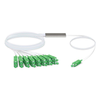
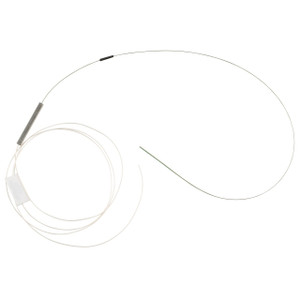
Ubiquiti UF-SPLITTER-16 Passive Optical Splitter
Overview
The Ubiquiti UF-SPLITTER-16 is a passive optical splitter designed to distribute a single input fiber across 16 independent output ports in fiber-based network deployments. As a passive component, it requires no external power, management interface, or firmware updates — signals pass through optically without active electronics or processing delay. This architecture makes it ideal for cost-sensitive fiber access networks where operational simplicity and reliability matter more than active switching features.
The UF-SPLITTER-16 (often searched as UF SPLITTER 16) integrates directly into Ubiquiti fiber infrastructure platforms, complementing fiber transceivers, media converters, and optical termination equipment. The 1:16 split ratio serves medium-density fiber access scenarios — point-to-multipoint topologies where one feeder fiber must reach multiple customer premises, sector sites, or remote equipment locations.
Key Features
- 16 Output Ports: Distributes one input fiber to 16 branches in a single pass. This port density is useful when scaling beyond smaller 1:8 splitters but still keeping the installation footprint compact — mounting in a standard fiber distribution enclosure or rack patch panel without excessive space overhead.
- Passive Optical Design: Zero power consumption and zero processing delay mean signals propagate transparently across the optical spectrum. No configuration or management burden — install and operate without monitoring, making unattended remote sites practical.
- Compact Form Factor: Weighs 0.300 lb and fits standard telecom rack and enclosure mounting schemes, reducing installation labor and footprint cost in crowded network plants.
- Single-Mode or Multi-Mode Compatibility: Accepts standard fiber connectors on both input and output ports, allowing flexibility in network topology design — integrate with your existing fiber plant without re-termination costs.
- Transparent Wavelength Operation: Works across the optical spectrum without wavelength-dependent processing, so it handles legacy and modern transmission systems equally without obsolescence risk.
- Industrial Temperature Range: Operates reliably in outdoor and indoor telecom installations across the temperature ranges typical of field deployments, eliminating climate control requirements at the splitter location.
Integration & Compatibility
The UF-SPLITTER-16 mounts in fiber distribution frames, patch panels, or network racks using standard telecom hardware. Secure all 16 output fibers to prevent strain and maintain bend radius compliance per fiber specifications.
Signal loss is inherent to passive splitting. A 1:16 split introduces approximately 12 dB of optical loss across all branches. This is non-negotiable physics — the splitter divides light energy equally among 16 ports. When integrating the UF-SPLITTER-16, calculate link budgets early in the design phase. Verify that connected equipment (fiber transceivers, ONUs, wireless radios, or remote switching modules) operates within acceptable optical power ranges at typical split output levels. If your transmit or receive modules cannot tolerate the 12 dB penalty, passive splitting may not fit your design — consider active switching or aggregation alternatives instead.
Input and output ports accept standard single-mode or multi-mode fiber connectors. No calibration, firmware updates, or configuration are required. The splitter operates transparently once fibers are terminated and secured.
Deployment Scenarios
Common use cases include fiber-to-the-building (FTTB) and fiber-to-the-premises (FTTP) last-mile deployments where a single feeder fiber serves multiple locations. The UF-SPLITTER-16 is also effective in backhaul ring networks, distributed remote sites, and aggregation points where passive splitting reduces operational complexity and cost relative to active switching solutions.
Frequently Asked Questions
Q: What is the optical loss penalty of the UF-SPLITTER-16?
A: The 1:16 split introduces approximately 12 dB of optical loss, distributed equally across all 16 branches. This is inherent to passive splitting and must be accounted for in link budget calculations. Verify that all connected transceivers and receivers can tolerate this loss within their specified optical power ranges.
Q: Does the UF-SPLITTER-16 require power or management?
A: No. As a passive optical component, the UF-SPLITTER-16 requires no external power, management interface, or firmware updates. It operates transparently once installed and requires no ongoing operational overhead.
Q: Can I use the UF-SPLITTER-16 with both single-mode and multi-mode fiber?
A: Yes. The splitter accepts standard fiber connectors on both input and output ports, compatible with single-mode or multi-mode fiber depending on your network specification. Ensure your fiber terminations and equipment transceivers match the mode type you choose.
Q: What temperature range does the UF-SPLITTER-16 operate in?
A: The UF-SPLITTER-16 operates across industrial temperature ranges typical of outdoor and indoor telecom installations. Specific operating temperature limits are provided in the product datasheet; confirm these against your intended deployment environment.
Q: How should I mount the UF-SPLITTER-16?
A: Mount the splitter in a fiber distribution enclosure, patch panel, or network rack using standard telecom fiber management practices. Secure all 16 output fibers to prevent strain and maintain bend radius compliance per your fiber specifications.
Q: Is the UF-SPLITTER-16 suitable for FTTP deployments?
A: Yes. The UF-SPLITTER-16 is commonly deployed in FTTP and FTTB last-mile access networks where a single feeder fiber must serve multiple customer premises or sector locations. The 16-port capacity scales beyond smaller splitter options for medium-density coverage areas.
Ted PerryPerspective based on aggregated and affiliated engineering team experience.
The Ubiquiti UF-SPLITTER-16 is a straightforward, cost-effective solution for scaling fiber coverage in point-to-multipoint UISP deployments. Its passive architecture means zero management overhead — a significant advantage in remote or lightly staffed sites. When you need to distribute one fiber to 16 endpoints without active electronics, the UF-SPLITTER-16 delivers exactly that function. Just remember that optical power loss is fixed and non-negotiable with passive splitting.
Technical Highlights:
- 1:16 Passive Split Ratio: Distributes a single input fiber across 16 independent output ports with no active processing. The 12 dB optical loss is inherent to this split ratio — calculate link budgets to ensure all connected transceivers operate within their receive power specifications at the splitter output.
- Zero Power Consumption: No external power supply, power budget strain on switch infrastructure, or UPS provisioning required. Pure passive optical distribution simplifies remote and outdoor installations.
- Compact 0.300 lb Form Factor: Mounts directly in standard fiber patch panels and distribution enclosures without excessive space overhead, reducing installation labor and real estate cost in crowded network plants.
Deployment Considerations:
- Verify optical power budgets before integrating the UF-SPLITTER-16 into your fiber plant. If your transceivers have tight receive sensitivity margins, the 12 dB split loss may exceed your link budget — test or model this before committing to passive splitting at this ratio.
- A passive splitter has no wavelength filtering or protocol intelligence. It works across the full optical spectrum, but that also means you cannot use it to segregate or prioritize traffic — all 16 branches receive identical copies of the input signal.
The UF-SPLITTER-16 shines in FTTP and FTTB last-mile access networks where cost and operational simplicity outweigh the need for active switching. If you are designing a medium-density fiber aggregation point and your equipment can absorb the 12 dB loss, this passive splitter is a reliable, no-management choice.