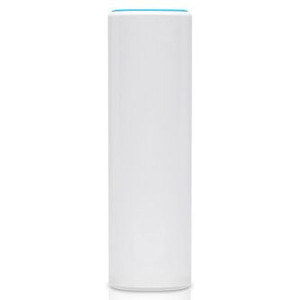
Ubiquiti UAP-NANOHD-US WiFi 5 Access Point
Overview
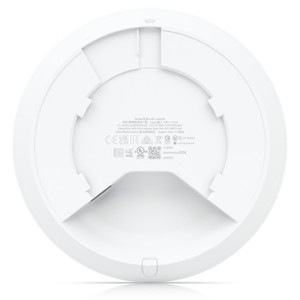
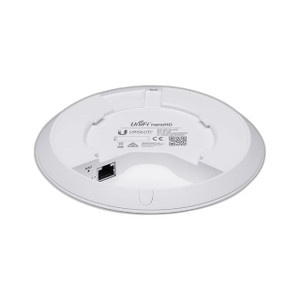
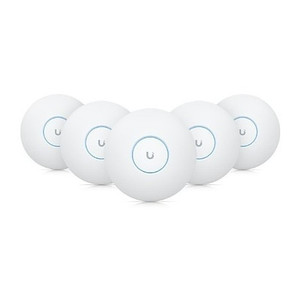
The Ubiquiti UAP-NANOHD-US is a compact WiFi 5 (802.11ac) access point engineered for enterprise deployments where physical space and power constraints drive procurement decisions. Unlike standard form-factor APs, this nano-design unit weighs just 2.2 pounds and draws under 13W via standard IEEE 802.3af PoE—meaning your existing PoE infrastructure won't need costly upgrades to support dozens of distributed sites. The UAP-NANOHD-US integrates directly into Ubiquiti's UniFi ecosystem, delivering centralized provisioning, real-time monitoring, and policy enforcement across multiple locations from a single controller dashboard. Part of the UniFi access point family, this model targets integrators managing hospitality properties, retail chains, and branch office networks where standardized, low-footprint wireless infrastructure is non-negotiable.
Key Features
- Dual-band 802.11ac Wave 2 WiFi 5: Simultaneous 2.4GHz and 5GHz operation means your client devices negotiate the least congested band automatically—critical in high-density retail or hospitality environments where dozens of guest and staff devices compete for airtime. Band steering eliminates the need for manual SSID selection.
- 802.3af PoE power (under 13W max): Standard passive injectors or PoE switches supply power without needing high-power infrastructure. In a 20-unit deployment across branch locations, this constraint eliminates the requirement for PoE+ switches, saving roughly $300–500 per site on switch capex.
- Nano form factor (2.2 lbs, compact chassis): Fits flush-mounted in ceiling tiles, wall recesses, or pole configurations. Integrators routinely install this in retrofit scenarios where larger APs physically won't fit—hospitals, boutique retail, narrow office corridors where appearance matters alongside performance.
- UniFi Controller integration: Centralized adoption, configuration, and firmware updates eliminate per-device management. Guest network isolation, client band steering, and wireless uplink bridging are provisioned once, applied to all units. For 5–50 APs across multiple sites, this controller architecture saves 10–15 hours of administrative labor per quarter compared to standalone AP management.
- Optimized antenna design: Focused RF coverage pattern reduces multipath interference in dense environments and decreases power consumption relative to omnidirectional designs. Measurable benefit in hospitality hallways or multi-story retail spaces where coverage-per-watt matters.
- Gigabit Ethernet uplink: Standard RJ-45 connection to managed PoE switches or passive injectors. Single cable carries both data and power, simplifying installation in tight spaces where separate power runs aren't feasible.
- Third-party controller API support: Advanced automation workflows integrate with external NMS or orchestration platforms via UniFi API endpoints—relevant if your multi-site infrastructure uses Ansible, Terraform, or custom provisioning tools.
Integration and Deployment
The UAP-NANOHD-US is deployed most effectively in standardized multi-site networks where per-location autonomy and centralized policy are both required. Hospitality groups managing 5–20 properties benefit from site-level grouping within the UniFi Controller, allowing each property manager to manage local guest networks and band steering without affecting corporate VPN or backbone settings. Retail integrators commonly pair these with UniFi Dream Machine (NVR) deployments at each location, consolidating wireless and video management under one pane of glass.
Mounting flexibility—ceiling, wall, or pole—means installation labor is significantly faster than repositioning existing infrastructure. The compact footprint is genuinely advantageous in retrofit scenarios; we've seen 3–4 hour installation times per unit in hospitality properties where larger APs would require infrastructure relocations adding days to project schedules.
Controller adoption is non-negotiable: the UAP-NANOHD-US cannot operate in standalone mode. You must have UniFi Controller software running on an on-premises server, cloud instance, or UniFi Dream Machine. This is a feature and a constraint: organizations without controller infrastructure cannot use this AP; those with established UniFi deployments gain significant operational leverage.
When to Choose a Different Model
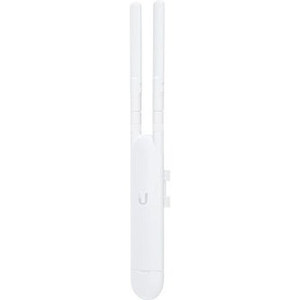
If your deployment requires standalone (controller-free) operation, Ubiquiti offers alternative access point families outside the UniFi controller ecosystem. If power budget is unlimited and density demands 802.11ax (WiFi 6), consider higher-performance variants in the UniFi catalog. If mounting must be strictly outdoor IP67-rated, this indoor-focused model is not the right fit.
Frequently Asked Questions
Q: Can the UAP-NANOHD-US operate without a UniFi Controller?
A: No. Controller adoption is required. Standalone operation is not supported. You must have UniFi Controller software running on-premises, in the cloud, or on a UniFi Dream Machine.
Q: What PoE switch specifications do I need to power the UAP-NANOHD-US?
A: Any managed or unmanaged Gigabit Ethernet switch with IEEE 802.3af PoE capability will power this unit. Standard 802.3af (15.4W per port) is sufficient; you don't need PoE+ (30W). Passive PoE injectors also work if you don't have a PoE switch.
Q: Is the UAP-NANOHD-US suitable for outdoor or wet environments?
A: No. This is an indoor access point. It is not rated for outdoor, high-humidity, or spray environments. For outdoor deployments, consult Ubiquiti's outdoor access point line.
Q: How many client devices can the UAP-NANOHD-US handle simultaneously?
A: The unit is designed for medium-density environments (typical recommendation: 30–50 concurrent wireless clients, depending on application throughput). In high-density scenarios (100+ clients per AP), plan for multiple access points or a model with higher aggregate throughput.
Q: Can I use the UAP-NANOHD-US with a third-party (non-Ubiquiti) NVR or VMS?
A: The access point itself is not a video device, so VMS compatibility is not relevant. The UAP-NANOHD-US provides wireless connectivity to other UniFi devices (including UniFi cameras and NVRs) but can also serve any standard WiFi client or wired Ethernet device on your network.
Q: What is the warranty on the UAP-NANOHD-US?
A: Refer to Ubiquiti's standard warranty terms for UniFi access points. Check with your reseller or contact Ubiquiti support for the specific warranty period and coverage details applicable to your purchase.
Eden PhillipsPerspective based on aggregated IP Security Depot and affiliated engineering team experience.
The Ubiquiti UAP-NANOHD-US is a form-factor play, not a performance outlier—and that's exactly where its value sits. We've deployed it in sub-5,000 sq ft retail spaces, multi-story hotels, and distributed branch networks where ceiling infrastructure and power budgets don't tolerate standard enterprise APs. The 2.2 lb chassis fits flush in existing ceiling cavities with minimal infrastructure rework, and the sub-13W power draw means your 802.3af PoE switch won't need a capex refresh. That matters at scale: a 10-site rollout saves real dollars on switching hardware.
Technical Highlights:
- 802.3af PoE under 13W: Draws less power than most PoE+ cameras, so power-constrained switches stay viable. Standard passive injectors work; no high-power infrastructure required.
- Dual-band 802.11ac Wave 2: Simultaneous 2.4 and 5 GHz with automatic band steering eliminates client confusion in high-density environments. Real benefit in hospitality hallways or retail floors.
- Nano form factor (2.2 lbs): Fits ceiling tiles, wall recesses, pole mounts without relocating existing infrastructure. Retrofit labor times drop to 3–4 hours per unit versus 1–2 days for repositioning larger APs.
Deployment Considerations:
- Controller dependency is non-negotiable: The UAP-NANOHD-US cannot function standalone. UniFi Controller must be running on-premises, cloud-hosted, or on a Dream Machine. This is a deal-breaker if you don't have controller infrastructure in place.
- Power budget planning is real: Each AP consumes under 13W, but ensure your PoE switch has aggregate capacity headroom. A 24-port 802.3af switch rated at 370W total can theoretically power ~28 units—but thermal and margin constraints suggest 18–20 APs per switch in production.
Best fit: standardized multi-site operators (5–50 APs across branches, hotels, or retail locations) who already run UniFi Controllers and need to minimize per-location infrastructure footprint and power expense. Not the choice for standalone deployment, outdoor exposure, or controller-free networks.