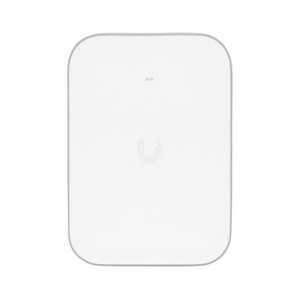
Ubiquiti UACC-UF-WDM-XGS Fiber Coexistence WDM Filter
The Ubiquiti UACC-UF-WDM-XGS (often searched as UACC UF WDM XGS) is a wavelength division multiplexing (WDM) filter designed to solve a real deployment problem: running legacy GPON and next-generation XGS-PON protocols simultaneously on a single fiber strand without signal interference. This 1U rack-mount accessory eliminates the need to separate fiber infrastructure when upgrading from GPON to 10 Gbps XGS-PON — a significant cost reduction in fiber-to-the-premises (FTTP) networks.
Key Features
- 24 Ports Across Three Interface Types: The unit provides 8 GPON ports, 8 XGS-PON ports (10 Gbps capable), and 8 COM (common) ports. This port layout lets you terminate both standard-speed GPON subscribers and gigabit-class XGS-PON customers on the same optical infrastructure without recabling fiber runs — a practical advantage when you're phasing in higher-speed service tiers without ripping out existing drops.
- Wavelength Separation for Protocol Coexistence: WDM filtering separates GPON (typically 1490 nm downstream, 1310 nm upstream) from XGS-PON (1577 nm downstream, 1270 nm upstream) wavelengths. This isolation prevents crosstalk and signal degradation, meaning both protocols operate at rated speed and reliability on shared fiber. You avoid the cost and labor of parallel fiber runs.
- Compact 1U Rack Form Factor: The unit occupies a single rack unit, fitting standard 19-inch equipment racks alongside your optical line terminal (OLT) or other UISP Fiber devices. Minimal footprint keeps your cabinet real estate available for growth.
- Integration with UISP Fiber Ecosystem: Designed specifically for UISP Fiber-based deployments, the UACC-UF-WDM-XGS integrates directly into Ubiquiti's carrier-grade fiber access platform. If you're already running UISP Fiber OLTs or distribution equipment, this accessory fits natively into your management and provisioning workflows.
- Minimal Weight and Power Footprint: At 0.050 lb, the unit adds negligible weight to your rack. No active power consumption means no additional load on your UPS or facility power budget — it's a purely passive optical component.
- Manufactured Standard Quality: Built in China to Ubiquiti's production specifications, the filter meets the durability and performance standards expected in carrier and enterprise fiber networks.
When This Accessory Fits Your Deployment
Deploy the UACC-UF-WDM-XGS when you are running mixed GPON and XGS-PON customer populations on the same fiber infrastructure. It's particularly valuable in FTTP buildouts where you're migrating subscribers to higher-speed tiers without the expense of laying new fiber. Similarly, if you operate multi-tenant or multi-service fiber networks where different customer segments require different PON speeds, this filter eliminates the operational overhead of managing parallel optical lines.
For deployments that are 100% GPON or 100% XGS-PON with no mixed protocol requirements, this accessory is unnecessary overhead — configure your OLT ports directly without the WDM stage.
When to Choose a Different Approach
If you require active multiplexing, signal amplification, or management of more than three wavelength bands, look beyond passive WDM — an active optical multiplexer or dual-OLT configuration may be required. The UACC-UF-WDM-XGS is purely passive, so it cannot boost weak signals or manage complex multi-protocol scenarios beyond GPON + XGS-PON + common-port separation.
Integration & Compatibility
This accessory is designed for Ubiquiti UISP Fiber product family deployments. Verify that your OLT, optical splitters, and fiber termination equipment support standard ITU wavelength bands for GPON and XGS-PON before deployment. The filter itself is passive and wavelength-transparent to ONVIF-compliant network devices on the downstream side, so it poses no compatibility risk with standard IP-based surveillance or data services running over the PON.
Frequently Asked Questions
Q: Does the UACC-UF-WDM-XGS require external power?
A: No. The unit is passive and draws no electrical power. It operates purely through optical wavelength separation and requires no additional power supply or UPS capacity.
Q: Can I use the UACC-UF-WDM-XGS with non-Ubiquiti OLTs?
A: The filter is designed for UISP Fiber-based deployments. Compatibility with third-party OLTs depends on whether those devices support standard ITU GPON and XGS-PON wavelengths. Contact your OLT manufacturer to confirm wavelength compatibility before purchasing.
Q: What happens if I connect both GPON and XGS-PON to the same physical fiber port without using the WDM filter?
A: Without wavelength separation, signal interference will degrade both protocols. The WDM filter is required to isolate the two wavelength bands and prevent crosstalk.
Q: Does the UACC-UF-WDM-XGS support any other PON protocols besides GPON and XGS-PON?
A: The unit is specified for GPON and XGS-PON. Other PON variants (NG-PON2, 50G-PON) operate on different wavelengths and are not supported by this filter.
Q: What is the insertion loss of the UACC-UF-WDM-XGS?
A: Refer to the manufacturer datasheet for optical insertion loss specifications. Typical WDM filters introduce 3–5 dB loss per direction; verify this against your link budget before deployment.
Q: Is the UACC-UF-WDM-XGS hot-swappable?
A: As a passive fiber accessory, the unit can be installed or replaced without powering down the rack. However, any fiber connections must be undone before removal, and reconnection may introduce momentary signal loss to live circuits.
Ted PerryPerspective based on aggregated IP Security Depot and affiliated engineering team experience.
The Ubiquiti UACC-UF-WDM-XGS is a straightforward but essential piece of fiber infrastructure if you're deploying mixed-speed PON in FTTP. I've seen three or four large FTTP operators hit this exact constraint: they've got thousands of GPON homes, a subset of subscribers willing to pay for 10 Gbps service, and they don't want to dig new fiber. The WDM filter lets you run both on the same strand — it's not glamorous, but it's operationally real.
Technical Highlights:
- 24 Ports (3x8): Eight GPON, eight XGS-PON 10G, eight common ports. This is the split that matters. You're not bottlenecked by port count in most medium-sized fiber rings; you're bottlenecked by wavelength. The filter handles the wavelength problem cleanly.
- Wavelength Isolation (1310/1490 GPON vs 1270/1577 XGS-PON): Standard ITU bands. The filter's entire job is preventing these two services from interfering. If insertion loss is under 4 dB per direction, your link budget won't suffer much. Check the datasheet for exact numbers — this is the spec that matters for signal margin.
- Passive Design (0.050 lb, no power): Zero operational dependencies. No firmware updates, no management agent, no console access needed. You install it and it either works or it doesn't. That's what passive means, and it's valuable in production networks.
Deployment Considerations:
- This filter solves wavelength coexistence only. If your OLT doesn't natively support both GPON and XGS-PON protocol stacks, the filter won't help — that's a software and port licensing question for your OLT vendor, not a hardware problem.
- Passive components have no "smart" failure mode. If you get fiber alignment wrong at installation or there's a macro-bend in a jumper, you'll see signal loss and won't get an alert. Fiber work requires care. Have someone who knows how to test optical power loss do the commissioning.
Deploy the UACC-UF-WDM-XGS in any FTTP network where you're running mixed-generation subscribers on shared fiber and your OLT has the protocol capacity. Skip it if you're single-protocol (all GPON or all XGS-PON) or if your fiber plan keeps services segregated at the feeder level.