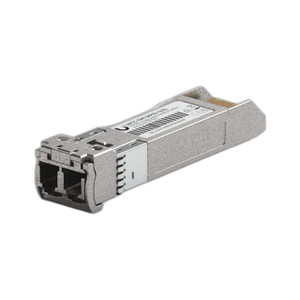
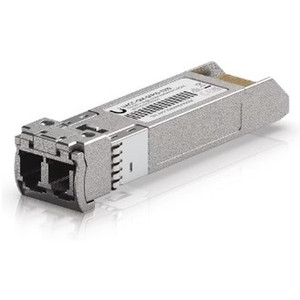
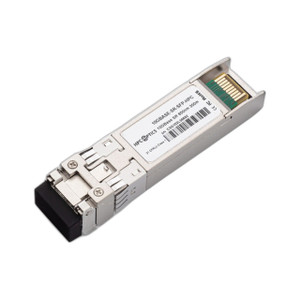
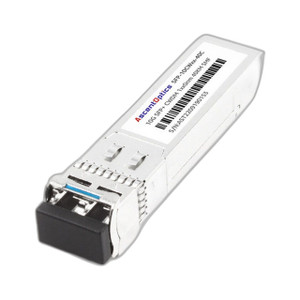
Ubiquiti UACC-OM-SFP10-1270 10G SFP+ CWDM Transceiver
The UACC-OM-SFP10-1270 is a 10 Gbps SFP+ optical transceiver module designed for CWDM (Coarse Wavelength Division Multiplexing) deployments on Ubiquiti switching and routing infrastructure. This module operates at 10 Gbps line rate and uses a 1270 nm wavelength channel, allowing you to multiplex multiple independent data streams across a single fiber pair by assigning different wavelengths to different channels — a cost-effective alternative to running separate fiber runs for each link.
Why Choose This Transceiver
CWDM architecture reduces fiber count and duct congestion in multi-site campus networks. By multiplexing up to 18 wavelength channels on a single fiber strand (in full CWDM deployments), you get bandwidth scaling without trenching additional fiber. The 10G line rate handles heavy aggregation traffic — typical for carrier-class equipment consolidation or data center interconnect scenarios where latency and throughput matter equally.
The module's industry-standard SFP+ form factor allows hot-swap installation into any Ubiquiti platform with SFP+ cage slots. No proprietary connectors, no firmware licensing per transceiver — plug, configure, run. Weight of 0.300 lbs and compact dimensions mean no mounting footprint penalties.
Key Features & Deployment Considerations
- 10 Gbps Data Rate: Handles saturation-level traffic across extended fiber links without packet loss or rate-limiting. Real-world throughput depends on switch fabric and client-side network adapters, but the transceiver itself does not bottleneck.
- 1270 nm Wavelength Channel: Assigned wavelength in the CWDM grid (typically 1270–1610 nm across 18 possible channels in 20 nm spacing). Verify wavelength compatibility with your CWDM plan and ensure opposite-end transceiver uses the same 1270 nm channel to avoid signal loss.
- SFP+ Cage Compatibility: Installs into any Ubiquiti switch, router, or optical transport device with SFP+ ports. Confirm port count and CWDM lane assignments before ordering — misconfiguration leads to no signal.
- Long-Distance Fiber Runs: Designed for multi-kilometer links (typical CWDM specs support 10–80 km depending on fiber type and loss). Campus backbone, inter-building links, and carrier peering connections are standard applications. Fiber quality, connector cleanliness, and splice loss directly affect real-world range.
- CWDM System Architecture Integration: Pairs with CWDM demultiplexers/multiplexers on each end of the fiber span. Requires optical planning — wavelength conflict or bad MUX/DEMUX alignment causes severe signal degradation. This is not a plug-and-play device for general Ethernet; it is a component of a planned optical system.
- Manufacturing & Build Quality: Manufactured in China per OEM spec. Standard commercial-grade transceiver construction — no exotic materials or military-grade hardening. Suitable for indoor data center and outdoor pole-mounted cabinet environments where temperature and humidity are controlled.
Integration Checklist
Before deploying the UACC-OM-SFP10-1270, confirm:
- Ubiquiti platform has available SFP+ ports and driver support for 10G optical transceivers.
- Opposite-end platform (router, switch, or optical demultiplexer) has a matching 1270 nm transceiver or is configured as part of a CWDM optical chain.
- Fiber type (single-mode preferred for CWDM; multi-mode will have much shorter range) is verified on both ends.
- Optical loss budget accounts for connector losses (~0.5 dB each), splice losses, and fiber attenuation (typically 0.25–0.35 dB/km for SM fiber at 1270 nm).
- Wavelength assignments in your CWDM system do not conflict. Running two 1270 nm signals on the same fiber pair causes crosstalk and data corruption.
What's in the Box
Transceiver module only. Installation assumes standard fiber optic handling practices: proper connector cleaning, anti-static precautions, and use of LC or SC connectors appropriate to your fiber infrastructure.
Frequently Asked Questions
Q: Can I use the UACC-OM-SFP10-1270 on non-CWDM fiber links?
A: No. This is a CWDM-specific transceiver designed for wavelength-division multiplexing systems. On a standard point-to-point fiber link without CWDM optics on the opposite end, there will be no signal. Use a standard 10G SFP+ transceiver if you need simple fiber-to-fiber connectivity.
Q: What is the maximum fiber distance supported by this transceiver?
A: CWDM transceivers at 1270 nm typically support 10–80 km depending on fiber type (single-mode vs. multi-mode), splice count, and optical loss budget. Measure end-to-end fiber loss with an optical power meter before deployment. This transceiver alone does not determine range — the entire optical path (fiber, connectors, splices, multiplexers) contributes to loss.
Q: Is the UACC-OM-SFP10-1270 hot-swappable?
A: Yes. SFP+ modules support hot insertion and removal while the Ubiquiti platform is powered on. Port traffic will drop briefly during swap. No firmware reload or platform reboot required.
Q: What Ubiquiti platforms support this transceiver?
A: Any Ubiquiti switch, router, or optical transport device with SFP+ cage slots. Verify your specific model documentation. Some platforms may require firmware updates or driver support for 10G optical recognition.
Q: Can I mix CWDM wavelengths on the same fiber pair?
A: Yes — that is the entire purpose of CWDM. Multiple wavelengths (each carrying separate data streams) can propagate on a single fiber strand. Wavelengths are spaced 20 nm apart in the CWDM grid, and an optical multiplexer/demultiplexer at each end combines and separates them. Ensure no two channels are assigned the same wavelength.
Q: What warranty applies to the UACC-OM-SFP10-1270?
A: Refer to your point of purchase terms. Ubiquiti hardware typically includes a 1-year manufacturer's warranty. Transceiver failures due to improper fiber connector cleaning, dust, or physical damage may not be covered.
Ted PerryPerspective based on aggregated IP Security Depot and affiliated engineering team experience.
The UACC-OM-SFP10-1270 is a purpose-built CWDM transceiver — not a general-purpose 10G optical module. Its 1270 nm wavelength channel is fixed, which means you are committing to a specific slot in a planned CWDM system. If you are scaling a campus backbone or data center interconnect and already have CWDM infrastructure in place, this module makes sense. If you are testing a single fiber link or need flexibility to repurpose transceivers across multiple wavelengths, you will find yourself re-architecting or buying additional inventory.
Technical Highlights:
- 10 Gbps Aggregate Throughput: Saturates 10 Gigabit Ethernet links without degradation. Useful for backbone aggregation where traffic bursts or sustained multi-camera streams are involved. Actual throughput depends on TCP window size and client-side adaptation, but the transceiver will not be the bottleneck.
- 1270 nm Wavelength Assignment: Fixed channel in the CWDM grid (18 total channels across 1270–1610 nm). Wavelength conflict (two transceivers on the same wavelength, same fiber) causes signal loss and errors. This is non-negotiable: wavelength planning must precede procurement.
- SFP+ Form Factor Density: Multiple 10G channels on a single platform (up to 12–48 SFP+ ports on large Ubiquiti switches) mean you can deploy many CWDM channels from one location without rack sprawl. Weigh this against the cost of CWDM multiplexer/demultiplexer equipment on each end.
Deployment Considerations:
- Optical System Dependency: This transceiver is one component of a CWDM chain. It cannot function alone. Budget for passive optical multiplexer/demultiplexer modules, fiber jumpers, connector terminations, and loss budgeting. Underestimating these costs is a common integration mistake.
- Fiber Type Matters: Single-mode fiber (SMF-28 or equivalent) is mandatory for long-distance CWDM. Multi-mode fiber will work for short runs (<2 km) but introduces chromatic dispersion penalties that degrade the 1270 nm signal rapidly. Confirm your fiber type before ordering.
- Connector Cleanliness is Non-Negotiable: Even small dust particles on LC or SC connectors cause insertion loss and reflection. Budget for fiber-optic cleaning supplies (alcohol, lens paper, inspection microscope) and operator training. A single bad connector can cost hours of troubleshooting.
Use the UACC-OM-SFP10-1270 in planned CWDM backbone expansions where wavelength inventory has been allocated, fiber type is confirmed as single-mode, and demultiplexer infrastructure is already installed or budgeted. Skip this if you are deploying a single test link or need to reuse transceivers across multiple fiber runs — the CWDM commitment is binding.