Ubiquiti UACC-OFC-MM-2M 2M Multimode Fiber Patch Cable
Overview
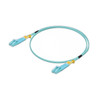
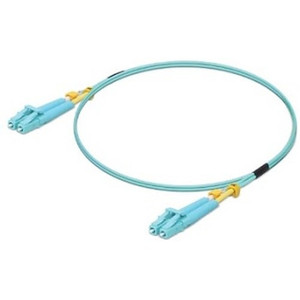
The Ubiquiti UACC-OFC-MM-2M is a 2-meter multimode fiber optic patch cable engineered for short-run optical connectivity in data centers, network closets, and Ubiquiti optical infrastructure deployments. The cable features LC Duplex connectors and a 50/125 micron core diameter — the standard for enterprise-grade multimode runs under 2 km. The aqua-colored jacket provides visual differentiation in dense fiber arrays, reducing connection errors during installation and troubleshooting. This accessory is purpose-built for environments where quick fiber interconnect changes are frequent and precision matters.
Key Specifications & Deployment Benefits
- LC Duplex Connector Type: Compact and latching LC connectors reduce insertion loss and maintain consistent optical alignment across connect/disconnect cycles — essential in active data center patch bays where cables are moved during maintenance or reconfiguration.
- 50/125 Micron Core Diameter: This multimode profile is the industry standard for short-distance runs (up to 2 km) and offers superior bend radius tolerance compared to single-mode. It absorbs microsecond timing variations without significant power loss, making it forgiving in rack-to-rack or cabinet-to-cabinet patches where conduit routing isn't always perfect.
- 2-Meter Length: Sized for patch panel to switch or SFP-to-SFP interconnects within a single rack or adjacent equipment. Eliminates excess coil-up that creates heat and stress on connectors; short enough to avoid signal degradation over the run.
- Aqua Jacket Material: Highly visible jacket color cuts installation mistakes in mixed fiber environments. When multiple vendors' cables exist in the same cabinet, color-coding by function (aqua for Ubiquiti UniFi optical) speeds problem isolation and reduces MTTR during outages.
- UniFi Infrastructure Integration: Designed for Ubiquiti equipment with LC Duplex SFP+ or SFP28 ports. Pairs directly with Ubiquiti's optical line cards and fiber-to-Ethernet bridges without requiring intermediate adapters or mode converters.
Compatibility & Integration
The UACC-OFC-MM-2M (often searched as UACC OFC MM 2M) is compatible with any Ubiquiti UniFi device featuring LC Duplex optical ports — including optical line modules, SFP+ transceiver slots, and dedicated fiber uplink interfaces. It also works with any third-party networking equipment using standard LC Duplex multimode connections; this is not a proprietary connector, so interoperability with non-Ubiquiti switches or patch panels is straightforward. Verify your SFP module or optical interface supports 850 nm wavelength, which is the standard for multimode fiber — virtually all enterprise multimode equipment does, but confirm before ordering if integrating older legacy optical infrastructure.
When to Choose a Different Cable
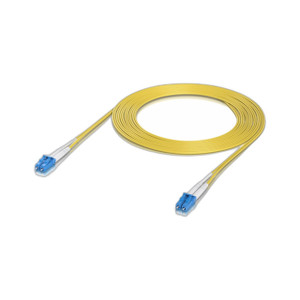
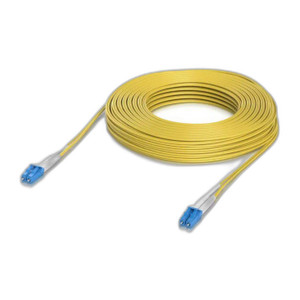
If your run exceeds 2 meters, consider a longer multimode variant in the same Ubiquiti accessory family. If you require runs longer than 2 km or need lower latency in ultra-long-distance links, single-mode fiber (typically yellow jacket, SMF core) is necessary — that requires different SFP transceivers and is not interchangeable with this multimode cable. For applications requiring absolute dust and moisture immunity in outdoor or damp enclosures, verify that your termination methodology (e.g., panel-mount feedthrough design) includes physical sealing; fiber itself doesn't degrade from moisture, but connectors can oxidize if exposed.
Frequently Asked Questions
Q: Can I use the UACC-OFC-MM-2M with non-Ubiquiti equipment?
A: Yes. This cable uses industry-standard LC Duplex multimode connectors. It will work with any network switch, patch panel, or optical module with matching LC Duplex 50/125 µm ports — Ubiquiti, Cisco, Arista, Juniper, etc. No special drivers or firmware required.
Q: What is the insertion loss of this cable?
A: Insertion loss for a 2-meter multimode patch cable is negligible — typically under 0.1 dB. At this short distance, signal degradation is not a limiting factor. Refer to the cable datasheet for exact measurements if required for certification testing.
Q: Is the UACC-OFC-MM-2M suitable for outdoor or harsh-environment routing?
A: No. This is a patch cable with standard jacket material, not rated for outdoor UV exposure, extreme temperature cycling, or direct sunlight. Use it inside equipment racks, cable trays, or conduit within climate-controlled spaces. For outdoor runs, specify outdoor-rated armored or conduit-protected fiber.
Q: Can I extend the 2-meter run with another patch cable?
A: Yes. You can daisy-chain two patch cables using an LC Duplex mating sleeve (coupler). However, each additional connector adds ~0.1 dB loss. For permanent longer runs, a single continuous cable is preferred; for temporary or staged deployments, couplers are acceptable if total loss remains within your optical module's sensitivity margin.
Q: Does the aqua color affect optical performance?
A: No. Jacket color is cosmetic and aids identification only. Optical performance is determined by core diameter, cladding, and connector quality — all standard across Ubiquiti's multimode line.
Ted PerryPerspective based on aggregated IP Security Depot and affiliated engineering team experience.
The UACC-OFC-MM-2M is a straightforward, spec-compliant multimode patch cable with no hidden surprises — which is exactly what you want in fiber infrastructure. At 2 meters with a 50/125 µm core, it handles the most common data center patch scenario: switch to optical module, or optical uplink card to patch panel. The aqua jacket saves real troubleshooting time when you're staring at a tangle of cables under a rack.
Technical Highlights:
- LC Duplex Latching Connectors: Reduces accidental disconnection and maintains alignment repeatability across dozens of connect/disconnect cycles — critical in active SFP bays where firmware upgrades or card swaps demand frequent reseating.
- 50/125 µm Multimode Core: Industry standard for short-haul runs (under 2 km). Delivers ~0.3 dB/km attenuation at 850 nm, meaning a 2-meter run sees virtually zero signal loss — optical module sensitivity is never the constraint at this distance.
- 2-Meter Length: Minimizes coil volume in tight rack spaces and avoids the signal-bending stress that comes from excessive slack. Long enough to route around obstacles; short enough to prevent accidental foot traffic damage.
Deployment Considerations:
- SFP Transceiver Pairing: Confirm your upstream optical module (SFP+, SFP28, or equivalent) supports 850 nm multimode wavelength. Nine times out of ten it does — that's the Ubiquiti default — but old enterprise hand-me-downs sometimes have single-mode transceivers installed. A single-mode transceiver on multimode fiber is a fast path to failure.
- Connector Maintenance: LC connectors are tight-tolerancing. Dust on the ferrule or incorrect mating sleeve alignment causes signal loss and module errors. Keep dust caps on unused ports; wipe connector ends with lint-free fiber optics swabs if you move cables frequently.
The UACC-OFC-MM-2M is your standard reach: use it for any Ubiquiti optical uplink that sits 2 meters or less away from the main patch panel. If you're building a fiber backbone across a warehouse or multi-floor facility, it's not the right tool — spec single-mode runs for distance. But for rack-to-rack interconnects, modular optical line cards, and SFP hot-swap scenarios, this cable is the no-drama choice.