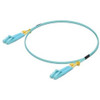
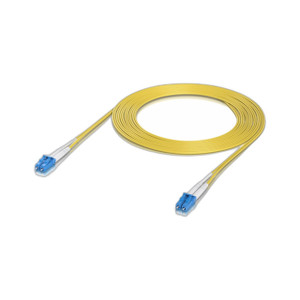
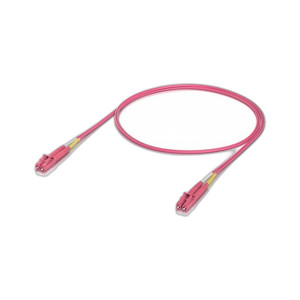
Ubiquiti UACC-OFC-MM-1M 1M OM3 Multimode Duplex LC Fiber Cable
Overview
The Ubiquiti UACC-OFC-MM-1M is a 1-meter OM3 multimode duplex LC fiber optic cable engineered for short-distance fiber runs in enterprise network infrastructure. Rated for 9 Gbps throughput, this cable connects optical transceivers, switches, and backbone equipment in data centers and campus deployments where reliable, low-latency signal transmission is non-negotiable. The 50/125 micron core diameter is the industry standard for multimode fiber, balancing distance capability with cost-effectiveness on runs under 300 meters — typical for equipment racks, network cabinets, and inter-floor backbone connections.
Key Features
- OM3 Multimode Specification: OM3 is rated for 10 Gbps over 300 meters, but at 1 meter the UACC-OFC-MM-1M operates with zero meaningful distance loss. This means you get full rated throughput with zero latency penalty — a critical detail when connecting high-speed optical interfaces in the same equipment room or adjacent racks.
- 50/125 Micron Core: This is the standard core size for modern multimode installations. It's wider than single-mode fiber (9 micron), which makes connection and splicing easier and more forgiving during deployment. Tolerates slight misalignment at the LC connectors without signal degradation.
- 9 Gbps Throughput Rating: Supports 10 Gigabit Ethernet (10GbE) at short distances, with headroom for real-world environmental variation. If you're running 10 Gbps interfaces, this cable will not be the bottleneck — assuming proper connector seating and no physical damage.
- LC Duplex Connectors: LC (Lucent Connector) is the de facto standard in modern fiber networks and data centers. Duplex configuration means two fibers (transmit and receive) in a single compact connector housing, reducing port footprint on optical switches and transceivers. Much smaller than older SC connectors, enabling higher port density on equipment.
- 1-Meter Length: Short enough for patch-cable runs between adjacent equipment, long enough to avoid tight coil stress during installation. At 1 meter, you avoid excess slack in congested cable trays while maintaining enough flex for equipment repositioning without re-terminating.
- Ubiquiti UniFi Compatibility: Integrates with Ubiquiti's optical networking line and any standard LC duplex-equipped optical interface. Not proprietary; works with any vendor's 50/125 multimode optical ports, so you're not locked into a single ecosystem.
Integration & Compatibility
The UACC-OFC-MM-1M (often searched as UACC OFC MM 1M) is compatible with any optical transceiver or switch port equipped with standard LC duplex connectors rated for multimode fiber. This includes Ubiquiti IP networking equipment, mainstream optical switches from Cisco, Juniper, Arista, and others. Use this cable for backbone runs between switches, NVRs, or fiber-fed network appliances. The 50/125 core and OM3 specification are standard in enterprise and campus infrastructure — no exotic equipment required. Verify that your receiving optical interface supports multimode fiber (not single-mode); single-mode interfaces will not function correctly with this multimode cable.
Frequently Asked Questions
Q: Can I use this cable for longer runs, like between buildings?
A: Not recommended. OM3 fiber is rated for 9 Gbps up to 300 meters, but signal quality degrades with distance and environmental stress (temperature swings, UV exposure). For inter-building runs, use dedicated outdoor-rated single-mode fiber or conduit-protected multimode runs with proper testing.
Q: Is this cable backwards-compatible with OM2 fiber?
A: Physically, yes — the connectors are the same. However, OM3 and OM2 have different performance profiles. Mixing them on the same backbone run can create speed inconsistencies. Keep OM3 cables paired with OM3-rated equipment for predictable performance.
Q: What's the maximum bend radius, and will coiling during installation damage the fiber?
A: Multimode fiber is more forgiving than single-mode on bend radius. Avoid sharp kinks and tight coils during installation, but normal patch-cable handling (loose coils, reasonable cable trays) will not cause micro-fractures. Extreme bending can introduce attenuation; treat it like any other optical cable.
Q: Do I need to terminate this cable myself, or does it come pre-terminated?
A: The UACC-OFC-MM-1M comes pre-terminated with factory LC connectors on both ends. No field termination required — plug and test.
Q: How do I test this cable after installation?
A: Use an optical power meter or fiber optic light source to verify signal presence at both ends. A basic continuity test confirms the fiber is not broken; a power meter confirms loss is within spec (<0.5 dB for 1-meter OM3 at 850nm). Your optical switch or transceiver will also report link status and power levels.
Ted PerryPerspective based on aggregated IP Security Depot and affiliated engineering team experience.
The UACC-OFC-MM-1M is a straightforward multimode patch cable optimized for short-distance 10 Gbps backbone runs. The OM3 50/125 spec is table-stakes for enterprise fiber infrastructure — if you're deploying optical backbone equipment in the same room or adjacent racks, this cable will deliver rated throughput without distance penalty. Key advantage: pre-terminated LC connectors eliminate field termination hassle, reducing installation risk and downtime.
Technical Highlights:
- OM3 Specification (9 Gbps rated): Supports 10 Gigabit Ethernet at full speed on 1-meter runs. No attenuation or latency hit at short distance — the cable will not be your bottleneck.
- 50/125 Micron Core: Standard multimode core size, easier to align and more forgiving than single-mode during connector seating. Tolerates typical data-center handling without micro-fractures.
- LC Duplex Connectors: Compact, high-density standard in modern switches and optical interfaces. Full duplex (TX/RX on one connector) reduces port footprint and simplifies cable management in congested cabinet runs.
Deployment Considerations:
- Multimode fiber is distance-limited compared to single-mode. At 1 meter this is irrelevant, but do not stretch this cable beyond equipment-room patches. For inter-building or long-distance runs, spec single-mode fiber instead.
- Verify that receiving optical interfaces support multimode (not single-mode only). Plugging into a single-mode SFP will result in link failure — the fiber types are optically incompatible.
- Pre-terminated connectors are a deployment win, but ensure both connector ends are clean and undamaged before insertion. Dust or micro-scratches on the ferrule can introduce signal loss or equipment damage.
Deploy the UACC-OFC-MM-1M on high-speed optical backbone segments where speed and plug-and-play simplicity matter more than distance range — rack-to-rack fiber feeds, NVR-to-switch connections, or optical appliance-to-backbone bridging. Not suitable for long campus runs or outdoor installations.