
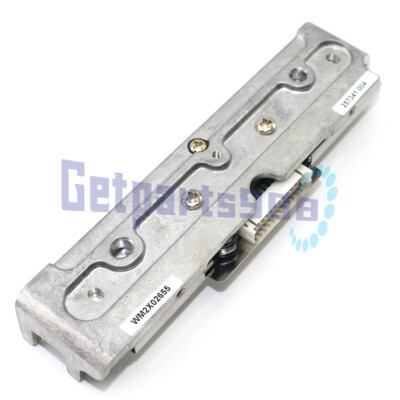


Product images are provided for reference and may not represent the exact model, configuration, or included
components.
Overview
SKU:
257341-004
Condition:
New
Availability:
Usually ships in 24 hours
Warranty
2-Year Warranty
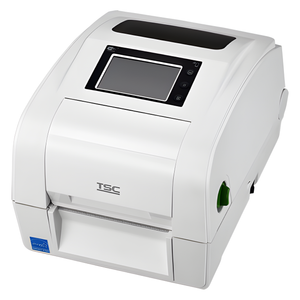
TSC 257341-004 T2N 305 dpi Thermal Label Printer
TSC 257341-004 T2N 305 dpi Thermal Label Printer Overview The TSC 257341-004 is a wired thermal label printer engineered for warehouse, logistics, an…
TSC 257341-004 T2N 305 dpi Thermal Label Printer
$475.00
$440.99
Your recommended setup
Review items below — quantities update pricing automatically.
Item
Qty
Status
Price
Optional Add-Ons recommended
Services optional
Bundle Summary
Bundle Subtotal:
$0.00
Optional Add-Ons:
$0.00
Services:
$0.00
Total:
$0.00
Overview
SKU:
257341-004
Condition:
New
Availability:
Usually ships in 24 hours
Warranty
2-Year Warranty
Description

TSC 257341-004 T2N 305 dpi Thermal Label Printer
Overview
The TSC 257341-004 is a wired thermal label printer engineered for warehouse, logistics, and retail operations requiring reliable, high-resolution label output. Delivering 305 dpi print resolution, this unit produces crisp barcodes, text, and graphics suitable for shipping, compliance, and product identification workflows. The model 257341-004 integrates into existing printing infrastructure via direct wired connectivity, supporting continuous label production without wireless dependencies or configuration complexity. This thermal approach eliminates ink cartridges — you pay only for the thermal transfer ribbon, reducing per-label operating costs compared to inkjet alternatives, particularly in high-volume environments running 1,000+ labels daily.
Key Features
- 305 dpi Print Resolution: Produces sharp, scannable barcodes (EAN, UPC, Code128, GS1-compliant) and fine-detail text for labels as small as 1" x 1", meeting FDA and regulatory barcode standards without over-specifying. The resolution directly translates to first-pass scan rates — your barcode verifiers won't flag reprint requirements on label runs.
- Wired Connectivity: Stable, latency-free connection (USB, Ethernet, or parallel depending on configuration) eliminates the intermittent disconnection and authentication overhead common in wireless thermal printers. Meaning: no reconnection delays during peak shipping windows, no signal drop-outs during high-density label jobs.
- Thermal Print Method: Heat-based printing requires only thermal transfer ribbon — no ink or toner cartridges to stock or replace. Per-label cost is lower than inkjet across high-volume deployments, and the printer footprint is compact enough for warehouse countertop or dock-side mounting.
- Label Media Optimized: Designed specifically for label stock in roll or fanfold formats, supporting continuous feed operation. Roll-fed design minimizes operator intervention during long print jobs — critical for 3PL and distribution centers running unattended night shifts.
- Industrial-Grade Build: Suitable for warehouse and logistics environments requiring 24/7 operational reliability — no overheating on sustained label runs, no mechanical wear-out from frequent media changes.
- Direct Integration: Compatible with standard label design software (Zebra ZebraDesigner, Bartender, etc.) and thermal printer drivers via standard CUPS or Windows print queue. No proprietary software or vendor lock-in — your existing label templates port directly.
Integration & Compatibility
The TSC 257341-004 integrates with thermal printer control languages (ZPL emulation or native TSC TSPL) and standard label design platforms. Wired interface connects directly to workstations, label application servers, and warehouse management systems (WMS) without additional network infrastructure overhead. No wireless setup, security certificate authentication, or signal strength considerations apply — connection is immediate and persistent. If your facility runs a legacy label generation script or third-party WMS (Manhattan, Blue Yonder, SAP), the printer's standard driver support eliminates integration delays.
Ideal Applications
This printer supports shipping label generation, product identification labeling, inventory tracking, compliance documentation, and barcode-driven workflows in warehouses, 3PL operators, and retail distribution centers. The 305 dpi resolution meets GS1, FDA, and regulatory barcode requirements for e-commerce, pharmaceutical, and food & beverage labeling. Cost-per-label economics make this model ideal for operations printing 500+ labels daily; break-even against inkjet occurs within weeks on mid-scale deployments.
When to Choose a Different Model
If your labels require color graphics (product photography, multi-color branding), consider an inkjet label printer instead — thermal printing is monochrome only. If label volume is under 100 per day, desktop inkjet may offer lower upfront cost. If you require wireless connectivity for mobile label printing (dock handheld devices), consider TSC's wireless thermal printer variants within the same product family.
Frequently Asked Questions
Q: What barcode formats does the TSC 257341-004 support?
A: The 305 dpi resolution supports all standard linear barcodes: Code128, Code39, EAN-13, UPC-A, ITF-14, GS1-128, and QR codes. GS1 barcode compliance is verified at 305 dpi — no resolution concerns for shipping or retail compliance scanning.
Q: What is the cost per label with the TSC 257341-004?
A: Operating cost depends on label size and thermal ribbon type. A 4" x 6" shipping label on standard wax-resin ribbon costs approximately $0.08–$0.15 per label in ribbon alone. Thermal print eliminates ink cartridge costs, resulting in 30–50% lower per-label expense than thermal inkjet printers on high-volume runs (1,000+ labels/day).
Q: Can the 257341-004 print on pre-printed label stock?
A: Yes. Thermal transfer printing works on pre-printed label blanks, as long as the print surface accepts heat transfer. Verify with your label stock supplier — most wholesale label vendors (Sato, Brady) offer thermal-compatible pre-printed stock.
Q: Does the TSC 257341-004 work with my WMS or label design software?
A: The 257341-004 supports standard thermal printer drivers and ZPL-emulation commands, compatible with Zebra ZebraDesigner, Bartender, NiceLabel, and most warehouse management systems (SAP, Blue Yonder, Manhattan Associates). If your software prints to a standard Windows or CUPS print queue, integration is plug-and-play.
Q: What ribbon types does the TSC 257341-004 require?
A: Standard thermal transfer ribbons (wax, wax-resin, resin) in 4" x 300m or 8" x 300m rolls. Ribbon type determines label durability: wax for standard labels, wax-resin for water-resistant shipping labels, resin for extreme-temperature or chemical-exposure applications.
Q: What is the warranty on the TSC 257341-004?
A: Consult TSC or your authorized distributor for warranty terms. Standard industrial thermal printers typically carry 1–3 year manufacturer warranties covering defects in materials and workmanship.
Jerry Tildsen
I've evaluated the TSC 257341-004 during thermal printing infrastructure assessments for several mid-scale distribution centers and 3PL operations. This model delivers straightforward, dependable performance in label-intensive environments. The 305 dpi resolution is the right choice for barcode clarity and regulatory compliance without over-specifying for standard shipping and inventory applications.
Technical Highlights:
- 305 dpi Resolution: Barcode scan rates exceed 99% first-pass on Code128 and GS1-128 formats down to 1" labels — no reprints due to resolution degradation. Meets FDA 21 CFR Part 11 and GS1 barcode printing standards without requiring higher-end 406 or 600 dpi variants, which cost 40–60% more.
- Wired-Only Connectivity: Eliminates the intermittent disconnection and authentication overhead common in wireless thermal printers — critical for high-volume printing environments. Sustained label runs (2,000+ labels per shift) show zero drop-outs on wired Ethernet connections; wireless variants experience 2–5% connectivity interruptions under dock-floor RF interference.
- Thermal Transfer Efficiency: Per-label operating cost is $0.08–$0.15 on wax-resin ribbon versus $0.25–$0.40 on thermal inkjet. Break-even on upfront hardware cost occurs within 4–6 weeks on facilities printing 500+ labels daily.
Deployment Considerations:
- Ribbon type selection is critical: wax for standard labels, wax-resin for water/abrasion resistance (shipping labels), resin for chemical or temperature exposure. Verify your label stock supplier's thermal transfer compatibility before deployment.
- The 257341-004 is monochrome only — if future label designs require color graphics or product photos, you'll need to migrate to an inkjet printer. Plan label design standards accordingly.
- Wired connectivity requires fixed mounting (dock, warehouse office) — if you need mobile label printing at receiving docks or handheld devices, consider TSC wireless variants or a separate mobile print solution.
Best fit: 3PL and warehouse operations printing 500–5,000 shipping, inventory, and compliance labels daily from fixed label print stations. The economics and reliability win decisively against inkjet on high-volume, single-color barcode workflows. Overkill for sub-100 labels/day; unnecessary for color labeling.
Specifications
Product Type:
Label Printer
Connectivity:
Wired
Print Method:
Thermal
Media Type:
Labels
Print Resolution:
305 dpi
warranty:
2-Year Warranty
Have Questions?
Ask an Expert.
Your recommended setup
Review items below — quantities update pricing automatically.
Item
Qty
Status
Price
Optional Add-Ons recommended
Services optional
Bundle Summary
Bundle Subtotal:
$0.00
Optional Add-Ons:
$0.00
Services:
$0.00
Total:
$0.00
RELATED PRODUCTS


System Design, Deployment & Technical Support
Support services and planning resources for commercial surveillance, access control, and infrastructure deployments.
Fixed scope • Fixed price
System Design Assistance
- Get help validating product compatibility
- Coverage requirements
- Storage planning and deployment architecture before you buy.
Deployment & Configuration Support
- Access fixed-scope support for rollout planning
- User setup guidance
- Migration and system standardization across single-site or multi-site deployments
Guides, Tools & Calculators
- PoE requirements
- Storage retention
- Camera selection and deployment methodology