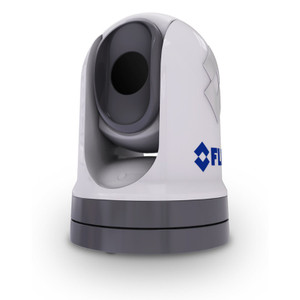
FLIR 427-0102-31-00 Triton FH-669 ID - 9MM
When perimeter security demands positive identification at distance in complete darkness, thermal imaging becomes non-negotiable. The FLIR Triton FH-669 ID with 9mm lens delivers the detection and recognition performance required for critical infrastructure, industrial facilities, and high-security perimeters where knowing what triggered an alarm determines the appropriate response. This thermal camera provides continuous thermal surveillance regardless of lighting conditions, weather, or visual obstructions.
Key Features
- Thermal imaging technology for 24/7 surveillance independent of visible light
- 9mm lens configuration optimized for mid-range identification tasks
- Triton FH-669 ID platform designed for demanding outdoor environments
- Eliminates false alarms from shadows, headlights, and reflections that plague visible cameras
- Detects heat signatures through light fog, smoke, and dust
- Reduces infrastructure costs by eliminating external illumination requirements
- Integrates with standard IP video management systems
- Ruggedized housing suitable for industrial and perimeter deployments
The FH-669 ID addresses the fundamental limitation of conventional cameras: they need light to function. In applications where lighting is impractical, cost-prohibitive, or tactically undesirable, thermal imaging provides a physics-based solution. Heat signatures from humans and vehicles appear clearly against cooler backgrounds, making intrusion detection reliable across all conditions. The 9mm lens strikes a balance between coverage area and identification distance, suitable for gate monitoring, facility perimeters, and areas where you need to identify rather than simply detect.
Deployment is straightforward for integrators already working with IP camera infrastructure. The Triton platform outputs standard network video streams compatible with leading VMS platforms, and the absence of required illumination simplifies both installation planning and long-term operating costs. For facilities managing multiple environmental challenges—dust from industrial processes, coastal fog, or simply the cost of lighting large perimeters—thermal imaging shifts the economic calculation. You're specifying a camera that works when visible-light solutions fail, providing the classification data security teams need to make informed decisions.