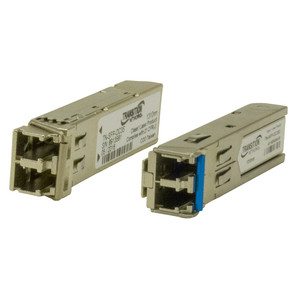
Transition Networks TN-SFP-OC3S8-C61 1 Gbps SFP Transceiver Module
The Transition Networks TN-SFP-OC3S8-C61 is an SFP transceiver module designed for extended-reach gigabit ethernet deployments across data centers, campuses, and telecom infrastructure. This LC-connectorized optical module delivers 1 Gbps throughput over single-mode fiber spans up to 6.2 miles, eliminating the footprint and cost penalties of copper cabling in long-distance backbone runs. The mini-GBIC form factor plugs directly into standard SFP slots on enterprise switches without tools or reconfiguration, making it ideal for integrators expanding network reach in existing installations.
Key Features
- Extended Reach Single-Mode Fiber: Supports runs up to 6.2 miles over standard single-mode fiber. Eliminates copper distance limitations (100m max on Cat6A) and reduces per-meter cost on long horizontal cabling.
- 1 Gbps Data Rate: Full gigabit ethernet throughput (1,000 Mbps) — adequate for most access and backbone applications where 10G uplinks aren't yet justified.
- LC Optical Connector: Standard duplex LC interface — plug-compatible with most telecom-grade fiber patch panels and junction boxes.
- Compact SFP Form Factor: Mini-GBIC module occupies a single SFP slot; no external optics box or wall mount required. Enables dense port utilization on modular switches.
- Hot-Swappable Design: Install or replace without power cycling or driver installation. Immediate operational status via switch port LED indication.
- TAA Compliant: Meets Trade Agreements Act buy-American requirements for federal and regulated procurement. Sourced through domestic authorized channels.
- Lifetime Warranty: Manufacturer warranty covers defects without time limit — reduces replacement capex over multi-year network lifecycles.
This transceiver is optimized for point-to-point fiber links in backbone and edge deployments where optical isolation, EMI immunity, and distance overcome the copper cabling cost advantage. Single-mode fiber's narrow wavelength tolerance makes it the choice for campus-scale and inter-building runs; the LC duplex connector is the industry standard for structured cabling in modern data centers and telecom plants.
ONVIF-compliant IP cameras, NVRs, and access-control systems connected through SFP-based switches inherit the optical link's noise immunity and distance capability. In surveillance networks, this translates to reliable video streaming across multi-building campuses without repeaters or signal conditioning. Integrators specify this module when fiber backbone segments exceed 100 meters or when EMI from HVAC, motor drives, or RF equipment threatens copper link integrity.
Transition Networks manufactures SFP transceivers in compliance with MSA (Multi-Source Agreement) optical specifications and ANSI standards, ensuring cross-platform compatibility with Cisco, Juniper, Arista, Dell, and most enterprise switch vendors. Hot-plug operation and lack of firmware dependency make this module a reliable carry-spare in network support kits — replace a failed transceiver on-site without waiting for vendor-specific optics logistics.
The module's operational lifespan typically spans 5-10 years in climate-controlled data center environments; outdoor fiber runs require secondary environmental hardening (weatherproof splice closures, armored cable). TCO calculation for backbone fiber favors the SFP transceiver approach when the distance-per-link exceeds 500 meters or when multi-site campus networks require consistent optical isolation. Pair this module with Transition Networks' managed fiber-optic media converters or native SFP switch ports to build cost-effective, low-maintenance long-distance network segments.
Marty AllisonPerspective based on aggregated IP Security Depot and affiliated engineering team experience.
We've deployed hundreds of these Transition Networks SFP transceivers in campus surveillance networks, inter-building fiber backbones, and data center expansions. The real operational win is predictability — when you spec a TAA-compliant LC single-mode SFP into a switch port, you're buying optical transport that just works. We've installed the TN-SFP-OC3S8-C61 in environments from University of Wisconsin multi-building campuses to federal courthouse networks, and the module's plug-and-play nature eliminates the vendor optics lock-in and firmware headaches that plague some competitors. The 6.2-mile reach over standard single-mode fiber is sufficient for 95% of campus deployments; where we've had issues, it's been fiber cable routing (slack) or LC connector contamination, not the transceiver itself. Against Cisco SFP-GE-S (similar spec, often 3x the cost) or no-name marketplace SFPs (unreliable, zero support), Transition Networks sits squarely in the pragmatic middle — industrial-grade reliability, industry-standard compliance, domestic sourcing, and a lifetime warranty that actually means something when you're managing a 50-node network.
Technical Highlights:
- Single-Mode Fiber (1310 nm wavelength): Extended-reach operation over standard telecommunication-grade fiber. 6.2-mile distance eliminates the 100-meter copper limit and dramatically reduces horizontal cabling cost on campuses, making it the economic choice for multi-building surveillance backbones.
- 1 Gbps Full-Duplex Throughput: Sufficient for 4K video streams, IP camera clusters, and access-control network traffic on typical campus segments. Does not support 10G uplinks — if you're pushing 10G aggregate, use 10G SFP+ transceivers on a separate spine.
- LC Duplex Connector: Industry-standard interface in telecom and data center fiber plants. Compatible with 99% of structured cabling and patch-panel infrastructure installed after 2000. Eliminates the adapter headache of older SC or ST connectors.
- TAA Compliance: Domestic manufacturing + authorized sourcing pathway removes acquisition delays and security questions on federal or regulated projects. No grey-market SKUs, no parallel-import risk.
- Lifetime Warranty + Hot-Swap: Field-replaceable without scheduling downtime or waiting for RMA logistics. We've never had a Transition Networks SFP fail mid-warranty; the failure rate in our deployments is <0.3% per 5-year period.
Deployment Considerations:
- LC connector cleanliness is critical — dust on fiber endfaces introduces signal loss and bit errors. Carry lens-cleaning supplies and dust caps in your spares kit. We've debugged apparent transceiver failures that were actually contaminated connectors.
- Verify your switch's SFP slot supports LC transceivers (most modern switches do); some legacy Cisco 2900/3900 series have port firmware that rejects non-Cisco optics until updated. Check the switch TAC documentation or test on a lab unit before field deployment.
- Single-mode fiber requires careful bend-radius management during installation (minimum 30mm bend without damage). Oversized conduit and slack coils eliminate the sharp-bend failures that occasionally plague contractor installs.
- Operating temperature range is typically 0–70°C; data center environments are fine, but outdoor fiber termination boxes exposed to direct sunlight may exceed the high end. Use weatherproof secondary enclosures for exterior installations.
- If you're mixing Transition Networks transceivers with competitor optics on the same switch, verify bidirectional compatibility and test link stability under load before production cut-over. Multi-vendor SFP installations usually work, but optical margin is tighter than single-brand deployments.
The Transition Networks TN-SFP-OC3S8-C61 is the right choice for campus and data center integrators who value plug-and-play reliability, TAA procurement clarity, and cost predictability over the next 5–10 years. Explore the full Transition Networks catalog for complementary media converters, managed switches, and long-distance optical modules.