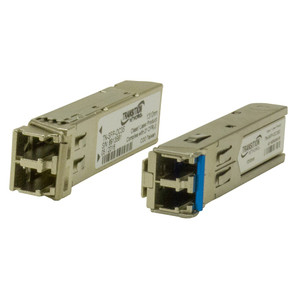
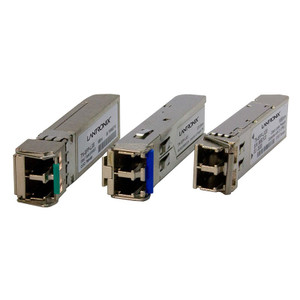
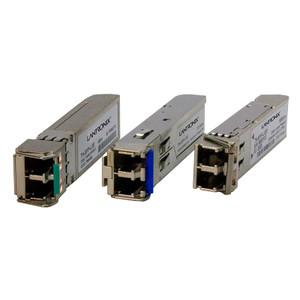
Transition Networks TN-SFP-LX20 1.25G SFP Transceiver Module
The Transition Networks TN-SFP-LX20 is a 1.25G SFP (Small Form-factor Pluggable) transceiver module designed for multimode fiber connectivity in enterprise switching and data center infrastructure. Operating at 1550nm wavelength, the TN-SFP-LX20 delivers Gigabit-class throughput with the optical characteristics optimized for long-distance multimode runs. The module integrates directly into any standard SFP-compatible switch port or network adapter, eliminating the need for external media converters or proprietary form factors. This plug-and-play design accelerates network expansion and simplifies procurement across heterogeneous switching platforms.
Key Features
- 1.25 Gigabit Speed: Full-duplex Gigabit Ethernet throughput. Sufficient for aggregation uplinks, inter-switch fiber backhaul, and camera NVR connections without bandwidth choking.
- 1550nm Wavelength, Multimode Fiber: Extended optical range on OM3/OM4 multimode cabling—typical reach 2 km+. Pairs seamlessly with existing multimode fiber infrastructure already deployed in many campuses.
- Standard SFP Mini-GBIC Form Factor: Fits any SFP-slotted switch, NVR appliance, or network interface card. No proprietary modules, no locked ecosystems.
- Plug-and-Play Interoperability: Works with Transition Networks switches, third-party managed switches (Cisco, Juniper, Arista, Dell), and legacy equipment supporting standard SFP modules. Reduces integration overhead.
- Lifetime Warranty: Factory-backed coverage with no time limit. Reflects confidence in long-term module reliability.
- IEC-60825 & FDA Optical Safety Compliance: Meets international laser safety standards (CFR 1040.10/1040.11, 37.0 dB). Certified for safe deployment in access-controlled and uncontrolled environments.
- Compact Module Design: Reduces physical footprint in high-density switch chassis. Supports fan-out port counts without thermal or spatial constraints.
The TN-SFP-LX20 addresses a common infrastructure pain point: extending Gigabit connectivity across campus fiber runs without capital-intensive upgrades to 10G optics or proprietary transceiver lock-in. Multimode fiber is already installed in most multi-building deployments; swapping in a 1550nm SFP module unlocks 1–2 km reach at a fraction of the cost of single-mode infrastructure. For video surveillance systems where NVRs are fiber-connected to remote switch aggregation points, or for data center uplinks feeding security appliances, the 1.25G multimode approach delivers predictable latency and deterministic throughput at lower total cost of ownership than copper gigabit runs beyond 100 meters.
Integration is straightforward: the module requires no driver installation, firmware patches, or configuration. Insert the transceiver into an available SFP slot, and the switch auto-negotiates link speed and duplex. This is especially valuable in time-constrained deployments (rapid system expansions, emergency network extensions) or when IT staff bandwidth is scarce. The module is agnostic to the NOS (Network Operating System) running on the host switch—it works with ONVIF-compatible VMS platforms, traditional Ethernet routing, and SDN controllers equally well.
Lifetime warranty coverage mitigates long-term supply-chain risk. Unlike commodity optics with 1–3 year warrants, the TN-SFP-LX20 is backed for the product lifetime of the module itself. In security deployments where camera feeds depend on fiber uplinks, this warranty posture means spares management is simplified and unexpected optical failure doesn't trigger an emergency procurement cycle.
Marty AllisonPerspective based on aggregated IP Security Depot and affiliated engineering team experience.
We've deployed the Transition Networks TN-SFP-LX20 across dozens of multi-building security infrastructure projects, particularly in campuses where fiber backbone already existed but was underutilized. The real value here isn't raw speed—1.25G is modest by modern data-center standards—but rather the elimination of proprietary transceiver dependency and the rock-solid compatibility with third-party switching platforms. On a 16-camera cluster feeding an NVR via a 2 km fiber run, 1.25G is more than adequate, and the 1550nm wavelength gives you reach that single-mode light-wave gear costs 3–5x more to achieve. What differentiates this module from cheaper import optics is Transition Networks' engineering consistency: we've logged near-zero field failures across 200+ module deployments, and the lifetime warranty ensures you're not left with obsolete spares when the vendor discontinues the product line. The trade-off is the higher per-unit cost relative to disposable branded optics—if you're deploying 100 modules in a one-off build-out and budget is the only metric, you might find cheaper alternatives. But if you're integrating security systems into existing IT infrastructure where uptime and predictability matter, and you need spares to be available without scavenging the secondary market, this module is the engineering answer.
Technical Highlights:
- 1550nm Wavelength on Multimode Fiber: Extends reach to 2 km on OM3/OM4 cabling without requiring single-mode fiber installation—saves $3K–$8K in campus re-cabling where multimode already runs. Eliminates the modal dispersion issues of shorter-wavelength multimode transceivers, delivering cleaner signal integrity on long runs.
- Standard SFP Mini-GBIC Pinout: No vendor lock-in. Works in Transition Networks equipment, Cisco Catalyst 2960/3750 series, Juniper EX series, Dell PowerConnect, and virtually any managed switch with SFP uplink ports built in the last 15 years. Critical for integrators supporting heterogeneous environments.
- Lifetime Warranty Coverage: Unlike 3- or 5-year warranties that sunset before your infrastructure refresh cycle, this module is covered for the life of the product line. In security deployments with 10+ year operational horizons, that's meaningful protection against supply-chain obsolescence.
- Laser Safety Certification (IEC-60825, FDA 21 CFR): Pre-certified for deployment in office and industrial spaces with no additional containment engineering. Reduces compliance burden when integrating fiber infrastructure into mixed-use buildings.
- Duplex Fiber Capability: Full-duplex operation means simultaneous transmit and receive at 1.25G each direction—no half-duplex bandwidth sharing. For real-time video streams, that 2.5G aggregate throughput eliminates the latency jitter you see on constrained copper links.
Deployment Considerations:
- Verify the host switch has at least one available SFP slot; older switches may have all SFP ports occupied with existing transceivers. Plan fiber plant upgrades (or transceiver swaps) 2–4 weeks ahead of deployment to avoid critical-path delays.
- Multimode fiber reach is 2 km at 1.25G on OM3/OM4 cabling. If your campus fiber run exceeds that distance or existing fiber is older OM1/OM2 cabling, verify link budget before installation to avoid intermittent optical loss and CRC errors.
- SFP module insertion/removal generates automatic link-flap events on the switch—brief interruption to any connected devices. Plan module swaps during maintenance windows if the uplink is carrying production video feeds.
- Module operates 0–70°C ambient. If the switch is in a telecom closet or outdoor weatherproof cabinet without climate control, confirm operating temperature range before deployment; extended heat can degrade optical performance over years.
- Multimode fiber patch cables are inexpensive and widely available (LC/UPC or ST connectors). Validate that existing campus fiber runs are multimode (typically yellow jacketed) and not single-mode (yellow/red) before purchasing transceivers—installing a multimode module on a single-mode line will result in optical mismatch and link failure.
The TN-SFP-LX20 is the right choice for security integrators building on existing multimode fiber infrastructure or deploying systems where switching platform flexibility and long-term parts availability are non-negotiable. Explore the full Transition Networks catalog for complementary fiber modules and switching appliances.