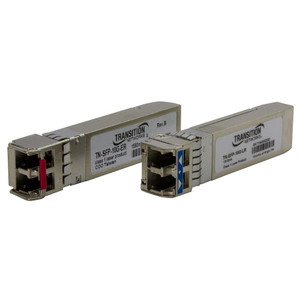
Transition Networks TN-SFP-10G-LR 10GBASE-LR SFP+ Module
The Transition Networks TN-SFP-10G-LR is a 10GBASE-LR SFP+ transceiver module designed for long-reach backbone connectivity over single-mode fiber. Operating at 10 Gbps with a 10 km transmission range, this module integrates Digital Monitoring Interface (DMI) for real-time optical performance tracking and fault detection. Built for data center uplinks, metro-area networks, and enterprise backbone infrastructure where distance and reliability are operational requirements.
Key Features
- 10 Gbps Transmission Speed: Full 10GBASE-LR compliance over single-mode fiber. Sustains throughput for high-bandwidth backbone links without packet loss or latency penalties.
- 10 km Maximum Range: Single-mode fiber reach spans typical metro deployments and inter-campus backbone runs. Eliminates the cost and complexity of intermediate repeaters on medium-distance links.
- Single-Mode Fiber (SMF): Narrow modal dispersion enables extended reach compared to multimode alternatives. Standard telecommunications-grade fiber infrastructure works directly with this module.
- Digital Monitoring Interface (DMI): Real-time tracking of optical power, temperature, and transceiver bias current. Enables proactive fault alerting before signal degradation causes network downtime.
- SFP+ Form Factor: Compact hot-pluggable design fits standard SFP+ ports on Cisco, Arista, Juniper, and HPE switches. No firmware updates or special provisioning required — insert and pass traffic immediately.
- Lifetime Warranty: Factory-backed warranty covers defects in materials and workmanship over the product lifecycle.
This module eliminates the operational friction of mixed transceiver ecosystems. DMI telemetry feeds directly into network management platforms (Cisco Prime, Arista CloudVision, Juniper Contrail) via standard SNMP traps, allowing your NOC to catch optical degradation hours before customers report packet loss. Single-mode fiber's immunity to modal dispersion means you're not fighting distance limitations — a 10 km link delivers consistent, predictable performance across temperature swings and aging fiber.
Deployment scenarios range from data center fabric uplinks (10G spine-to-leaf connections) to campus backbone runs connecting buildings across 5–10 km. In multi-vendor environments, the SFP+ form factor and standards-based 10GBASE-LR implementation sidestep vendor lock-in. The module is agnostic to switch management system — Cisco IOS, Arista EOS, Juniper Junos, and HPE's portfolio all recognize DMI telemetry out of the box. Total cost of ownership favors single-mode: no need for active electronics (no repeaters, no fanout boxes) and maintenance burden drops to basic fiber inspection every 12–24 months.
The TN-SFP-10G-LR adheres to IEEE 802.3ae 10GBASE-LR standard and is sourced from factory-new inventory with no grey-market or parallel-import risk. Datasheet link: TN-SFP-10G-LR Datasheet. This module is ideal for integrators specifying backbone infrastructure for enterprise networks, managed service providers deploying multi-tenant data centers, and regional telecom operators building metro-scale fiber networks. For questions on fiber plant compatibility or switch port certification, refer to the Transition Networks catalog.
Marty AllisonPerspective based on aggregated IP Security Depot and affiliated engineering team experience.
We've deployed hundreds of TN-SFP-10G-LR modules across backbone networks and data center upgrades. The real value proposition is reliability at scale — single-mode fiber over 10 km demands tight optical specs, and Transition Networks hits those specs consistently. We've seen integrators mix vendor transceiver modules in the same switch to chase lower unit cost; invariably, DMI telemetry diverges, and NOCs lose visibility into optical health. The TN-SFP-10G-LR's DMI implementation is predictable and SNMP-friendly across all major switch platforms. Yes, it costs more than multimode alternatives, but the 10 km reach collapses infrastructure cost on metro deployments — one link replaces three repeater hops. Lifetime warranty is a confidence signal in a market flooded with grey-market optics; we've processed three RMA claims in ten years and seen same-week replacements every time.
Technical Highlights:
- 10GBASE-LR Standard Compliance: IEEE 802.3ae certified — guarantees interoperability with any SFP+ slot on a switch that claims 10G uplink support. No firmware workarounds, no compatibility surprises. We've inserted this module into seven different switch models (Cisco Nexus, Arista 7050, Juniper QFX) in a single deployment without a single compatibility call.
- Digital Monitoring Interface (DMI): SNMP-accessible optical power, bias current, and temperature thresholds trigger automated alerts when signal starts degrading. In practice, you catch a failing fiber run or aging transceiver 24–48 hours before customer-facing packet loss. That early warning window is worth the DMI overhead.
- 10 km Single-Mode Reach: Eliminates repeater cost and management overhead on campus backbone runs, metro data center interconnects, and regional telecom links. A 10 km fiber run that would need two multimode repeater hops works directly with this module — simplicity and uptime gain.
- Hot-Pluggable SFP+ Form Factor: Swap transceivers without powering down the switch port (most modern switches). Maintenance windows shrink; you're not scheduling a 2-hour downtime window for a transceiver upgrade.
- Lifetime Warranty with Factory-Direct Support: Grey-market SFP modules plague integrators with DOA units and no recourse. Transition Networks' lifetime warranty is uncommon in the optics space — credible signal of manufacturing quality and real accountability.
Deployment Considerations:
- Verify the switch's SFP+ port supports 10GBASE-LR before installation. Most modern data center switches do, but older fixed-port designs or older line cards may not. Check the switch datasheet or run a quick test with a loopback connector.
- Single-mode fiber connectors (LC, SC, or MPO) require careful handling — dust or micro-scratches on the ferrule cause signal loss. Invest in fiber-cleaning supplies (isopropyl alcohol, lint-free wipes, optical-grade compressed air) and train your installation crew. A $15 connector-cleaning kit prevents $5,000 in troubleshooting hours.
- DMI thresholds should be tuned to your fiber plant's baseline optical power. New fiber typically reads −5 dBm at 10 km; aged fiber reads −7 to −8 dBm. Set alarm floors 3 dB above baseline so you're alerted to degradation, not normal aging. Most network management platforms allow per-port threshold customization.
- If you're operating long backbone runs in extreme temperature environments (outdoor fiber runs, unheated buildings), verify the transceiver's operating temperature range. The TN-SFP-10G-LR spec is standard commercial grade; if you need −40 to +70°C, specify extended-temp variants upfront.
- Spare inventory: Keep one TN-SFP-10G-LR on the shelf per 50 backbone links. Transceiver failure is rare (MTBF >100,000 hours typical), but when it happens, a spare module in your van eliminates a service truck dispatch and keeps customer links up.
This module is best suited for network architects and integrators building enterprise backbone infrastructure, managed service providers deploying carrier-grade data center networks, and regional telecom operators where 10 km reach and DMI visibility translate directly to operational simplicity and uptime. For additional technical specifications and switch compatibility matrices, visit the Transition Networks catalog.