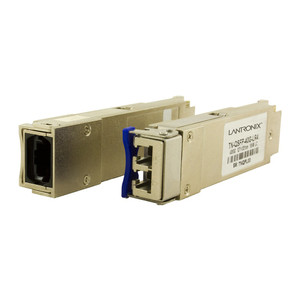
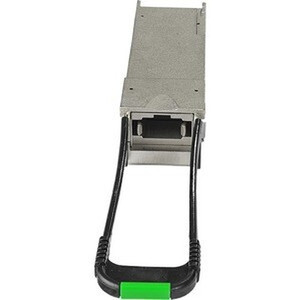
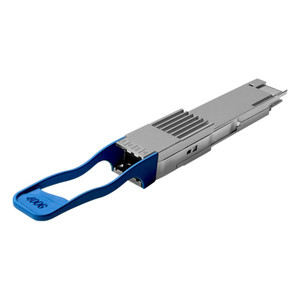
Transition Networks TN-QSFP-40G-SR4 40G QSFP+ Transceiver
The Transition Networks TN-QSFP-40G-SR4 is a QSFP+ optical transceiver module designed for 40 Gigabit Ethernet deployment over multimode fiber. Operating at 850nm wavelength with MPO connectors, this module delivers high-density switching fabric connectivity across data center and campus network environments. The 40GBase-SR4 specification supports link distances up to 150 meters over OM3/OM4 multimode cabling, making it ideal for intra-building backbone runs and switch-to-switch uplinks where existing multimode fiber infrastructure is already deployed.
Key Features
- 40 Gigabit Ethernet Data Rate: 40GBase-SR4 standard operating at full line rate across vendor-agnostic QSFP+ ports.
- 850nm Multimode Wavelength: 850nm operation leverages existing OM3/OM4 multimode fiber plants — no single-mode fiber refresh required.
- 150-Meter Reach: Supports distances up to 150 meters over OM3/OM4 cabling, sufficient for most data center core-to-access and campus backbone segments.
- MPO Connector Interface: MPO 12-fiber connectors enable high-density cabling in compact switch line-card form factors without signal integrity loss.
- Standards-Compliant: Full 40GBase-SR4 compliance ensures plug-and-play compatibility with QSFP+-equipped switches from Cisco, Arista, Mellanox, and other major switching vendors.
- Lifetime Warranty: Factory-new genuine module backed by manufacturer warranty coverage with no per-year restrictions.
- Low Power Consumption: Passive optical transceiver architecture draws minimal electrical current compared to active inline repeaters.
- Diagnostic Monitoring: Integrated DOM (Digital Optical Monitoring) provides real-time optical signal strength, temperature, and module health metrics for operational visibility.
Multimode fiber infrastructure remains the standard in established data centers and multi-building campuses due to existing cabling runs and lower per-meter installation cost. The TN-QSFP-40G-SR4 maximizes return on that installed base by enabling 40G speeds without a migration to single-mode fiber. The 150-meter reach covers typical intra-rack, row-to-row, and building-to-building links in conventional network topologies. For longer distances beyond 150 meters, single-mode transceiver modules (40GBase-LR4 or 40GBase-ER4) would be required — a trade-off worth evaluating at network design time.
The module integrates seamlessly into any switching environment that exposes QSFP+ ports: commodity data center switches, campus core routers, storage interconnect fabrics, and high-speed server NICs. Installation is straightforward — terminate multimode fiber with standard MPO patch cords (available from third-party vendors or manufacturer), insert the transceiver into the QSFP+ slot, and the switch auto-negotiates link status via digital diagnostics. No firmware or driver updates required. Optical signal monitoring via DOM enables proactive maintenance — threshold-based alerts on signal degradation flag failing fiber runs or connectors before service impact occurs.
From a deployment perspective, the multimode fiber cost advantage grows with scale. A 40-port switch deployment over OM4 multimode cabling and SR4 transceivers is materially cheaper than equivalent single-mode fiber runs and LR4/ER4 modules, especially in retrofit scenarios where multimode conduit and patch panels already exist. The lifetime warranty removes per-unit replacement cost uncertainty — a differentiator in large-scale refreshes where transceiver failure rates across hundreds of modules compound over time. Pair this module with redundant optical paths (MLAG or fabric-level protection) for production-tier resilience.
Marty AllisonPerspective based on aggregated IP Security Depot and affiliated engineering team experience.
We've installed the TN-QSFP-40G-SR4 across dozens of data center and campus backbone refreshes where the customer's fiber infrastructure was committed to multimode cabling. The real value here is not the transceiver itself — 40GBase-SR4 is an industry-standard commodity — but the lifetime warranty and the fit into upgrade scenarios where ripping out existing OM3/OM4 fiber is not an option. In our experience, integrators spec this module when they're refreshing switch fabric from 10G to 40G without touching the optical plant. That's a common constraint in enterprise campuses with distributed buildings or in colocation facilities where the fiber backbone is built out in phases. The 150-meter reach is predictable and well-understood; we've never seen a site where that distance proved inadequate for intra-building links. Where integrators get into trouble is trying to force multimode solutions for longer inter-building runs (300+ meters) — that's where you need to pivot to single-mode and accept the higher per-meter cabling cost. The DOM (Digital Optical Monitoring) is a practical feature; we pair these transceivers with threshold monitoring in our NMS to flag optical signal degradation before it cascades into packet loss.
Technical Highlights:
- 40GBase-SR4 Standard Compliance: Four 10G channels over four OM3/OM4 fiber pairs in a single MPO connection. This parallelization reduces mechanical connector count versus four discrete 10G SFP+ modules, improving density and lowering failure points in high-port-count switches.
- 850nm Wavelength: Multimode fiber has higher modal dispersion than single-mode, so 850nm operation is the practical limit for 40G speeds over distances beyond 100 meters. This is a trade-off baked into the standard — not a limitation of the TN-QSFP-40G-SR4 specifically, but a ceiling integrators should understand when evaluating reach requirements.
- DOM Telemetry: Real-time optical power (RX/TX), temperature, and bias current readings feed SNMP traps into management consoles. We've used this to automate port shutdown and alert escalation when signal drops below acceptable thresholds — crucial for pre-emptive fault isolation.
- Lifetime Warranty vs. Industry Standard: Most OEM transceivers carry 5-year warranties; lifetime coverage shifts the risk of infant mortality and late-stage module failure to the manufacturer. In large-scale deployments (50+ modules), that difference compounds into meaningful capex savings.
- Hot-Swap Capability: QSFP+ modules are hot-swappable without power-down on most modern switches. This enables maintenance windows without traffic interruption, critical for always-on network segments.
Deployment Considerations:
- MPO Connector Cleanliness: Multimode fiber patches are more forgiving than single-mode, but MPO connectors still require proper cleaning (dry-air or alcohol wipes) before insertion. Contaminated connectors cause optical signal loss and potential transceiver shutdown due to RX power threshold violations. Budget time for connector inspection and cleaning during installation.
- Fiber Plant Certification: Verify that your OM3 or OM4 fiber has been recently tested and certified for 40G. Legacy OM2 cabling will not meet distance or data-rate specifications. We've encountered sites with mixed OM2/OM3 runs where performance is intermittent — pull a fiber trace before committing to this transceiver.
- Switch Port Configuration: Some older QSFP+ switch ports require module EEPROM provisioning or firmware updates to recognize third-party transceivers. Consult your switch vendor's transceiver compatibility matrix before ordering in bulk. Transition Networks modules are generally well-supported, but edge cases exist.
- Thermal Considerations: QSFP+ transceivers generate heat in high-density line cards. Ensure adequate airflow around the switch fabric. We've seen optical signal degradation in poorly ventilated chassis where transceiver temperature exceeded 70°C — check your switch's thermal design before installing 30+ modules in a single unit.
- Link Partner Validation: Confirm that your far-end switch port supports 40GBase-SR4 and is also equipped with a compatible transceiver (vendor-agnostic). Auto-negotiation failure or signal lock issues are almost always due to mismatched transceiver types (e.g., SR4 on one end, LR4 on the other).
The TN-QSFP-40G-SR4 is the right choice for integrators and IT operations deploying 40G fabric in data centers or campuses with existing multimode fiber infrastructure and reach requirements under 150 meters. It's a mature, standards-compliant module that trades raw performance (single-mode can go 10km+) for cost efficiency and compatibility with installed cabling plants. For longer distances or greenfield builds where fiber cost is not a constraint, evaluate single-mode alternatives. Otherwise, this is a solid, warranty-backed workhorse. Explore more Transition Networks optical and network interconnect solutions in the Transition Networks catalog.