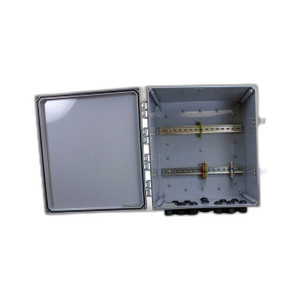
Transition Networks OCA-1BA1A1 10-Port Gigabit Cabinet Bundle
The Transition Networks OCA-1BA1A1 is a complete outdoor-rated switch cabinet assembly designed for distributed network deployments in surveillance, industrial control, and telecommunications edge applications. The bundle integrates a 10-port gigabit unmanaged switch (8 copper RJ45 + 2 single-mode fiber SC ports) with a hardened cabinet enclosure rated for field installation. Single-mode fiber capability extends network reach to 1800 feet—critical for perimeter security deployments where camera nodes or remote access points sit 300+ meters from the core network. The unmanaged architecture eliminates configuration complexity and management licensing, making this platform ideal for integrators deploying fixed-topology surveillance networks across outdoor sites.
Key Features
- 10-Port Gigabit Architecture: 8× RJ45 copper + 2× single-mode fiber SC connectors. Copper ports handle local switch fanout; fiber ports extend reach to remote buildings or pole-mounted nodes without repeaters.
- Single-Mode Fiber Range: Up to 1800 feet (550 meters) per fiber port. Enables long-haul links in parking-lot surveillance, campus perimeters, and industrial complexes without active repeaters or managed switching overhead.
- Unmanaged Gigabit Switch: No VLAN configuration, no spanning-tree tuning, no firmware updates required. Plug-and-play deployment reduces technician time on-site and eliminates software licensing.
- Outdoor-Rated Cabinet Enclosure: Hardened cabinet assembly rated for outdoor field deployment. Protects switch internals from dust, moisture, and temperature swings; designed for pole and rack mounting in harsh environments.
- DIN Rail Mounting: Standard DIN rail profile accommodates integration into existing telecom racks, utility enclosures, and pole-mount assemblies. Reduces custom fabrication and speeds installation cycles.
- Lifetime Warranty: Manufacturer warranty covers the switch platform and enclosure assembly, reducing spare-parts inventory risk over multi-year surveillance and industrial deployments.
- Mixed-Media Topology: Single device supports both short-haul copper runs (camera PoE injectors, local NVRs) and long-haul fiber backhaul. Eliminates the need for separate managed switches at remote nodes.
The OCA-1BA1A1 cabinet bundle addresses a common integration pain point: field surveillance sites often require both local gigabit fanout (to support multiple PoE cameras and edge recording) and extended fiber backhaul to a central facility. Traditional approaches require two separate switches—a managed edge switch for local copper failover and a managed core switch at the hub. This assembly collapses that topology into a single, unmanaged point. For parking-lot surveillance across a 300-meter perimeter or campus security with multiple buildings, the fiber reach eliminates the need for intermediate access points or optical repeaters, reducing ongoing maintenance and power consumption.
Gigabit fiber links also provide galvanic isolation on sensitive sites where camera enclosures, lighting rigs, and industrial equipment share the same electrical infrastructure. By breaking ground loops with single-mode fiber, integrators avoid hum bars, color shifts, and intermittent video glitches that plague all-copper runs in electromagnetically noisy environments. The switch itself carries no managed intelligence—VLAN tagging, QoS queuing, or multicast filtering—which makes it immune to firmware vulnerabilities and eliminates the operational overhead of security patches on edge devices.
Deployment scenarios include perimeter surveillance on multi-acre industrial or commercial properties, distributed camera networks across university or hospital campuses, and remote utility monitoring installations (oil/gas, power distribution, water treatment) where central management is limited and field technicians need to provision additional camera feeds on short notice. The outdoor cabinet rating and DIN rail form factor make this assembly compatible with existing telecom and utility infrastructure, reducing site preparation costs and accelerating project timelines.
The OCA-1BA1A1 operates passively—no configuration interface, no network management protocol, and no active cooling. Unmanaged switches are inherently simpler and more reliable than their managed counterparts on fixed, single-topology networks. The lifetime warranty reflects Transition Networks' confidence in the platform's durability. For integrators building large surveillance or industrial control grids where every remote access point requires local fanout plus secure, long-distance fiber backhaul, this cabinet bundle delivers plug-and-play network infrastructure without the capex and operational overhead of managed switching.
Marty AllisonPerspective based on aggregated IP Security Depot and affiliated engineering team experience.
In our experience deploying surveillance and industrial networks across multi-site properties, the OCA-1BA1A1 solves a genuine problem: managing gigabit fanout and long-distance backhaul without introducing complexity or recurring management costs. We've seen integrators over-specify managed switches at remote nodes simply to gain fiber support, only to struggle with firmware patching, VLAN misconfiguration, and on-site technician training. This cabinet bundle strips that away. It's unmanaged, so it either works or it doesn't—there's no middle ground of intermittent configuration drift. On a 400-meter campus surveillance network, the single-mode fiber reach eliminates the need for intermediate repeater stations or powered optical extenders, which translates directly to lower capex and zero ongoing maintenance on remote network nodes. The cabinet enclosure itself is the often-overlooked piece: most integrators buy a switch and then improvise a weatherproof mounting solution. Here, it's integrated, outdoor-rated, and compatible with standard pole and rack hardware. We've found this reduces field installation time by 2-3 hours per remote site compared to retrofitting a switch into a utility enclosure.
Technical Highlights:
- Single-Mode Fiber Distance (up to 1800 ft): Single-mode fiber (typically 9-micron SMF-28) operates at longer distances than multimode because the narrow core reduces modal dispersion. 1800 feet eliminates intermediate repeater nodes on large campuses or industrial properties. Multimode would max out around 500-600 feet, forcing additional switching infrastructure and power provisioning at remote buildings.
- Unmanaged Gigabit Architecture: No VLAN tags, no STP, no management interface—the switch floods frames on all ports in the same broadcast domain. On fixed topologies (surveillance network with a fixed set of cameras and NVRs), this is a feature, not a limitation. Reduces configuration error surface and eliminates firmware update cycles.
- Mixed-Media Fanout (8 copper + 2 fiber): Copper ports connect local PoE injectors, NVRs, and edge analytics appliances; fiber ports backhaul to central recording or cloud. Single device handles both roles without cascading switches, simplifying cabling and reducing failure points.
- Outdoor Cabinet Enclosure: DIN rail is the standard form factor for utility and telecom rack systems. Pre-integrated cabinet eliminates custom welding or 3D-printed enclosures and speeds compliance with site electrical codes. Rated for temperature swings and moisture ingress typical of unheated utility buildings.
- Lifetime Warranty: Reflects component reliability expectations. On a deployed network, this reduces spare inventory and RMA logistics compared to standard 5-year warranties. Over a 10-year deployment cycle, the capex advantage is measurable.
Deployment Considerations:
- Unmanaged switch operates in a single broadcast domain—all 10 ports are in the same VLAN. If you need segmentation between camera subnets or isolate management traffic, you'll need to deploy managed switches upstream or at the camera edge. This is a topology design choice, not a product limitation, but it must be planned during network architecture.
- Single-mode fiber requires SC or LC termination; RJ45-to-fiber media converters add cost and complexity if you're retrofitting existing copper infrastructure. Budget for new fiber cabling and termination labor if fiber runs don't already exist on the site.
- The cabinet enclosure provides environmental protection but not active cooling. In extreme heat (120°F+), confirm thermal management with site conditions. Most outdoor surveillance networks operate in moderate climates; if your site includes furnaces or hot-weather industrial equipment, verify enclosure thermal rating against site temperature extremes.
- Gigabit unmanaged switches don't back-pressure on oversubscription—if all 10 ports try to forward simultaneously at line rate, frames will be dropped. In practice, this is rare on surveillance networks (cameras and NVRs don't burst simultaneously), but confirm traffic patterns during design if you're connecting high-bandwidth industrial sensors or backup appliances.
- DIN rail mounting assumes standard telecom rack or utility pole hardware. If your site uses non-standard enclosures, verify mechanical compatibility before ordering. Most utility sites and modern surveillance installations support DIN rail; legacy installations may require adapters.
The OCA-1BA1A1 is the right choice for integrators building outdoor surveillance or industrial networks that span multiple buildings or sites and need reliable, configuration-free network fanout at each node. For single-building, small-footprint deployments, a managed edge switch or PoE-only architecture might be simpler. For large-scale perimeter or campus surveillance with fiber backhaul, this cabinet bundle delivers the infrastructure foundation without the ongoing management overhead. See the Transition Networks catalog for additional outdoor-rated switching and fiber platform options.