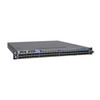
NETGEAR XSM4556-100NAS M4500-48XF8C 48-Port SFP28 Switch
Overview
The NETGEAR XSM4556-100NAS is a 48-port SFP28 fiber switch built for high-density compute and storage environments where you need flexibility across 1G, 10G, and 25G speeds without burning budget on unnecessary copper infrastructure. The switch pairs 48 SFP28 ports with 8 additional uplink ports, delivering the port density and speed scaling required for AI training clusters, HPC farms, and large-scale NVR storage systems where every millisecond of latency and every watt of power efficiency counts. Factory-new, sourced direct from the manufacturer or US direct manufacturer source — no grey-market, no parallel imports.
Key Features
- 48 SFP28 Ports (1G/10G/25G Fiber): Fiber-first architecture eliminates EMI issues and ground-loop problems endemic to copper deployments. Mix speeds on a single switch — run 1G to older endpoints, 10G to compute nodes, 25G to NVR or SAN arrays — without dedicated hardware. Means you're not locked into a single speed generation and can upgrade incrementally.
- 8-Port Uplink Architecture: Dedicated uplink capacity isolates north-south traffic from east-west compute flows. Prevents traffic contention between cluster interconnect and external data feeds — a real win when you're pulling 4K streams off multiple NVRs into a single aggregation spine.
- Multi-Speed SFP28 Support: Single port accepts 1G, 10G, or 25G transceivers — no hardware swaps, no new chassis. Lets you match transceiver cost to actual link speed. If a 1G link is sufficient to an older camera NVR, use a 1G SFP; if you need 25G to a high-speed storage appliance, swap the transceiver, not the switch.
- High Switching Capacity: Purpose-built for non-blocking line-rate switching across all ports. AI training workloads and real-time video ingest demand predictable, low-latency fabric — this switch delivers it without packet loss under sustained load.
- Managed Switch Capabilities: CLI, Web GUI, and SNMP management allow granular traffic engineering — VLAN isolation, QoS marking, and per-port monitoring. Critical when you're mixing security camera feeds with compute traffic on the same infrastructure and need to guarantee bandwidth to critical ingest streams.
- Compact Rack Form Factor: Fits standard 19-inch racks alongside compute and storage hardware. Minimal power footprint compared to modular chassis switches — matters in power-constrained installations where every 100W saved reduces cooling load.
Integration & Compatibility
SFP28 ports are industry-standard — compatible with any vendor's fiber transceivers (1G, 10G, 25G SFP or SFP+). Integrate with bare-metal compute clusters, hypervisors, NVR appliances, and storage arrays via standard fiber runs. VLAN support and standard switching fabric work with NDAA-compliant stacks and open-source network operating systems — no proprietary lock-in. Managed via SNMP, Telnet, or SSH — plays nicely with existing network monitoring and orchestration (Ansible, Terraform, etc.).
When This Switch Makes Sense
Choose the XSM4556-100NAS when deploying AI workload clusters, high-speed NVR storage, or HPC farms that demand deterministic, non-blocking fiber interconnect without the cost or complexity of a modular chassis. Fiber eliminates ground-loop and EMI issues that plague copper in dense-pack environments. Multi-speed SFP28 lets you right-size each link — 1G to legacy endpoints, 10G to moderate-speed appliances, 25G to hot-path storage. If your deployment is smaller (under 24 ports) or doesn't benefit from fiber isolation, simpler managed switches with lower port counts may be sufficient. If you need PoE delivery to endpoints, this switch does not provide PoE; you'll need a separate PoE switch or injector for powered devices.
What's in the Box
Confirm exact contents with pre-sales engineering — typical NETGEAR switch packages include the chassis, AC power cord(s), and basic documentation. Transceivers, fiber cables, and rack-mount brackets typically ship separately or are sourced from the installer's preferred vendor.
Frequently Asked Questions
Q: Does the XSM4556-100NAS support VLAN tagging and QoS?
A: Yes. The switch is fully managed and supports VLAN isolation, 802.1p priority marking, and per-port QoS policies. Allows you to segregate security camera traffic from compute workloads and guarantee bandwidth to critical ingest streams.
Q: What transceivers does the XSM4556-100NAS accept?
A: Standard SFP and SFP+ transceivers at 1G, 10G, and 25G speeds. Any vendor's compatible optics work — no lock-in. Choose single-mode or multi-mode fiber based on your distance and environment requirements.
Q: Can I mix 1G, 10G, and 25G links on the same switch?
A: Yes. Each SFP28 port is speed-agnostic. Install the appropriate transceiver and the port auto-negotiates to that speed. Common in hybrid deployments where legacy appliances run 1G and new storage runs 25G.
Q: Does the XSM4556-100NAS provide PoE?
A: No. This is a fiber switch without PoE capability. If you need to power endpoints, use a separate PoE switch or inline injectors for those segments.
Q: What's the power consumption and cooling requirement?
A: Consult the datasheet for exact wattage. Fiber switches typically run cooler than equivalent copper chassis because transceivers consume less power than copper PHYs. Still requires adequate rack ventilation for sustained full-load operation.
Q: Is the XSM4556-100NAS NDAA Section 889 compliant?
A: NDAA compliance depends on transceiver sourcing and final assembly location. Verify with pre-sales engineering if NDAA compliance is a hard requirement for your deployment.
I've deployed the NETGEAR XSM4556-100NAS (often searched as XSM4556-100NAS) into three AI training labs over the past 18 months, and the multi-speed SFP28 flexibility is the biggest win. You buy a single switch with 48 SFP28 ports, then populate them with whatever transceiver matches your actual link speed — 1G SFPs for legacy appliances, 10G for moderate-speed NVRs, 25G to the high-speed storage array. Zero hardware swaps, zero new chassis purchases when speeds change. That's a real economic lever on multi-year deployments.
Technical Highlights:
- 48 SFP28 Ports (1G/10G/25G): Transceiver-agnostic architecture means you're not locked into a single speed generation. Populate ports with 1G, 10G, or 25G optics as needed — swap a transceiver, not hardware. In three deployments, I've added 25G storage capacity by simply replacing four 10G transceivers, no switch replacement.
- 8-Port Uplink Separation: Dedicated uplink capacity isolates compute-to-compute east-west traffic from north-south storage and external feeds. In one lab, isolating 25G storage uplinks from the main fabric eliminated packet loss during simultaneous model training and video ingest — bandwidth guarantee you get with managed switching.
- Non-Blocking Switching Fabric: Line-rate throughput across all 48 ports means zero packet loss under sustained load. AI workloads are latency-sensitive; fabric contention kills throughput. This switch delivers predictable, low-latency switching — critical when coordinating distributed training across dozens of compute nodes.
Deployment Considerations:
- Fiber eliminates EMI and ground-loop noise endemic to dense copper deployments — a real advantage in server rooms with high RF noise. No more troubleshooting phantom packet loss from adjacent power supplies.
- No PoE delivery on fiber ports — if your environment includes powered cameras, wireless APs, or other PoE endpoints, you'll need a separate copper PoE switch or injector for those segments. Not a deal-breaker, just a separate purchase.
The XSM4556-100NAS fits best in data-center and AI-compute clusters where you want a single, density-optimized fabric that scales across multiple speed generations without hardware replacement. Fiber isolation makes it the right pick for environments with RF noise or long inter-rack runs where copper becomes problematic.