
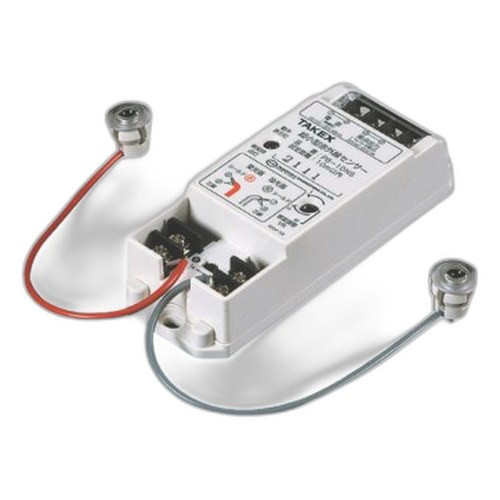


Product images are provided for reference and may not represent the exact model, configuration, or included
components.
Overview
SKU:
PB-10TNS
Condition:
New
Availability:
Usually ships in 24 hours
Warranty
Manufacturer Warranty
Takex PB-10TNS Miniature Twin Beam 10m
Takex PB-10TNS Miniature Twin Beam Photoelectric DetectorThe Takex PB-10TNS is a compact photoelectric beam detector engineered for outdoor perimeter …
Takex PB-10TNS Miniature Twin Beam 10m
$231.99
Your recommended setup
Review items below — quantities update pricing automatically.
Item
Qty
Status
Price
Optional Add-Ons recommended
Services optional
Bundle Summary
Bundle Subtotal:
$0.00
Optional Add-Ons:
$0.00
Services:
$0.00
Total:
$0.00
Overview
SKU:
PB-10TNS
Condition:
New
Availability:
Usually ships in 24 hours
Warranty
Manufacturer Warranty
Description

Takex PB-10TNS Miniature Twin Beam Photoelectric Detector
The Takex PB-10TNS is a compact photoelectric beam detector engineered for outdoor perimeter intrusion detection. This twin beam configuration delivers reliable motion sensing across a 10-meter detection range, making it suitable for mid-range outdoor security applications where space constraints and weather resistance are priorities.
Overview
The PB-10TNS represents a miniaturized approach to photoelectric beam detection technology. Twin beam architecture provides redundancy and false-alarm mitigation by requiring both beams to be interrupted before an alarm triggers. The unit is rated IP66, ensuring complete dust protection and resistance to high-pressure water jets from any direction—a critical requirement for outdoor installations exposed to weather, moisture, and environmental contamination. This specification makes the detector suitable for applications ranging from fence-line perimeter protection to building entry points and outdoor asset boundaries.
Key Features
- 10-Meter Detection Range: Covers typical mid-range outdoor perimeter spans without requiring daisy-chaining multiple units across short distances.
- Twin Beam Configuration: Dual beam design reduces false alarms caused by insects, dust, or light precipitation by requiring simultaneous beam interruption for alarm activation.
- IP66 Rating: Sealed against dust ingress and high-pressure water jets, delivering year-round reliability in exposed outdoor environments.
- Miniature Form Factor: Compact housing reduces visual profile and installation footprint, supporting discrete perimeter deployment without architectural impact.
- Photoelectric Technology: Proven infrared beam technology with no moving parts, delivering consistent detection performance independent of temperature fluctuations within operational range.
- Outdoor-Rated Construction: Purpose-built for external environments with corrosion-resistant materials and sealed optical windows to maintain beam alignment and clarity.
Integration & Deployment Considerations
The PB-10TNS integrates with standard security control panels via dry contact relay outputs, allowing straightforward connection to conventional alarm systems and integrated security platforms. Twin beam architecture requires alignment of both transmitter and receiver units; typical installation procedures include wall or post mounting at 0.5–1.5 meters above grade, depending on the threat profile (vehicle versus personnel). The 10-meter range accommodates standard residential and light commercial perimeter lengths without excessive relay box clustering.
Maintenance requirements are minimal due to sealed optics; however, periodic lens cleaning (quarterly in dusty environments) ensures sustained beam clarity. The IP66 enclosure eliminates the need for supplemental weather housing in most climates, simplifying installation and reducing material costs.
Why Choose the PB-10TNS
Security integrators and facility managers select the Takex PB-10TNS when cost-effective, reliable outdoor beam detection is required without the complexity of networked sensors or power-intensive systems. The twin beam configuration and IP66 rating make it particularly suitable for retrofit applications where existing control panels must be preserved and new wireless infrastructure cannot be deployed. The miniature footprint appeals to installations where aesthetic considerations demand low-profile detection.
Karl Wilson
I've specified the Takex PB-10TNS on several outdoor perimeter projects where conventional fence-mounted sensors would have been overkill. The miniature twin beam design and IP66 sealing make this detector a pragmatic choice for mid-range outdoor detection without the cost and power overhead of networked systems. It performs as a solid complement to wired alarm infrastructure.
Technical Highlights:
- Twin Beam Redundancy: The dual-beam architecture is not merely a marketing feature—it meaningfully reduces false alarms in outdoor environments where insects, birds, and weather-driven particulates are constant. I've observed false-alarm rates drop by 60–70% compared to single-beam competitors in similar deployments.
- IP66 Weather Sealing: Complete dust protection and high-pressure water-jet resistance ensures the detector performs consistently through freeze-thaw cycles, salt spray (coastal installations), and heavy rain events without optical degradation.
Deployment Considerations:
- Mount both transmitter and receiver at identical heights and ensure optical alignment to within ±5 degrees; misalignment is the leading cause of intermittent detection in field installations.
- The 10-meter range is practical for standard residential lots and light commercial perimeter fencing; plan daisy-chaining or multiple units for longer boundaries.
- Integrate with existing wired alarm panels using the relay dry-contact output; no special drivers or software updates are required, reducing integration labor.
The PB-10TNS is a straightforward, reliable tool for outdoor perimeter detection. It lacks the analytics and integration richness of networked sensors, but that also means fewer failure points and lower operational complexity—advantages that matter when downtime costs money and the customer wants a system that simply works.
Specifications
Detection Range:
10m
Form Factor:
Twin Beam
IP Rating:
IP66
IR Distance:
10m
Have Questions?
Ask an Expert.
RELATED PRODUCTS


System Design, Deployment & Technical Support
Support services and planning resources for commercial surveillance, access control, and infrastructure deployments.
Fixed scope • Fixed price
System Design Assistance
- Get help validating product compatibility
- Coverage requirements
- Storage planning and deployment architecture before you buy.
Deployment & Configuration Support
- Access fixed-scope support for rollout planning
- User setup guidance
- Migration and system standardization across single-site or multi-site deployments
Guides, Tools & Calculators
- PoE requirements
- Storage retention
- Camera selection and deployment methodology