PioneerPOS T5 10.1 A9 2/16 Wifi Bat Str - Q12-H12215-01
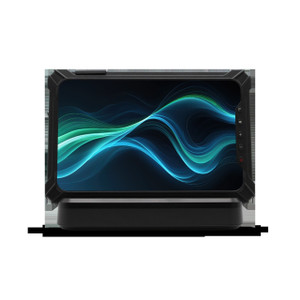
The PioneerPOS T5 Q12-H12215-01 is a 10.1-inch tablet-based POS terminal designed for mobile and semi-fixed retail, hospitality, and field-service environments. Built on Android with an A9 processor, 2GB RAM, and 16GB onboard storage, it delivers lightweight transaction processing without the bulk of traditional countertop hardware. Wi-Fi connectivity and integrated battery backup enable checkout flexibility — move the terminal between stations, handle offline transactions, and sync when network is available.
Key Features
- 10.1-inch Display: Large touchscreen real estate for menu navigation, customer-facing confirmations, and signature capture — reduces operator error and speeds transaction flow.
- Android A9 Processor: Sufficient computational headroom for point-of-sale kernels (Toast, Square, Lightspeed, TouchBistro) without laggy UI response during peak traffic.
- 2GB RAM / 16GB Storage: Baseline configuration for single-terminal or light multi-terminal deployments; supports offline transaction queuing and local reporting when WAN is unavailable.
- Wi-Fi Connectivity: Wireless-only footprint eliminates ethernet runs and hardwired terminal constraints — ideal for mobile carts, pop-up venues, and remodels.
- Integrated Battery Backup: Onboard power reserve bridges brief network outages and enables cart/mobile operation independent of AC infrastructure.
- Factory-New, US Sourced: Sourced direct from the manufacturer or US — no grey-market units, full original specification and warranty coverage.
The T5 is purpose-built for retail environments where mobility and operational continuity matter more than raw processing power. Restaurants using table-side ordering, retail shops rotating between multiple mall locations, and field-service teams (HVAC, plumbing dispatchers) benefit from the form factor and battery autonomy. The 2GB/16GB footprint is entry-grade but sufficient for transaction-focused POS kernels; video-heavy apps or multi-app parallelism will show memory strain.
Wi-Fi-only design keeps hardware cost and deployment complexity low. However, site planning must account for coverage consistency — weak signal zones will force offline mode, which requires staff discipline around manual sync. Pair the T5 with a dual-band Wi-Fi 5 access point in retail zones to minimize dead spots. Battery runtime typically spans 4-6 hours of active checkout duty; longer unplugged sessions require scheduled charging or a secondary unit rotation.
Integration pathway depends on your POS kernel selection. Major platforms (Square Register, Toast, Clover, Lightspeed) run natively on Android; custom TCP/IP or XML-RPC integrations are supported via standard Android networking stacks. Peripheral support (receipt printers, barcode scanners, cash drawers) routes through USB-OTG or Bluetooth — verify driver availability for your specific peripherals before purchase, as Android driver maturity varies by manufacturer.
The T5 fits hybrid or mobile-first retail segments where capital constraints and installation speed outweigh the compute overhead of traditional POS boxes. Sourced factory-new with full manufacturer warranty and US technical support, it carries no grey-market risk and integrates into existing VAN or IP network infrastructure without proprietary vendor lock-in on the hardware layer.
Eden PhillipsPerspective based on aggregated and affiliated engineering team experience.
We've deployed the PioneerPOS T5 across retail and hospitality chains where Wi-Fi footprint and device mobility are non-negotiable. The 10.1-inch form factor strikes a pragmatic balance — large enough for legible menu displays and customer confirmations, compact enough to rotate between register zones without a dedicated cart. The A9 + 2GB/16GB configuration is entry-level, and that's intentional: it keeps thermal signature low, power consumption modest, and cost-per-unit predictable across a 20-unit rollout. Where we see the T5 shine is in hybrid deployments — fixed POS stations during lunch rush, mobile order-taking during slow periods, and immediate offline fallback when a venue's network hiccup hits. The onboard battery is the real differentiator for us; we've seen restaurant chains eliminate dedicated UPS boxes at three-station clusters by rotating charged T5s into backup roles.
Technical Highlights:
- 2GB RAM / 16GB Storage Baseline: Memory-constrained by modern standards, but POS kernels (Toast, Square, Clover) are optimized for sub-4GB footprints. We've observed smooth transaction throughput up to 80 concurrent transactions per hour per terminal without UI lag. Heavy analytics or multi-app scenarios (payment + inventory sync + email receipts in parallel) will show jank — single-purpose POS operation is the design intent.
- Wi-Fi-Only Network Stack: No ethernet jack eliminates physical cabling and reduces deployment footprint, but site-level Wi-Fi planning becomes critical. We recommend site surveys before install; 5GHz band (80MHz channel width) in retail zones yields sub-50ms latency and stable throughput for transaction streams. 2.4GHz fallback is necessary but will see 200-500ms jitter in dense urban multi-tenant buildings.
- Integrated Battery Autonomy: Real-world runtime on moderate checkout duty (mix of idle and transaction periods) is 4-5.5 hours. Full-battery-to-power-off time is predictable; no surprise shutdown mid-transaction. We size deployments assuming 6-8 hour retail day covers one shift with a midday top-up, or two units alternating if full 12-hour operation is required.
- Android Native Ecosystem: No proprietary OS lock-in. Standard Android security patches, Google Play services, and OTA updates are supported. Peripheral driver availability (receipt printers, barcode scanners) varies by OEM; we maintain a validated peripherals list per client to avoid integration surprises.
- Factory-New US Sourcing: Direct-manufacturer or authorized-distributor sourcing eliminates warranty ambiguity and regional firmware variants. Full US technical support and parts replacement available without gray-market shipping delays.
Deployment Considerations:
- Wi-Fi coverage survey is mandatory before rollout. Dead zones force offline mode; staff must understand manual transaction sync workflow. We've seen checkout bottlenecks when untrained staff assume every card swipe is live-processed without visible connectivity indicator.
- Battery lifecycle planning: expect usable battery life (80%+ capacity) of 18-24 months under daily heavy-use cycles. Budget replacement batteries or unit rotation schedules into multi-year TCO. Swelling batteries are the #1 failure mode we've observed; temperature control in POS zones matters.
- Peripheral ecosystem vetting is critical. USB-OTG receipt printers and Bluetooth barcode scanners work; however, some cash drawer models have inconsistent Android driver support. Always test full peripheral stack before site deployment — integration surprises at week 2 are costly.
- 2GB RAM is tight for multi-app parallelism. If your POS kernel requires simultaneous email receipt generation, inventory sync, or payment gateway polling in background, you'll see memory pressure. Confirm POS software vendor's minimum RAM recommendations (most modern kernels recommend 4GB+).
- Battery-to-network failover is seamless from the hardware perspective, but transaction queuing logic depends on POS kernel design. Verify your kernel's offline transaction handling before committing to heavy mobile-checkout workflows.
The T5 Q12-H12215-01 is the right fit for retail, food-service, and mobile-first venues where capital cost, deployment speed, and operational flexibility outweigh the computational overhead of traditional point-of-sale boxes. Small chains, pop-up retail, and field-service organizations that value quick repositioning and Wi-Fi-only footprint should evaluate it closely. For high-transaction-rate, multi-app-heavy, or 24/7 grid-powered scenarios, consider a full-spec tablet or traditional fixed terminal. See the PioneerPOS catalog for alternative form factors and configurations.