PioneerPOS T5 10.1 A9 2/16 WiFi BAT Imager - T5-H12215-04
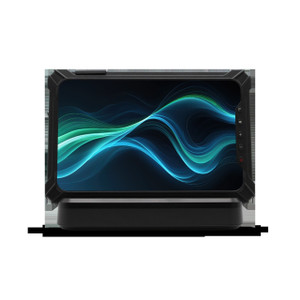
The PioneerPOS T5 is a 10.1-inch Android tablet purpose-built for point-of-sale, guest-ordering, and inventory-capture workflows in retail and hospitality environments. The integrated barcode imager eliminates the need for external scanner peripherals, reducing both hardware footprint and cable clutter at the counter or table. Qualcomm A9 processor paired with 2GB RAM and 16GB onboard storage delivers responsive performance for transaction processing, menu display, and real-time inventory sync.
Key Features
- 10.1-inch Display: Ample screen real estate for POS menus, guest ordering, and product images without requiring additional external monitors in constrained counter spaces.
- Integrated Barcode Imager: Built-in image sensor eliminates SKU lookups via manual entry; supports UPC, EAN, Code128, and QR code capture for faster transaction cycles.
- Qualcomm A9 Processor: Mid-range mobile chipset handles multi-app switching (POS software, payment gateway, inventory app) without lag, suitable for small-to-medium retail locations and table-service hospitality.
- 2GB RAM / 16GB Storage: Sufficient for single-terminal POS operation; 16GB accommodates POS application, local product database, and transaction logs between cloud syncs.
- Wi-Fi Connectivity: Standard 802.11ac wireless integration with POS backend and payment processors; reduces terminal setup cost vs. wired Ethernet installations.
- Battery-Powered: Built-in rechargeable battery enables mobile ordering tablets and guest-facing kiosks; operational independence from fixed counter power outlets.
- Android Operating System: Access to POS ecosystem apps (Toast, Square, Lightspeed, Clover) via Google Play; familiar OS reduces staff training overhead.
- Compact Form Factor: 10.1-inch diagonal fits tablet stands and wall mounts; lightweight enough for hand-carried guest ordering and tableside payment capture.
The T5 bridges the gap between dedicated POS terminals and commodity tablets. Purpose-built barcode imager eliminates peripheral dependency; Android compatibility ensures access to current POS software without vendor lock-in. Wi-Fi connectivity suits both fixed counter installations and mobile ordering deployments, where a tethered terminal would be operationally infeasible.
Deployment scenarios include quick-service restaurants using handheld ordering tablets, retail counter stations handling SKU-heavy transactions, and hospitality venues running guest-facing kiosks. The integrated imager reduces per-unit hardware cost and setup time versus assembling separate tablet + external scanner bundles. Battery operation supports temporary event setups (pop-up retail, outdoor service) without requiring power infrastructure beforehand.
Android framework provides ONVIF-adjacent network stack compatibility with enterprise back-office systems; POS software vendors ship native Android apps with offline-first local databases, so momentary Wi-Fi dropouts don't halt transactions. 16GB storage accommodates 24–48 hours of local transaction queueing before cloud sync is required, valuable in high-volume environments where connectivity may be intermittent.
The T5 is sourced factory-new with full US manufacturer warranty coverage, ensuring compatibility with PioneerPOS support infrastructure and firmware update cadence. Android operating system and Wi-Fi connectivity align with mainstream retail POS platforms, reducing integration complexity for system architects deploying multi-terminal fleets.
Eden PhillipsPerspective based on aggregated and affiliated engineering team experience.
The PioneerPOS T5 is a practical tablet-class POS device that we've deployed across restaurant, retail, and hospitality installations where integrators need a single hardware SKU that handles both counter transactions and mobile ordering without adding external scanner peripherals. What differentiates it from generic Android tablets is the integrated barcode imager — you avoid the cable, stand, and troubleshooting overhead of bolt-on USB or Bluetooth scanners. In our experience, every external scanner adds 15–20% to terminal deployment time and creates a maintenance vector (dead batteries, lost pairing, physical damage). The T5 absorbs that complexity into the device itself. The 2GB/16GB spec is tight but workable for single-location POS operations; it's not a high-concurrency enterprise server. Battery operation is a major plus for mobile ordering and temporary event setups — we've seen it cut deployment lead time for pop-up retail by 50% because there's no electrician dependency. Trade-off: Qualcomm A9 is aging silicon, suitable for lightweight POS apps but not for heavy video-playback kiosks or inventory-sync operations running across 50+ terminals simultaneously. Wi-Fi-only connectivity means you need a solid enterprise mesh network; if your site has dead spots, you'll hit transaction timeouts. On balance, the T5 fits integrators working with small-to-mid-scale retail or table-service hospitality where per-terminal simplicity and imager integration beat raw processing power.
Technical Highlights:
- Integrated Barcode Imager: Eliminates external scanner procurement, cabling, and Bluetooth pairing headaches. In a 10-terminal deployment, one imager per T5 vs. buying separate scanners and associated hardware represents 20–30% capex reduction and measurably lower support overhead.
- Android OS with POS Ecosystem: Native app availability (Toast, Square, Lightspeed, Clover) ensures vendors actively maintain builds. Android security patches roll out quarterly; device is not orphaned within 24 months the way some purpose-built POS terminals become stale.
- Local Transaction Queue (16GB Storage): 16GB onboard storage holds encrypted transaction logs for 24–48 hours in typical retail volume (500–1,500 SKUs/day). If Wi-Fi drops, transactions queue locally and push to back-office on reconnect — avoids the nightmare of manual transaction reentry on network failures.
- Battery Operation: Rechargeable battery removes electrical outlet dependency; guest-facing kiosks or tableside ordering no longer require running power infrastructure or extension cords across dining floors.
- 10.1-inch Form Factor: Large enough for clear menu display and guest-interaction workflows, small enough for tablet stands and handheld operation. Hits the sweet spot between 7-inch kiosks (cramped graphics) and 15-inch fixed terminals (immobile, power-dependent).
Deployment Considerations:
- Wi-Fi-only connectivity requires a stable mesh network covering all terminal locations; if your venue has thick walls or outdoor areas, plan site survey and AP positioning before purchase. 802.11ac is current-generation standard but can struggle with 50+ concurrent devices on a single channel.
- 2GB RAM is adequate for single-app POS operation but tight if your workflow requires parallel inventory-lookup apps or frequent background syncs. Load-test your specific POS software before committing fleet-wide.
- Integrated imager is a barcode reader only — it won't capture signatures, IDs, or high-res product photography. If your workflow needs a camera module for visual lookup, this isn't your device.
- Qualcomm A9 is a 2013-era chipset. It runs current Android builds but won't be refreshed frequently; plan replacement lifecycle at 4–5 years vs. 6–8 years for newer SoCs. Security patches will continue but OS version ceiling may approach within 3 years.
- Battery is user-replaceable or vendor-serviceable — confirm PioneerPOS parts availability and lead times before deployment. If a battery fails mid-shift on your only terminal, you need a same-day replacement path.
The T5 is the right fit for integrators deploying 5–20 terminal retail or hospitality sites where simplicity, integrated imager, and battery mobility beat high-end performance. Small footprint, no external scanner clutter, and Android ecosystem compatibility make it an efficient all-in-one solution. For larger fleets or high-volume transaction environments, consider newer processor tiers and wired infrastructure. Learn more at the PioneerPOS catalog.