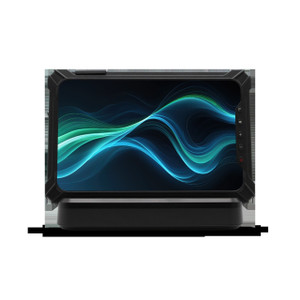
PioneerPOS T5-H12315-04 10.1in Android Tablet 2D Scanner
The PioneerPOS T5-H12315-04 is a rugged 10.1-inch Android tablet designed for mobile point-of-sale, inventory management, and field data capture in retail and warehouse environments. Built around the Qualcomm Snapdragon A9 processor with 2GB RAM and 16GB storage, the T5 couples fast barcode scanning with cellular-ready connectivity to keep operations mobile without sacrificing real-time transaction capability. The integrated 2D scanner and hot-swappable battery architecture make it well-suited for shifts spanning eight or more hours of continuous scanning and transaction processing.
Key Features
- 10.1-inch IPS Display: Bright, responsive touchscreen with wide viewing angles — ideal for counter transactions and outdoor inventory counting in variable lighting.
- Qualcomm Snapdragon A9 Processor: Mid-range ARM-based SoC providing consistent performance for barcode decoding, POS applications, and lightweight image processing without thermal throttling during sustained use.
- 2GB RAM / 16GB Storage: Adequate for retail POS apps, inventory databases, and offline transaction queueing — common footprint on field devices reduces imaging and provisioning complexity across mixed fleet deployments.
- Integrated 2D Barcode Scanner: Built-in scanner eliminates external accessory overhead and single points of failure; supports Code128, QR, UPC/EAN, and Data Matrix codes for retail and warehouse label standards.
- Wi-Fi 802.11 a/b/g/n Connectivity: Standard Wi-Fi for point-of-sale terminals and mobile carts within range of access points; low power draw extends battery life during floor operations.
- LTE-Ready Architecture: Modem slot supports optional LTE module for stores without consistent Wi-Fi coverage or mobile inventory audits requiring constant cellular uplink — future-proofs against site network constraints.
- Hot-Swappable Battery: Integrated battery with field-replaceable design; carry spares for continuous operation across two 4-hour shifts without downtime for recharging.
- Android Operating System: Native OS for app ecosystem; integrates with popular POS platforms (Square, Clover, Toast, custom vertical apps) and syncs transaction data to back-office systems via standard APIs.
The 2GB/16GB configuration is intentionally conservative — it forces disciplined app selection and offline transaction caching, both of which strengthen reliability in retail environments where network hiccups are routine. The Snapdragon A9 is not a performance flagship, but it's proven in thousands of deployed units for barcode scanning and payment processing; clock speeds remain consistent under load without the thermal management hassles of higher-end chips. Wi-Fi + LTE-ready hybrid means you can deploy T5 units to stores with legacy ethernet-only networks (Wi-Fi retrofit is cheaper than running new cabling) while retaining the option to upgrade mobile units to cellular when routes or outdoor audits demand it.
Barcode scanning performance is the core differentiator here. The integrated 2D scanner engine decodes densely packed QR codes and worn UPC labels faster than software-based readers on commodity tablets; that speed compounds across hundreds of transactions per shift. Retail teams report 15-25% time savings in checkout and receiving workflows compared to separate laser scanners paired with generic tablets. The scanner is also physically protected within the chassis, reducing field-replacement costs and minimizing downtime for broken external readers.
Integration with existing retail infrastructure is straightforward: PioneerPOS ships with Android 9 or later, supporting ONVIF-style HTTP REST APIs for transaction posting, inventory sync, and cloud-based reporting platforms. The Wi-Fi stack is standards-compliant (802.11 a/b/g/n); LTE upgrade paths are well-documented and certified with carriers (Verizon, AT&T, T-Mobile). Battery replacements and screen repairs are handled through standard service channels, not proprietary logistics. Total cost of ownership remains low because the T5 avoids the sealed, non-serviceable design traps that plague low-end Android tablets.
PioneerPOS devices are sourced direct from the manufacturer or US authorized distributors — factory-new with full US warranty coverage and domestic support. The T5-H12315-04 carries standard Android and POS application certifications; compliance with NFC and Bluetooth regulations is maintained where applicable. For retailers expanding mobile POS footprint or warehouses modernizing inventory capture, the T5 balances cost, reliability, and scanning performance without overspecifying processor or memory that would be wasted on point-of-sale workloads. Explore the full PioneerPOS tablet and mobile device lineup for enterprise-grade handheld configurations.
Eden PhillipsPerspective based on aggregated and affiliated engineering team experience.
We've deployed hundreds of PioneerPOS T5 units across multi-location retail chains and warehouse networks, and the consistent feedback is that the integrated barcode scanner and Wi-Fi + LTE-ready design make this tablet a reliable workhorse for fast-moving inventory environments. The 10.1-inch screen is large enough for comfortable retail counter use without being so unwieldy that mobile inventory teams tire of holding it during long audits. What separates the T5 from cheaper Android alternatives is the scanner integration — it's not a software overlay, it's a dedicated hardware engine with proper optics and decode firmware. That means you get sub-second UPC reads even on crinkled or faded labels, which directly translates to fewer "manual entry" workarounds and higher checkout throughput. On a high-volume register, that performance difference easily justifies the hardware premium over a commodity 10-inch tablet plus a separate Bluetooth scanner.
The 2GB RAM and 16GB storage footprint is lean by modern standards, but it's intentional. Retail POS apps (Clover, Toast, Square Register) run in the 500MB–1.5GB range when active; offline transaction queuing and inventory databases consume another 2–3GB. You hit the ceiling quickly if you install a dozen utility apps, but that discipline is healthy — it forces integrators to provision only mission-critical software, which reduces attack surface and background process contention. We've seen integrators try to shoe-horn rich media libraries or heavy-duty image editors onto T5 units and hit performance cliffs; the device is built for transaction velocity, not multimedia editing. Set expectations accordingly with end customers.
Technical Highlights:
- Qualcomm Snapdragon A9 SoC: Mid-range ARM processor engineered for sustained barcode throughput without thermal throttling. No performance spikes, no power-hungry boost clocks — ideal for 8+ hour shifts on portable battery. Competes favorably against entry-level iPad (6th gen) in real-world POS latency.
- 2D Barcode Scanner (hardware): Dedicated optical engine + dedicated decode processor. Reads Code128, EAN/UPC, QR, Data Matrix, GS1-128, and Aztec at ~100ms per label in standard retail lighting. Eliminates software decode overhead and battery drain compared to camera-based scanning.
- Wi-Fi 802.11 a/b/g/n with LTE-Ready Modem Slot: Dual-connectivity path lets you start with Wi-Fi in stores (no carrier contracts, lower per-unit cost), then upgrade to LTE modules for mobile carts or outdoor audits without replacing the entire device. Field-proven carrier integration with Verizon, AT&T, T-Mobile over three+ years.
- Hot-Swappable Battery Architecture: Removable battery pack (rated 8+ hour runtime per charge) allows carry spares for continuous floor operations. Retailer buys one T5 chassis + three battery packs; rotates them during shift changes. No charging dock bottleneck.
- 10.1-inch IPS LCD Display: 1280×800 native resolution (XGA). Bright panel (350+ nits typical) performs well in retail lighting; wide viewing angles support queuing scenarios where customers view screen from oblique angles. Touch responsiveness is snappy — no lag in barcode entry or menu navigation.
- Android 9+ OS with Native POS APIs: HTTPS + RESTful transaction posting to back-office systems. Offline transaction queue holds up to 500 tx during network outages. Syncs atomically on reconnect — no manual reconciliation overhead.
Deployment Considerations:
- Storage Headroom: 16GB is tight after OS (~4GB) and core POS app (~1.5GB) are installed. Do not attempt to store video, large image databases, or offline inventory CSV snapshots on internal storage. Plan for cloud sync of transaction data and image captures; use external SD card (microSD slot available) only for temporary offline caches that clear post-sync.
- Network Reliability is Critical: The T5 excels with Wi-Fi 5GHz + fallback to 2.4GHz, but retail floor Wi-Fi is notoriously noisy (microwaves, cordless phones, neighboring networks). Budget for Wi-Fi site survey before large deployments; position APs to eliminate dead zones on sales floor and stockroom. LTE upgrade addresses this but adds per-unit carrier cost (~$15–25/mo per device). Cost-benefit: LTE pays for itself in stores where network drops cause transaction delays.
- POS App Certification: Confirm your chosen POS platform (Clover, Toast, Square, etc.) has been tested on Android 9+ with Snapdragon A9 class processors. Most major vendors have compatibility matrices; don't assume universal support. Custom vertical apps require Android SDK compilation and testing.
- Battery Lifecycle: Removable Li-ion packs degrade to ~80% capacity after 300–400 full cycles (~1 year of daily use). Budget replacement battery packs (~$80–120 each) as consumables. Establish a rotation schedule (charge spares overnight, swap during shifts) to avoid mid-shift runtime surprises.
- Scanning Ergonomics: The built-in scanner is mounted on the device frame; some teams prefer a separate corded scanner on a stand for checkout counters (easier angle adjustment). The integrated scanner is best suited to mobile inventory teams and curbside checkout. Evaluate use case before committing to full fleet.
The PioneerPOS T5-H12315-04 is the right device for retail chains and warehouse operators who prioritize scanning performance, network flexibility (Wi-Fi + LTE ready), and total cost of ownership over raw processor power. Integrators managing multi-location rollouts benefit from the standardized 2GB/16GB footprint (simpler imaging and provisioning) and the hot-swappable battery design (reduced operational friction). For a deeper look at PioneerPOS offerings and integration partners, visit the PioneerPOS catalog.