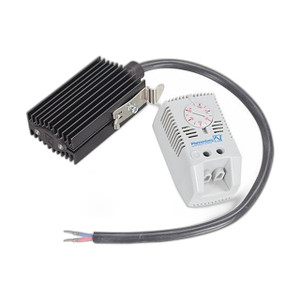
STI STI-HTR200T Radiant Heater with Thermostat
Overview
The STI-HTR200T is a 9VDC radiant heating unit designed to prevent condensation and maintain credential reader sensitivity in outdoor and semi-protected access control installations. Condensation buildup on card readers, biometric sensors, and electronic lock mechanisms degrades performance or causes temporary lockouts — the HTR200T's radiant heating element eliminates this by maintaining optics and mechanical components above the dew point. The integrated thermostat eliminates external temperature control modules, reducing wiring complexity and control overhead. Deploy this in outdoor card reader enclosures, building access points in freezing climates, and any weather-exposed credential reader where supplemental heating is critical to uptime.
Compatibility
The STI-HTR200T operates on 9VDC power and integrates into access control power supplies and auxiliary 9VDC feeds standard in most commercial reader and lock installations. It is designed for direct mounting into enclosures protecting credential readers and electronic locking mechanisms. Verify your existing power supply can source the heater's current draw; typical access control 9VDC supplies (12VA, 20VA, or 40VA models) carry sufficient capacity for most single-reader installations. If you are converting from 24VDC to 9VDC via a buck converter or dedicated auxiliary supply, confirm the supply has headroom for the heater load in addition to reader and strike current.
Installation Notes
Mount the HTR200T inside the enclosure protecting your reader or lock mechanism. Position it to radiate heat toward optics or exposed mechanical components most susceptible to condensation. Ensure adequate airflow around the heater element to prevent thermal buildup in the enclosed space. Wire the unit directly to your 9VDC power rail; no external thermostat module is required. The built-in thermostat cycles the heating element based on ambient temperature, so no separate setpoint configuration is needed. Confirm your enclosure can withstand sustained low-level heat output without degrading polycarbonate or plastic components — test with a short energization cycle before final deployment if using non-standard enclosure materials.