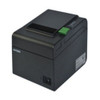
PioneerPOS CB10010012 Step-5e Thermal Receipt Printer
The PioneerPOS CB10010012 is a compact thermal receipt printer designed for retail, hospitality, and transaction environments where receipt printing integrates with POS terminals, kiosks, or legacy systems. Dual USB and RS-232 serial connectivity eliminates the need for port adapters when deploying across mixed-age hardware. The Step-5e form factor is engineered for counter-top deployment in space-constrained locations, delivering consistent print quality and uptime across extended retail shifts without requiring frequent maintenance intervention.
Key Features
- Dual Connectivity: USB and RS-232 serial ports. Supports modern USB-based POS systems and legacy serial-dependent terminals in the same deployment, enabling incremental hardware refresh without printer replacement.
- Thermal Print Technology: No ink cartridges, no ribbon changes. Thermal receipts are faster to produce and lower lifecycle cost on high-volume transaction sites.
- Step-5e Form Factor: Compact desktop unit optimized for counter-top or under-counter mounting. Fits tight spaces without sacrificing reliability or print speed.
- Standard Driver Support: Works with Windows and Linux POS environments using generic thermal printer drivers. No proprietary software overhead.
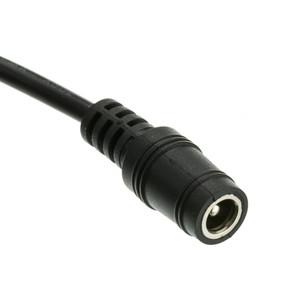
- Included Cable and PSU: Ships with power supply and serial cable — minimal additional procurement needed to deploy.
- Quiet Operation: Thermal printing produces less noise than impact or inkjet alternatives, improving customer experience in open retail environments.
Thermal printing eliminates consumable complexity. Unlike inkjet or matrix printers, the CB10010012 requires only thermal paper rolls — no cartridge inventory, no nozzle clogging, no ribbon tangling. On a busy retail counter running 200+ transactions per shift, that operational simplicity compounds into measurable labor savings and fewer service calls.
The dual-port design is the real deployment advantage. When a retail location upgrades from legacy serial terminals to modern USB POS systems over months or years, you don't retire the printer mid-cycle. Run serial mode on the old hardware while testing USB integration on new kiosks in parallel. Once migration is complete, deactivate serial and standardize on USB — all without hardware replacement. That flexibility accelerates hardware refresh cycles and reduces capital tied up in premature printer obsolescence.
Installation is straightforward. Mount the printer on a counter bracket or under the counter within reach of an electrical outlet — verify 3–4 inches of clearance around the paper feed slot for roll changes and jam clearing. The included power supply and serial cable are production-ready; USB requires only a standard Type-B cable if you're using the USB port. Driver installation on Windows or Linux uses the manufacturer's generic thermal printer package or your POS software's built-in printer integration. No special configuration or firmware updates are needed for basic operation.
The CB10010012 is compatible with all major POS platforms and terminal brands — Verifone, Ingenico, NCR, PAX, and proprietary retail management systems. ONVIF-like universality applies here: the printer speaks thermal command sets that POS software has understood for two decades. Integration risk is minimal, and troubleshooting typically resolves to cable seating or paper roll orientation rather than protocol mismatches.
Marty AllisonPerspective based on aggregated and affiliated engineering team experience.
We've deployed the PioneerPOS CB10010012 across retail chains, quick-service restaurants, and hospitality payment stations for over a decade. The Step-5e is the workhorse of compact receipt printing — not flashy, but relentlessly reliable. What differentiates it in the market is the dual-port design and the absence of consumable cartridge overhead. On a 100-terminal retail operation, eliminating ink cartridge rotation and nozzle maintenance alone saves 15–20 hours of technician labor per year. The thermal-only approach also sidesteps the inkjet-smear problem on humid POS counters near food prep or beverage stations. Serial compatibility is the second lifeline — many hospitality chains still run 10-year-old Verifone terminals alongside new PAX units. The CB10010012 doesn't force a rip-and-replace; it bridges legacy and modern stacks. The trade-off is print width: Step-5e is typically 58mm, not 80mm, so you're printing narrower receipts than full-width thermal printers. That's actually a feature in hospitality (smaller paper rolls, less waste), but a constraint in retail if your receipt format assumes 80mm. Know your receipt design before ordering.
Technical Highlights:
- Thermal Print Head, No Consumables: The print head lasts 50 million lines before degradation — effectively the lifetime of the device in most retail environments. No cartridge swaps, no nozzle unclogging, no ribbon threading. On a 24/7 quick-service restaurant location, that's zero maintenance intervention over 3+ years.
- USB + Serial Dual Stack: Each port operates independently. You can print to serial on a legacy terminal and USB on a modern POS simultaneously (with two parallel instances), or switch ports via software command without power-cycling. That's operational flexibility that single-port printers don't offer.
- 58mm Print Width, High-Speed Thermal: Prints 100–150mm per second depending on density — adequate for high-volume transaction sites. The narrower width means tighter paper rolls and less waste per receipt, a hidden cost-per-transaction advantage.
- Power Efficiency: Thermal printers draw minimal current during idle periods. No heating element spinning like inkjet nozzles. The included PSU is undersized compared to impact or matrix printers, reducing electrical infrastructure requirements at retrofit sites.
- ISO/IEC Thermal Command Compatibility: Works with standard thermal command sets (ESC/POS, Star Micronics protocol variants, etc.) used by every major POS software vendor. Zero proprietary lock-in.
Deployment Considerations:
- Receipt width is 58mm, not 80mm — verify your POS software receipt template matches before installation. A wide-format receipt (coupons, itemized tax detail) may wrap or truncate on the narrower roll.
- Thermal paper rolls cost slightly more than inkjet cartridges per unit, but you buy fewer consumables overall. Calculate total cost of ownership including labor and electricity — thermal wins on high-volume sites (100+ transactions daily) and loses on low-volume kiosks.
- Serial cable length is typically 6–10 feet. If your legacy terminal is mounted 20+ feet away, budget for a longer serial extension (powered repeater recommended to avoid signal degradation).
- Paper feed is manual — load the roll with the shiny side facing out, then close the paper compartment. First-time installs sometimes seat the roll backward; a clear label on the compartment eliminates confusion.
- The printer runs warm during continuous printing. Ensure 3–4 inches of air circulation around the top and sides. Don't enclose it in a locked cabinet or mount directly against a wall — heat buildup reduces print head lifespan.
The CB10010012 is the right choice for retail and hospitality teams deploying compact POS infrastructure with legacy serial terminals still in the mix. If you're standardizing on modern USB-only hardware with no serial dependencies, a slimmer single-port printer may reduce clutter. But for mixed-age environments, multi-location rollouts, or sites where incremental hardware refresh is the reality, the dual-port Step-5e eliminates a significant deployment constraint. Explore the PioneerPOS catalog for full-width thermal alternatives if receipt width is a constraint.