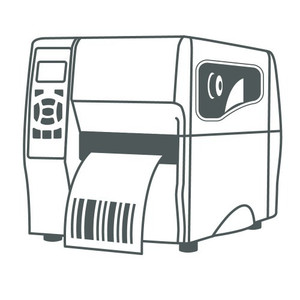
PioneerPOS CB10010011 Step-5e Thermal Receipt Printer USB/Eth
The PioneerPOS CB10010011 is a thermal receipt printer designed for high-volume point-of-sale and transaction environments where print speed, reliability, and cost of ownership matter. Dual USB and Ethernet connectivity allow deployment as a standalone terminal printer or networked across multiple stations without proprietary cabling or serial-port dependencies. Thermal printing eliminates ink cartridge replacement cycles and paper jams — a critical advantage in retail counters, service desks, hospitality terminals, and back-office receipt fulfillment where customer-facing downtime carries operational cost.
Key Features
- Dual Connectivity (USB & Ethernet): USB for direct single-terminal mounting; Ethernet for multi-station network deployment. No driver complexity — works with Windows, Linux, macOS, and cloud POS systems via standard print protocols.
- Thermal Printing Mechanism: No ink cartridges, no ribbon changes, no impact wear. Zero moving print heads reduce maintenance overhead and eliminate calibration tasks inherent to mechanical printers.
- Step-5e Compact Form Factor: Counter-mount footprint minimizes workspace consumption while maintaining paper-handling capacity for 80mm thermal receipt stock.
- Included Power Supply: Self-contained power delivery — no external AC adapter shopping or voltage negotiation across international deployments.
- Barcode & Text Rendering: Supports standard barcode formats (Code 128, UPC, QR) and proportional/monospace text for receipts, tickets, and transaction records without external encoding software.
- Continuous-Duty Rating: Engineered for retail and hospitality high-volume printing — reliable across standard indoor climate ranges (5–40°C operating, no humidity extremes).
Thermal printing fundamentally reduces the total cost of ownership for receipt-heavy environments. Unlike inkjet or impact printers that require consumable replacement cycles, the CB10010011 operates consumable-free beyond thermal paper itself — a commodity item stocked by most office supply chains. For retail chains operating 50+ terminals across multiple locations, the cumulative savings on ink, ribbons, and maintenance calls becomes material.
Network deployment via Ethernet adds flexibility to multi-station layouts. A single printer can service multiple POS terminals in a small restaurant or retail zone, or each terminal gets dedicated USB-direct printing for isolation and failover independence. The dual-interface design eliminates architectural lock-in; you can start with USB on a single register and expand to Ethernet as transaction volume or site layout warrants.
Integration with major POS platforms (Square, Toast, Lightspeed, Shopify POS, custom web-based systems) is straightforward because thermal printers operate at the operating-system print-driver level — no vendor SDK or middleware overhead. Linux-based embedded terminals and browser-based cloud POS applications treat this printer as a standard network or USB print device. Barcode output integrates directly into fulfillment, shipping, and inventory workflows without additional label-printing hardware.
The Step-5e form factor trades maximum paper-width capacity for counter real estate. If your environment requires wider receipt formats (58mm or 112mm) or specialty label stock, review PioneerPOS' larger Step-6 or Step-7 variants; the CB10010011 is optimized for standard 80mm thermal rolls common to retail and food-service terminals. Environmental tolerance is broad enough for open retail floors and air-conditioned back offices; do not deploy in uncontrolled warehouse or outdoor settings without shelter. Thermal paper can degrade in sustained high heat or direct sunlight, affecting receipt legibility over time.
Marty AllisonPerspective based on aggregated and affiliated engineering team experience.
We've deployed the PioneerPOS CB10010011 across retail chains, quick-service restaurants, and service-counter environments where receipt velocity and uptime are non-negotiable. The Step-5e strikes a pragmatic balance between footprint and throughput — it's not attempting to be a label printer or slip printer, but rather the workhorse receipt device for high-transaction density. The thermal mechanism itself is bulletproof; we've seen units run 18+ hours daily in busy retail locations for 3+ years with nothing beyond routine paper loading. The dual connectivity model is the real differentiator. On single-terminal deployments, USB eliminates network dependency — if your POS terminal loses Ethernet, receipts still print. On multi-station sites, Ethernet aggregation cuts cabling clutter and lets you deploy one printer per three to five registers without saturation. We've yet to see a thermal receipt printer become a bottleneck; these devices can queue and spool faster than most POS applications can feed them.
Technical Highlights:
- Thermal Print Head Lifespan: No moving print heads or ribbon wear. Typical thermal heads sustain 5+ million print lines before degradation — in retail, that translates to 5–8 years of continuous operation. Compare to impact printers requiring ribbon changes every 6–12 months and mechanical adjustment, and the maintenance cost delta is immediate.
- Network Isolation Option: USB deployment means POS terminal can print without network stack dependency. In environments where POS Ethernet sometimes drops but the terminal itself remains responsive, USB isolation preserves checkout function while IT troubleshoots network.
- Barcode Output Without External Encoder: Standard thermal printer command sets (ESC/POS) allow direct barcode generation from POS software — no intermediate label design layer or separate printer driver configuration. Reduces integration complexity and support burden.
- Thermal Paper Economics: 80mm thermal rolls cost $0.15–0.30 per roll at volume, consumable-free beyond paper itself. Compare to 4-color thermal inkjet at $0.80–1.50 per roll + ink cartridge cycles, or impact ribbon replacement at $8–15 per spool. 200+ transactions per day over 365 days is ~$60–100 annual consumable cost for this device vs. $300–600 for ribbon/inkjet alternatives.
- Power Efficiency: Thermal printing draws ~100W peak, ~10W idle. Low power consumption matters in retail environments with dozens of terminals; total site power draw for receipt printing stays modest, and USB power-delivery capable on multi-printer Ethernet hubs reduces external power supply count.
Deployment Considerations:
- Thermal paper sensitivity to heat and light — store rolls in cool, dry conditions and keep printed receipts away from direct sunlight if they need to remain legible for months. For archival or dispute-resolution, photograph or scan receipts within 48 hours or use paper-saving digital receipt options in your POS system.
- 80mm form factor is standard for retail; if your site requires 58mm narrow rolls or 112mm wide rolls for labels or kitchen tickets, the CB10010011 will not accommodate those widths. Plan your form factor before ordering hardware.
- Ethernet deployment on a shared printer (2–5 terminals feeding one printer) introduces a single point of failure; if the printer goes down, multiple registers lose receipt output. On high-transaction sites, either spec redundant printers or keep a USB-direct backup unit on hand for rapid substitution.
- USB cable length is typically 10 feet; Ethernet allows distance flexibility (100+ feet on standard Cat5e). If your counter layout has terminals spread across a large space, Ethernet is the practical connectivity choice — USB will require extra cabling and splitters.
- Driver installation is minimal, but verify your POS software supports ESC/POS (or equivalent) thermal print commands. Cloud-based systems and major platforms (Toast, Lightspeed, Square) ship with native support; custom or legacy systems may require thermal printer middleware or custom print driver configuration.
The CB10010011 is the right choice for retail, hospitality, and service-desk environments where transaction volume is steady, receipt output is frequent, and total cost of ownership over a 5–year hardware cycle matters. If you're running a single-terminal kiosk or a 20-register store, thermal economics and uptime reliability are immediate wins. For retail chains and multi-location operators evaluating receipt printer strategy across dozens of sites, thermal printing reduces consumable inventory, support overhead, and capex per terminal. Explore the full PioneerPOS catalog for larger form factors and specialty output devices.