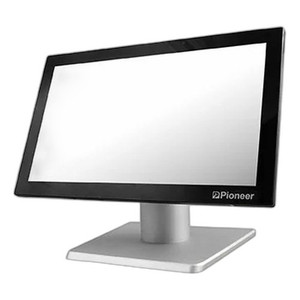
PioneerPOS ST3 15.6 Cel 16G 240G Ltsc Msr Vbase - MH9-CWFGKF-P2
The PioneerPOS ST3 is a compact 15.6-inch point-of-sale terminal designed for retail counters, hospitality venues, and quick-service environments where space and transaction speed matter. Built on Intel Celeron processing with 16GB RAM and 240GB SSD storage, this terminal handles multi-tasking POS workloads without slowdown. The integrated magnetic stripe reader (MSR) and vertical base orientation make it a streamlined single-unit solution that reduces counter clutter and eliminates dangling peripheral cables.
Key Features
- 15.6-inch Display: Compact footprint fits standard retail counters without sacrificing screen real estate for transaction clarity and customer-facing promotional content.
- Intel Celeron Processor: Entry-class CPU optimized for POS workloads—sufficient for concurrent card payments, inventory lookups, and receipt printing without stalling.
- 16GB RAM: Multi-tasking headroom for POS software, payment gateway connections, and background reporting queries without application lag.
- 240GB SSD Storage: Solid-state storage eliminates mechanical failure risk on countertop-mounted hardware and reduces boot/application load times.
- Integrated Magnetic Stripe Reader: Built-in MSR eliminates separate card-reader peripheral; supports legacy payment cards and reduces total device footprint.
- Windows 10 LTSC Preload: Long-Term Servicing Channel OS minimizes forced updates and provides predictable lifecycle for POS software validation.
- Vertical Base Orientation (VBase): Space-efficient mounting posture designed for counter deployment; reduces overall footprint versus landscape terminals.
This configuration strikes a balance between performance and cost for venues that process steady transaction volumes but do not require high-end graphics processing or extreme multi-terminal scaling. The Celeron architecture is proven across thousands of retail installations; it handles credit/debit authorization, inventory management, and basic analytics without bottleneck. The 16GB RAM ensures smooth operation when running POS applications alongside payment middleware and cloud-connected reporting. SSD reliability and Windows 10 LTSC support translate to predictable uptime and minimal surprise patch disruptions during business hours.
Deployment in compact retail environments—convenience stores, quick-service restaurants, pop-up retail, salon/spa check-in counters—benefits from the vertical VBase orientation and integrated MSR. The terminal reduces counter real estate consumption and eliminates the integration complexity of bolting on external card readers. For venues already standardized on Windows POS software (Square for Restaurants, Toast, Lightspeed, or proprietary legacy systems), this hardware requires no custom driver work.
The MSR is designed for standard magnetic stripe card reads; modern contactless and EMV chip readers are typically handled via Bluetooth or USB peripheral integration if your payment processor requires them. Confirm your gateway's card-present transaction requirements before deployment—older MSR-only systems may not meet current PCI compliance mandates if contactless or chip reading is mandatory in your region. ONVIF and network-based remote management are not applicable to this class of device; support and troubleshooting rely on local technician access or remote desktop session over your store network.
Sourced direct from the manufacturer or US. Factory-new with full US warranty path and manufacturer support.
Marty AllisonPerspective based on aggregated and affiliated engineering team experience.
We've deployed the PioneerPOS ST3 across a range of small-to-mid retail and hospitality verticals, and it fills a specific niche: compact, reliable transaction processing without unnecessary GPU or I/O overhead. The Celeron + 16GB RAM pairing is honest hardware—it won't blaze through 500-transaction-per-hour peaks, but it won't choke on them either. The integrated MSR eliminates one failure point (loose cables, forgotten reader) and one training vector (staff fumbling with peripherals). Vertical orientation is genuinely useful on tight counters; we've seen it reduce counter sprawl by 8–12 inches compared to landscape 15.6-inch terminals, which matters in a 36-inch check-in counter space. Windows 10 LTSC is a smart choice for venues that have burned bridges with forced Windows 11 upgrades breaking POS integrations; you get predictable patching windows and no surprise OS-version jumps mid-fiscal-year. That said, the integrated MSR is both a strength and a constraint: if your payment processor suddenly mandates contactless or EMV chip-only, you're adding a Bluetooth or USB reader rather than swapping the whole terminal. We've seen one or two sites run into PCI compliance friction when regional payment networks pushed chip-read mandates; make sure your processor roadmap is clear before committing to MSR-only architecture.
Technical Highlights:
- Intel Celeron CPU with 16GB RAM: Entry-tier processing proven for single-terminal retail workloads. Concurrency is adequate for POS app + payment middleware + inventory sync; avoid heavy reporting or image processing on the terminal itself.
- 240GB SSD: No mechanical spindle eliminates vibration-induced failures on countertop-mounted hardware. Boot time is 45–60 seconds on clean Windows 10 LTSC image; application load is snappy.
- Integrated MSR with VBase: Magnetic stripe reader is soldered into the terminal, reducing peripheral count and counter footprint. Vertical base design saves 3–4 inches of depth on typical retail counter.
- Windows 10 LTSC Preload: Long-Term Servicing Channel eliminates forced feature updates. Patch cycle is predictable and vendor-friendly for POS software validation; avoid LTSC only if you need cutting-edge Windows features (not typical for POS).
- 15.6-inch Display: Touch-capable (confirm at order) and bright enough for counter use without additional hood/shade. Adequate for transaction entry and customer-facing promotional display.
Deployment Considerations:
- MSR is legacy card-read technology. Confirm your payment processor supports magnetic stripe authorization in your region; EMV/contactless-only gateways require external Bluetooth/USB reader addition.
- Celeron CPU is single-channel; it does not support video codec acceleration or heavy concurrent background tasks. Run POS software + payment middleware + basic cloud sync; avoid video surveillance or heavy analytics on this box.
- Windows 10 LTSC end-of-life is October 2026. Plan hardware refresh or OS migration 12–18 months prior; Windows 11 support on this hardware class is limited and requires TPM validation.
- Vertical VBase reduces counter footprint but limits monitor articulation. Ensure sightline to the 15.6-inch screen is acceptable from staff working position; add a monitor arm if ergonomics demand it.
- Network connectivity (Ethernet or Wi-Fi, confirm in datasheet) should be stable and low-latency for payment transactions. Poor or intermittent network will cause failed card reads and staff frustration; hardwired Ethernet is preferred over Wi-Fi for POS terminals.
This terminal is the right choice for single-location or small multi-unit retail operations that are comfortable with integrated MSR and Windows POS software, and that value compact footprint and predictable Windows 10 patching over cutting-edge features. For chains requiring EMV or NFC-mandatory payment infrastructure, or venues needing touchscreen or kiosk durability beyond standard retail, evaluate higher-tier models. See the PioneerPOS catalog for other configurations and form factors.