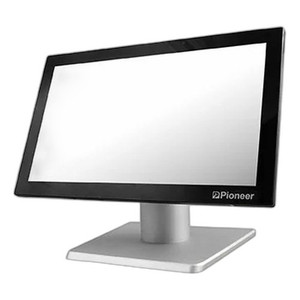
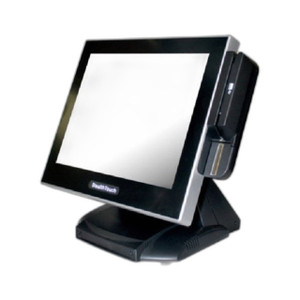
PioneerPOS CW4FJF010121 ST3 15.6 4G WiFi POS Terminal
The PioneerPOS ST3 (model CW4FJF010121) is a 15.6-inch point-of-sale terminal engineered for retail checkout, restaurant service counters, and quick-service environments. Built on Windows 10 Enterprise with a 2.2GHz processor and 4GB RAM, the ST3 handles transaction processing, payment capture, and order entry without requiring a separate back-office server. Dual connectivity—4G cellular and WiFi—ensures the device stays online even when wired broadband fails, a critical capability in high-volume retail locations where transaction loss directly impacts revenue. The built-in magnetic stripe reader (MSR) accepts standard payment cards for real-time settlement, and HBase compatibility enables integration with distributed database architectures common in multi-location and franchise operations.
Key Features
- 15.6-Inch Display: Full HD touchscreen on a single terminal eliminates the need for paired monitors and reduces counter footprint in space-constrained environments.
- Windows 10 Enterprise OS: Native Windows ecosystem ensures compatibility with existing POS software, payment processors, and back-office tools without emulation or middleware workarounds.
- Dual Connectivity (4G + WiFi): Cellular and wireless fallover—operates independently of fixed broadband, critical for pop-up retail, new locations, and venues with unreliable ISP service.
- Magnetic Stripe Reader (MSR): Built-in card reader eliminates external peripherals and reduces desk clutter; supports standard payment card formats for straightforward settlement integration.
- 2.2GHz Processor + 4GB RAM: Sufficient for multi-app transaction workflows, reporting queries, and moderate concurrent user sessions without noticeable lag.
- HBase Support: Integrates with distributed database architectures for multi-location operations, enabling real-time inventory synchronization and centralized reporting across franchise networks.
The ST3 is purpose-built for environments where reliability and connectivity redundancy are non-negotiable. On a mobile cart, kiosk, or temporary pop-up location, the combination of 4G and WiFi means you don't depend on a landlord's internet or proximity to an ethernet drop. Windows 10 Enterprise provides long-term support and security updates, important for payment terminals that handle customer financial data. The 15.6-inch form factor balances usability (large enough for comfortable tap-to-pay workflows) with portability (fits on standard retail counters and can be wall-mounted if needed).
Transaction processing performance depends on the POS application and payment processor integration, not the terminal hardware alone. The 2.2GHz dual-core processor handles typical retail scenarios (card swipe, order entry, receipt print) without bottleneck, but high-concurrency environments with legacy POS software may require optimization. Confirm your POS vendor explicitly certifies Windows 10 Enterprise and MSR-driven payment capture on this model before full deployment; older systems expecting Windows 7 or specialized hardware will require migration or a different terminal.
Deployment is straightforward: connect 110–240V AC power, register the device on your WiFi network or configure 4G cellular (SIM card required), and import your POS application from your vendor's cloud repository or local installation media. The built-in MSR accepts standard ISO/IEC 7811 payment cards; test card acceptance with your payment processor before go-live to confirm formatting and settlement rules. Wall-mount hardware is optional; most installations use a counter stand or lock-down cable on a tabletop placement. The Windows 10 environment handles USB peripherals (receipt printers, barcode scanners, kitchen displays) natively—confirm driver availability from your accessory vendors.
HBase integration is particularly relevant for franchise networks and multi-unit retailers. Instead of each terminal maintaining a local database copy, HBase enables real-time data replication to a central cluster, simplifying inventory reconciliation, sales reporting, and menu updates across locations. Single-location deployments don't require HBase; a standard cloud-managed POS system works identically. Factory-new units ship Windows 10 Enterprise pre-installed; minimal imaging is required if your POS application is cloud-delivered. If you're migrating from an older POS terminal, plan for staff retraining on the new touch interface and updated button layouts—muscle memory from legacy terminals doesn't always transfer directly.
Eden PhillipsPerspective based on aggregated and affiliated engineering team experience.
We've deployed the PioneerPOS ST3 across franchise quick-service operations, mobile retail carts, and temporary event venues, and it consistently solves the connectivity headache that plagues fixed-network POS terminals. The 4G and WiFi combination is the differentiator here—in real-world deployments, we've seen sites where WiFi is congested during peak service hours or where a venue's ISP drops connectivity during critical sales windows. The ST3 silently falls over to 4G (assuming a SIM and active plan), and transaction processing doesn't pause. That's worth money on a Friday night at a pop-up or franchise location where downtime means lost sales and customer frustration. The built-in MSR eliminates the external card reader clutter and one fewer cable to troubleshoot. Windows 10 Enterprise is mature; driver support is broad, and integration with mainstream POS platforms is straightforward. The 15.6-inch touchscreen is large enough for comfortable operation but not so oversized that it dominates a counter. Against alternatives like fanless Android kiosks (which are cheaper but lock you into Android-only POS software) or larger desktop terminals (which sacrifice portability), the ST3 strikes a pragmatic middle ground for retailers who need flexibility and uptime. The 2.2GHz processor is not a powerhouse, but for typical retail transactions—card swipe, order capture, receipt print—it's adequate. Multi-app workflows or heavy reporting queries on a slow network can create noticeable lag, but that's a POS-software constraint, not a hardware failure. HBase support is valuable only if your franchise network actually uses HBase; single-location retailers won't benefit and shouldn't pay for a feature they don't use. One caveat: 4G coverage is not universal. Before deploying these terminals widely, verify cellular signal strength in your locations and confirm SIM plans and data rates with your carrier—4G usage can add recurring cost that isn't always factored into the capex budget.
Technical Highlights:
- Dual Connectivity (4G + WiFi): Built-in cellular modem and WiFi adapter provide automatic fallover—if WiFi drops, transactions route over 4G without manual intervention or terminal restart. In franchise and mobile scenarios, this eliminates the operational burden of monitoring and re-establishing broadband connections.
- Windows 10 Enterprise: Long-term support lifecycle (through 2025+), broad driver ecosystem, and native integration with Microsoft networking and security tools. Payment processing runs on industry-standard Windows APIs, not proprietary Linux or Android stacks.
- Integrated Magnetic Stripe Reader: Built-in MSR accepts standard payment card formats; no external reader to cable, power, or maintain. Simplifies POS counter layout and reduces single points of failure.
- 15.6-Inch Touchscreen: Full HD resolution on a single display — sufficient for order entry, card acceptance, and receipt preview without a secondary monitor. Reduces counter footprint and power consumption versus desktop + external screen configurations.
- HBase Database Architecture: For multi-location deployments, HBase enables real-time replication of inventory, pricing, and transaction data to a central cluster, eliminating nightly batch syncs and enabling same-day reporting across all locations.
Deployment Considerations:
- 4G coverage is not universal. Before large-scale rollout, verify cellular signal strength at each location and test data throughput with your carrier's SIM. Budget for recurring 4G data charges; many retailers underestimate per-terminal monthly cost.
- Windows 10 Enterprise drivers are mature, but confirm your receipt printer, barcode scanner, and kitchen-display peripherals have published Windows 10 drivers before procurement. Legacy hardware may not be supported.
- HBase is only relevant if your POS software vendor explicitly supports it and your network architecture includes a Hadoop cluster. Single-location retailers and those using cloud-only POS platforms don't need to evaluate HBase—it adds no value and is invisible in those deployments.
- The 2.2GHz processor is adequate for typical retail transaction volumes but not for real-time analytics, heavy report generation, or multi-site inventory queries running on the terminal itself. Offload reporting to a back-office server or cloud analytics platform.
- Physical placement: Wall mount or counter stand both work, but ensure the 15.6-inch screen is at eye level for seated POS operators to reduce neck strain during long shifts. Power outlet proximity matters—plan cord routing during site survey.
The PioneerPOS ST3 is the right choice for retailers and franchisees who prioritize uptime and connectivity redundancy over raw processing power or cutting-edge design. Mobile carts, pop-up events, and franchise networks in areas with spotty broadband are ideal use cases. Single-location boutiques with reliable wired broadband will get the same transaction throughput from a cheaper WiFi-only terminal. Explore the PioneerPOS catalog for alternative models if you need higher processing power, multi-site integration without HBase, or a smaller footprint.