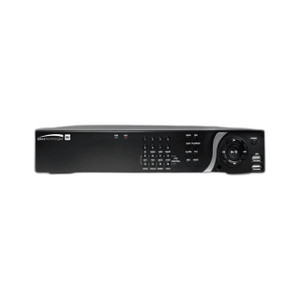
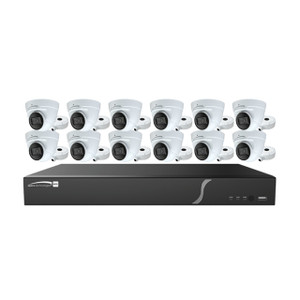
Speco Technologies ZIPN16T4 16-Channel 8MP NVR with 4TB Storage and 12x 5MP Turret Cameras
Overview
The Speco Technologies ZIPN16T4 is a turnkey network video recorder system designed for integrators and facility managers deploying medium-scale surveillance across retail, warehouse, and commercial sites. The kit pairs a 16-channel 8MP NVR with 12 matched 5MP turret-style IP cameras and a factory-installed 4TB hard drive — eliminating the need to source and stage components separately. The ZIPN16T4 supports simultaneous recording, playback, and live viewing across all 16 channels, meaning you can export forensic footage while the system continues recording without performance degradation. The 4TB HDD provides extended retention; at 5MP resolution, expect roughly 10–14 days of continuous 24/7 recording on all 12 cameras before the oldest footage rolls over, depending on scene complexity and compression settings. If retention requirements exceed two weeks, plan for external storage or a secondary NVR.
Key Features
- 16-Channel 8MP NVR: Records up to 16 simultaneous video streams at 8MP resolution. The 8MP capability future-proofs the system — you can add higher-resolution cameras later without replacing the recorder. The NVR's processing headroom means real-time transcoding for remote viewing won't bottleneck your network or CPU.
- 4TB Factory-Installed HDD: Pre-loaded storage eliminates procurement delays and ensures out-of-box compatibility. No RAID configuration required for this kit; single-drive setups are simpler to manage but leave no redundancy if the drive fails — budget for a spare 4TB drive on standby or plan for external backup.
- 12x 5MP Turret Cameras: Matched camera set ensures consistent image quality and color balance across all zones. Turret form factor (compact dome-style housing) mounts on walls, ceilings, or pole brackets without requiring elaborate mounting hardware. The 5MP resolution (2592 × 1944) delivers sufficient detail for facial recognition and license-plate capture at 10–15 feet, though longer distances may require higher megapixels.
- IP-Based Architecture: Full IP camera network means you leverage existing ethernet cabling and PoE infrastructure. Remote access and mobile viewing are standard — configure via standard browser or mobile app depending on Speco's supplied software.
- 4-Channel Headroom for Expansion: The 16-channel NVR handles the 12 included cameras, leaving 4 unused channels. Add third-party ONVIF-compatible cameras to fill those channels without replacing the NVR, scaling the system as facility layouts or coverage requirements change.
- Multi-Codec Support: NVR handles H.264 and H.265 (HEVC) compression. H.265 cuts storage consumption roughly 40–50% versus H.264 at equal quality — a real win on 24/7 recording, though older playback systems may not support HEVC.
- Simultaneous Multi-Stream: Record all channels, play back a clip for investigation, and export evidence without interrupting live capture. Critical for active sites where stopping the recorder is not an option.
- Indoor/Outdoor Turret Design: Turret cameras handle standard indoor and sheltered outdoor deployments. Verify IP rating of individual cameras in your environment — if full weather resistance is mandatory, confirm specifications against your facility's exposure.
- Pre-Configured Kit Reduces Integration Time: Cameras arrive paired to the NVR, so you skip firmware matching and IP address conflicts. Typical setup: mount cameras, connect power, connect NVR to network, and begin recording within a few hours.
Integration & Compatibility
The ZIPN16T4 ships as a complete system with ONVIF support, enabling integration with third-party video management software and Milestone Xprotect if your facility standardizes on that platform. The NVR connects to a standard network switch; if all 16 channels are populated with 5MP cameras at 30 fps, you'll consume roughly 150–200 Mbps of network bandwidth depending on compression. Ensure your network switch has sufficient uplink capacity and PoE power budget (the turret cameras typically draw 8–15W each, so plan for a managed PoE switch with sufficient wattage or supplement with external PoE injectors).
Storage & Retention Planning
The included 4TB drive is non-redundant. For mission-critical deployments, configure external NAS or backup storage for daily archival. If you need longer retention without overwriting, add a second 4TB USB external drive or implement network-based backup to preserve evidence chains.
Frequently Asked Questions
Q: Can I add cameras beyond the 12 included in the ZIPN16T4 kit?
A: Yes. The NVR supports 16 channels total, so you have 4 open slots. Add any ONVIF-compatible IP camera and configure it on the NVR via the web interface or management software. Camera resolution and frame rate must align with your network bandwidth — mixing 5MP, 8MP, and higher-resolution cameras is supported as long as total bitstream stays within your switch's capacity.
Q: What is the typical recording duration on the 4TB HDD?
A: At 5MP resolution with H.264 compression, expect 10–14 days of continuous 24/7 recording before the oldest footage overwrites. H.265 compression extends that to roughly 15–20 days. Scene complexity, frame rate (15 fps vs 30 fps), and motion-triggered recording all affect actual retention. Benchmark retention in your environment before deploying.
Q: Does the ZIPN16T4 support remote viewing over the internet?
A: Yes. The NVR supports standard IP-based remote access. Configure port forwarding on your firewall or use a cloud gateway service (check Speco's documentation for supported platforms) to view live and playback footage from mobile or desktop browsers. Ensure your WAN uplink bandwidth supports the bitrate you intend to stream remotely.
Q: Is the 4TB HDD redundant, and what happens if it fails?
A: No. The ZIPN16T4 kit includes a single 4TB drive with no RAID or mirroring. If the drive fails, all recordings are lost. For critical deployments, budget for external backup (USB or NAS) or a second NVR as a failover. Some integrators install a spare 4TB drive on standby for rapid replacement.
Q: What are the power and networking requirements?
A: The NVR requires standard AC power (110–240V). The 12 turret cameras are powered via PoE (802.3af or 802.3at). Plan for a managed PoE switch with minimum 180–200W available power budget if running all 12 cameras at full power draw. Confirm your switch model supports the wattage before purchase.
Q: Can I integrate the ZIPN16T4 with Milestone Xprotect or other VMS software?
A: Yes. The NVR supports ONVIF, which allows Milestone and other major VMS platforms to connect and pull video streams from the recorder. Check the VMS compatibility matrix with your software vendor to confirm supported camera resolutions and codecs.
Ted PerryPerspective based on aggregated IP Security Depot and affiliated engineering team experience.
The ZIPN16T4 is a solid middle-ground NVR for integrators who need a pre-validated platform and want to avoid component sourcing headaches. The real value here is the kit approach: 12 matched 5MP turrets and a 16-channel 8MP NVR in one box means no firmware version mismatches, no surprise compatibility issues, and a single warranty claim path if something fails on day one. The turret form factor is versatile — you mount these on ceilings, walls, or pole brackets without custom brackets, which saves site-engineering time on retail or warehouse jobs.
Technical Highlights:
- 4TB HDD Storage + 5MP Cameras: Delivers 10–14 days of 24/7 recording at H.264 compression. Swap to H.265 and you'll stretch that to 15–20 days, but verify your playback systems support HEVC before committing. This matters if your SLA requires minimum 2-week retention.
- 16-Channel NVR, 12 Cameras Included: Leaves 4 unused channels for expansion. Integrators can upsell additional cameras or third-party sensors without replacement — just add them to the open slots and reconfigure the network trunk if bandwidth allows.
- Simultaneous Multi-Stream Recording & Playback: You can export forensic clips while live recording continues uninterrupted. Critical for active retail or warehouse environments where the system cannot go offline for investigation.
Deployment Considerations:
- No Storage Redundancy: Single 4TB drive means one hard-drive failure = total data loss. For mission-critical sites (healthcare, financial, high-theft retail), mandate external NAS backup or a second NVR as failover. Budget accordingly.
- PoE Power Budget: 12 turret cameras at 8–15W each = 96–180W total. Verify your managed PoE switch has headroom; undersized switches cause brown-out or camera drop-outs during peak motion (morning rush, loading dock activity, etc.). I've seen integrators overlook this and field service calls are expensive.
- Network Bandwidth Planning: 12 × 5MP cameras at 30 fps = roughly 150–200 Mbps depending on codec. Your network backbone (uplink from NVR to core) must handle this without congestion. If you're also running VMS or secondary storage, you'll exceed 250 Mbps — verify switch and WAN capacity before shipment.
Best fit: retail chains, warehouses, and small commercial sites where a pre-matched system reduces integration risk, upfront cost is lower than enterprise platforms, and you need 10–20 days of retention without elaborate archival. Avoid if you require sub-second failover redundancy, need RAID storage, or are deploying across multiple buildings with centralized recording — that's where enterprise NVRs or distributed edge recording wins.