Speco Technologies TVIHD TVI to HDMI Converter
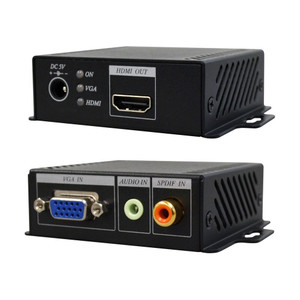
The Speco Technologies TVIHD is a dedicated TVI (Television Video Interface) to HDMI converter designed to bridge legacy TVI camera infrastructure with modern HDMI display ecosystems. In surveillance deployments where TVI cameras remain operationally sound but control rooms, monitoring stations, and verification workflows have migrated to HDMI-equipped displays, the TVIHD eliminates the need to replace cameras or route all feeds through full DVR/NVR systems just to access live video on contemporary monitors and projectors.
Overview
TVI remains widely deployed across North American and Asian surveillance installations as a cost-effective digital video transmission standard. However, end-user facilities increasingly standardize on HDMI displays for control rooms, command vehicles, and field verification setups. The TVIHD converter solves this mismatch without requiring system-wide replacement. This is particularly valuable in retrofit deployments, temporary monitoring scenarios, and hybrid system migrations where TVI and HDMI sources must coexist.
Direct signal conversion—rather than encoding through a DVR or network appliance—means faster deployment, lower latency, and reduced operational complexity. Integrators deploying the TVIHD should verify that TVI camera outputs comply with TVI standards and confirm target HDMI displays support the source video resolution and refresh rates being supplied.
Key Features
- Direct TVI-to-HDMI signal translation — converts TVI video input to standard HDMI output without intermediary recording or network infrastructure, reducing latency and eliminating the need for a full DVR/NVR just for display purposes.
- Compact form factor — sized for integration into control room equipment racks, mobile command vehicles, temporary monitoring stations, and field commissioning setups without occupying significant space.
- Plug-and-play operation — minimal configuration required; technicians familiar with standard video cabling can deploy the converter without requiring network administration, IP addressing, or software licensing.
- Passive signal translation architecture — no active re-encoding or processing overhead, meaning lower power consumption and reduced heat dissipation in enclosed rack environments.
- TVI input compatibility — accepts video streams from any TVI-compliant camera source, making the converter suitable for mixed-format installations where TVI cameras coexist with analog or IP systems.
- Professional-grade construction — rated for 24/7 continuous operation in surveillance deployments, providing consistent uptime in busy monitoring environments.
- Cost-effective format migration path — enables display infrastructure upgrades without requiring camera or transmission infrastructure replacement, reducing total cost of ownership in large multi-camera installations.
Integration & Compatibility
The TVIHD converter accepts TVI video input via standard video connectors and outputs standard HDMI video compatible with any modern HDMI-equipped display device. This enables direct integration into existing control room infrastructure, mobile command vehicles, temporary monitoring stations during system testing or maintenance windows, and field verification setups where technicians need to confirm TVI camera output independent of centralized recording systems.
Common deployment scenarios include connecting TVI camera feeds to HDMI monitors during system commissioning and testing phases, providing temporary HD display output during planned maintenance windows, supporting multi-format control room environments where TVI and HDMI sources must be monitored simultaneously, and enabling field technician access to live TVI camera feeds via portable HDMI displays. The converter is particularly useful in mixed-camera installations where TVI, analog, and IP cameras coexist, allowing operators to verify TVI camera output without relying on full NVR systems or complex signal routing.
When considering this converter alongside broader surveillance infrastructure, integrators may want to review network video recorders for scenarios where recording and centralized management are required, or explore surveillance cameras in the Speco Technologies catalog if camera replacement or expansion is planned.
Frequently Asked Questions
Q: What is the difference between TVI and HDMI output?
A: TVI (Television Video Interface) is a digital video standard designed for transmission over coaxial cable, commonly used in DVR-based surveillance systems. HDMI is a modern digital video standard used in consumer and professional displays, monitors, and projectors. The TVIHD converter translates TVI signals into HDMI format so that TVI camera feeds can be displayed on HDMI-equipped monitors without requiring a full DVR or NVR system.
Q: Does the TVIHD require power or network configuration?
A: The TVIHD operates as a passive signal translator requiring no power supply, network configuration, IP addressing, or software licensing. Installation is straightforward—connect TVI input, connect HDMI output, and power on the display. No IT infrastructure or specialized technical knowledge is required.
Q: Can I use the TVIHD with any TVI camera?
A: Yes, the TVIHD accepts input from any TVI-compliant camera. However, integrators should verify that the camera's output format matches TVI standards and that the target HDMI display supports the video resolution and refresh rate being supplied by the camera.
Q: Is the TVIHD suitable for temporary or field deployments?
A: Yes. The compact form factor and plug-and-play operation make the TVIHD ideal for temporary monitoring setups, mobile command vehicles, commissioning and testing phases, and field verification work where technicians need to confirm TVI camera output without deploying full recording infrastructure.
Q: What happens if my HDMI display doesn't support the TVI camera's resolution?
A: The TVIHD passes the TVI signal directly to HDMI output without re-scaling or processing. If the target display does not support the input resolution, the display may not render the video correctly. Confirm that the HDMI monitor or projector supports the resolution and refresh rate of your TVI camera before deployment.
Q: Can the TVIHD be used alongside DVR or NVR systems?
A: Yes. The TVIHD is ideal for parallel deployments where operators need real-time HDMI output for verification or monitoring purposes while recording is handled by a separate DVR/NVR system. This is common in control room environments where multiple video formats and display types coexist.
Ted PerryPerspective based on aggregated IP Security Depot and affiliated engineering team experience.
I've deployed the Speco TVIHD in several retrofit projects where end-users had migrated control room displays to HDMI standards but lacked the budget or operational justification to replace existing TVI camera infrastructure. The TVIHD solved that mismatch efficiently. The passive architecture—no power supply, no network config, no software—is the real win here. It's not a smart device. It's a signal translator, and that simplicity matters in the field.
Technical Highlights:
- Passive signal translation: No power supply or network infrastructure required means faster commissioning, lower failure modes, and one fewer device to track in your inventory or support lifecycle.
- Compact form factor: Fits easily into existing rack layouts, mobile command vehicles, or field kit bags without requiring dedicated equipment space or cooling.
- Direct TVI-to-HDMI conversion: Zero latency compared to DVR/NVR re-encoding; video reaches the display immediately, which matters in live monitoring and troubleshooting scenarios.
Deployment Considerations:
- Verify upfront that your HDMI display supports the resolution and refresh rate your TVI camera is outputting. The TVIHD does not re-scale or process—it passes the signal straight through.
- This is not a recording device and not a network appliance. If you need recording, centralized management, or multi-camera aggregation, you still need a DVR or NVR alongside the TVIHD.
The TVIHD is best positioned for mixed-format retrofit environments, temporary monitoring setups, commissioning workflows, and control rooms where operators need parallel HDMI output alongside existing DVR infrastructure. It's not a replacement for a proper NVR in a new installation, but for making legacy TVI cameras work with modern display infrastructure, it's a straightforward, low-risk choice.