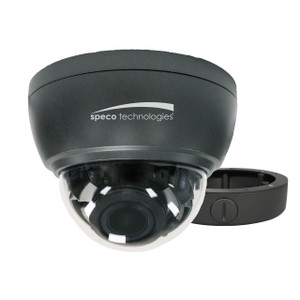
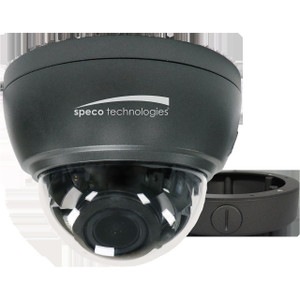
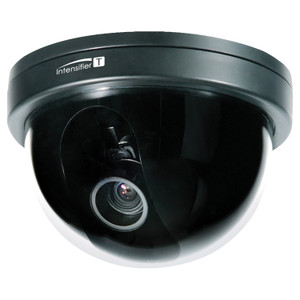
Speco Technologies HLED33DTW 2MP HD-TVI Dome Camera
Overview
The Speco Technologies HLED33DTW is a 2MP HD-TVI indoor dome designed for fixed surveillance in retail, office, and institutional settings where adjustable framing and infrared capability matter. Delivering 1920×1080 resolution at 30 fps, the HLED33DTW uses coaxial infrastructure — eliminating network overhead and cybersecurity surface when integrated into existing analog or hybrid HD-TVI backbones. The motorized 2.8–12mm varifocal lens lets you dial in field of view after installation without swapping lenses, and integrated infrared (IR) illumination extends coverage into dark or unlit spaces 24/7. Wide dynamic range (WDR) processing handles mixed light conditions — bright windows next to dim corners — so you spend less time adjusting shutter speed or gain during commissioning.
Key Features
- 2MP (1920×1080) at 30 fps: HD-TVI format compresses video efficiently over coax, reducing bandwidth and storage footprint compared to uncompressed or network-based 2MP streams. Standard definition is adequate for identifying general activity and movement; if you need facial recognition or license-plate detail, step up to a 4MP or 5MP model.
- Motorized 2.8–12mm varifocal lens: One SKU covers a 4.3x zoom range. At 2.8mm you get wide hallway or retail floor coverage; at 12mm, tighter framing on distant corners or high-mounted installations. No field swap needed during site surveys — adjust focus and zoom position via the coax receiver controls.
- Built-in infrared illumination: IR emitters enable low-light and nighttime imaging without external LED panels. Eliminates the expense and maintenance of separate IR lighting rigs, especially valuable in unattended warehouses or corridors with no ambient light after hours.
- Wide dynamic range (WDR): Balances detail in bright and dark areas of the same frame. A checkout counter backlit by storefront windows and a shadowed corner both render visible; reduces the need for multiple cameras or manual exposure tweaking per zone.
- Dual power input (12V DC or 24V AC/DC): Flexibility for integration with legacy building power systems, 24V control circuits, or standard PoE injectors. No proprietary connectors; uses common terminal blocks and RJ-45 connectors for network integration.
- Motion detection analytics: Edge-level motion triggers alert or recording state changes without external video management software overhead. Useful for basic activity-based recording or simple alarm relay workflows in standalone or small-footprint deployments.
- HD-TVI coaxial transport: Video encoded in HD-TVI (high-definition transport video) format travels directly over existing coax cable to Speco TVI receivers, hybrid DVRs, or NVR platforms. Avoids costly network redesigns and simplifies isolated security networks with no IP connectivity required.
- Indoor-rated housing (14°F to 122°F / −10°C to 50°C): Suitable for climate-controlled interiors. No IP66, IP67, or vandal rating — not designed for outdoor rain, direct sunlight, or impact resistance. If your site includes covered entry vestibules or outdoor loading docks, specify a weatherproof alternative.
Integration and Compatibility
The HLED33DTW integrates into any Speco HD-TVI or hybrid receiver system. Because it uses coaxial transport (not Ethernet), it does not require IP address assignment, firmware updates, or network troubleshooting. Existing installations using analog or hybrid backbones can add this camera without adding IP load or VLAN complexity. The varifocal lens supports manual or motorized focus and zoom control from the receiver front panel or remote, making field adjustments straightforward during commissioning.
When to Choose a Different Model
If your application requires outdoor weatherproofing, pan-tilt-zoom mechanics, higher resolution (4MP+), or advanced edge analytics (people counting, line crossing, object classification), evaluate alternatives from the dome camera category or higher-resolution IP camera options. The HLED33DTW is strictly indoor. Applications needing continuous onboard recording or thermal imaging should also consider models with built-in storage or thermal sensors.
Frequently Asked Questions
Q: Can I install the HLED33DTW outdoors?
A: No. The HLED33DTW lacks IP66 or IP67 weatherproofing and is rated for indoor operation only (14°F to 122°F). Outdoor mounting or exposure to direct rain will degrade the optics and electronics. Choose a weatherproof dome or bullet for outdoor coverage.
Q: Does the HLED33DTW require an IP address or network configuration?
A: No. The HLED33DTW uses HD-TVI coaxial transport and does not connect to Ethernet. Video flows directly over coax to your Speco TVI receiver or hybrid DVR. No IP addresses, ONVIF setup, or firmware updates needed.
Q: What is the maximum infrared range?
A: The specification evidence does not provide an explicit IR range (distance in meters or feet). Refer to the manufacturer datasheet or contact your systems integrator for nighttime illumination distance on your specific installation.
Q: Can I use the HLED33DTW with a standard PoE switch or injector?
A: Yes. The HLED33DTW supports PoE power input, so it can draw power from a standard PoE injector or switch port. It also accepts 12V DC or 24V AC/DC if you prefer hardwired power — useful in facilities where PoE is not available.
Q: Is the lens motorized or manual?
A: The 2.8–12mm lens is motorized, meaning you control focus and zoom position via the coax receiver. After installation, you can adjust framing without physically accessing the camera or swapping optics.
Q: What recording resolution and frame rate does the HLED33DTW support?
A: The HLED33DTW delivers 1920×1080 (2MP) at 30 fps. This is adequate for activity detection and general monitoring in retail or office environments. For higher resolution or frame rate, consider a 4MP or 5MP alternative.
James EverettPerspective based on aggregated IP Security Depot and affiliated engineering team experience.
The HLED33DTW lands squarely in the "good enough for coax-based facilities" lane — and that's not damning with faint praise. If your site already has analog or hybrid coax infrastructure, adding a 2MP HD-TVI dome eliminates the need for network redesign, VLAN planning, and IP camera licensing hassles. The varifocal lens is the real play here: one camera, one SKU, and you dial in coverage without field visits to swap optics.
Technical Highlights:
- Motorized 2.8–12mm varifocal lens: 4.3x zoom range in one package cuts inventory complexity and lets installers fine-tune coverage post-deployment. At 2.8mm you cover 30–40 feet horizontally; at 12mm, tighter detail on subjects 15–20 feet away. Field-adjustable without climbing ladders.
- 2MP (1920×1080) 30 fps HD-TVI: Enough for detecting movement and general activity; not sufficient for facial recognition or ANPR work. Storage footprint is lean compared to network 2MP streams — coax HD-TVI compression is efficient, so you don't fill your NVR as quickly.
- Integrated IR illumination + WDR processing: The IR emitters handle full darkness; WDR balances mixed light (bright windows, dark corners). Together, they reduce the need for manual exposure tweaking and external lighting rigs, cutting deployment time and operational complexity.
Deployment Considerations:
- Strictly indoor-rated (14°F to 122°F). A covered vestibule or overhang? Maybe — but rain splash or direct sun exposure will cause problems. Verify thermal limits for your climate.
- No IP connectivity means no firmware updates and no remote access via the camera itself — all control happens at the Speco receiver. If your security team is used to mobile app access to individual cameras, be clear on that limitation before ordering.
- The HLED33DTW works best in facilities that already have Speco TVI infrastructure. Mixing TVI and IP cameras in the same NVR adds complexity; if you're designing a greenfield system or moving to IP, consider IP-only alternatives instead.
Deploy the HLED33DTW in retail environments with existing coax backbone where field-adjustable zoom and simple motion alerting matter more than facial detail or advanced analytics. Small-to-medium office buildings, warehouses, and institutional spaces with analog heritage infrastructure are the sweet spot.