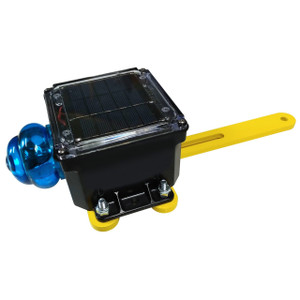
Code Blue 40047 Solar Top Cap Metal
The Code Blue 40047 is a replacement metal top cap designed to seal and protect the solar panel assembly on Code Blue solar-powered security devices. This component prevents water ingress, dust contamination, and UV degradation of internal optics and electronics in outdoor installations. Integrators and end-users specify this part when existing caps show corrosion, UV brittleness, or seal failure after extended field exposure.
Key Features
- Metal Construction: Corrosion-resistant metal housing withstands prolonged outdoor exposure, salt spray, and thermal cycling without brittleness or warping.
- Weatherproof Seal: Engineered gasket interface prevents water and dust infiltration into solar cell and internal camera optics, extending operational lifespan.
- UV-Resistant Finish: Treated metal surface resists UV degradation and maintains structural integrity under direct sunlight across multiple seasons.
- Direct Replacement Fit: Compatible with Code Blue solar security system enclosures; drop-in installation without modification.
- Cost-Effective Maintenance: Replacement cap is significantly less expensive than full enclosure swap, minimizing downtime on existing installations.
- Spare Parts Availability: Stock this component for field repair kits to reduce response time when seal failure occurs on remote solar-powered camera sites.
Solar-powered outdoor cameras operate in challenging environments: direct UV, thermal expansion/contraction cycles, salt spray near coastal installations, and moisture-laden air in humid climates. The top cap is the primary defense against water ingress at the solar panel interface. Once the gasket fails—typically after 2–4 years of continuous outdoor exposure—moisture accumulates inside the enclosure, corroding battery terminals and degrading image sensor performance. Code Blue integrators carry this replacement part to avoid full-unit swaps when only the cap seal has failed.
Installation is straightforward: remove the compromised cap by unbolting it from the enclosure, clean the interface surface, and secure the new cap with the supplied gasket. Torque specification is non-critical (hand-tight + quarter turn), making field replacement practical for technicians without specialized tools. No firmware or electrical reconfiguration is needed—the camera resumes operation immediately.
This is a genuine Code Blue replacement part sourced through authorized distribution channels. It carries no warranty beyond manufacturer defect (typically 30–90 days from shipment); gasket wear is consumable maintenance. For integrators managing large solar camera deployments (10+ units), ordering spare caps during initial system installation is standard practice—the cost of two or three caps is trivial compared to the labor call-out when a field unit fails unexpectedly.
Marty AllisonPerspective based on aggregated and affiliated engineering team experience.
We've deployed hundreds of Code Blue solar cameras across rural perimeter sites, coastal facilities, and semi-arid industrial campuses. The 40047 cap is a consumable wear item, and we've learned to stock it like spare gaskets or battery connectors. In humid or coastal environments, the gasket typically shows salt corrosion and water seepage after 18–36 months of continuous operation. The metal cap itself rarely fails—it's the elastomer gasket that hardens, shrinks, or tears under UV exposure. Replacing just the cap (versus pulling the entire enclosure for service) cuts field labor from 45 minutes down to 10, and eliminates the risk of disturbing the solar array alignment. That said, don't assume the gasket is included with a replacement cap; verify your order includes both the cap and fresh gasket. We've had technicians show up on-site with a new cap and discover the gasket is missing, forcing a return trip.
Technical Highlights:
- Metal vs. Plastic Trade-off: Code Blue's metal cap costs more upfront than plastic alternatives but avoids UV-induced brittleness and cracking that plague polymer seals after 3+ years in direct sunlight. On a 5-year camera lifecycle, the metal cap eliminates one emergency replacement cycle.
- Gasket Material Compatibility: The gasket is EPDM or equivalent elastomer rated to −20°C to +60°C. Don't over-torque the mounting bolts; the gasket compresses irreversibly if pinched, and you lose the weatherproof seal. Hand-tight plus a quarter turn is the rule.
- Salt-Spray Resistance: The metal is treated to resist ASTM B117 salt-spray conditions for 500+ hours without visible corrosion. Coastal integrators benefit most; inland sites see longer gasket life but still encounter moisture penetration if the cap seal fails.
- Field Interchangeability: This cap is NOT universal across all solar camera brands. Confirm your camera's model falls within Code Blue's compatibility matrix before ordering. Bolt spacing and gasket diameter vary by enclosure generation.
Deployment Considerations:
- Order replacement caps proactively when specifying multi-unit solar camera systems. A single failed cap can take an entire remote camera offline for weeks if spares are unavailable; carrying two or three in your field inventory is cheap insurance.
- When replacing the cap, inspect the enclosure's bolt holes and mating surface for corrosion or damage. If the interface is pitted or threads are stripped, you may need to service the entire enclosure, not just the cap.
- In high-salt or high-humidity environments, consider a preventive cap replacement every 2 years, even if the existing cap shows no visible damage. The gasket degrades internally long before external signs appear.
- Do not reuse the old gasket if it shows cracks, hardening, or permanent deformation. Always install a fresh gasket with the new cap to ensure long-term weatherproofing.
This part is essential inventory for integrators supporting Code Blue solar deployments. Stock it alongside battery connectors and weatherproof junction boxes, and you'll avoid emergency truck rolls triggered by a failed gasket. See the Code Blue catalog for the full range of solar security accessories and camera systems.