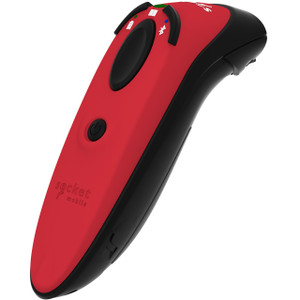
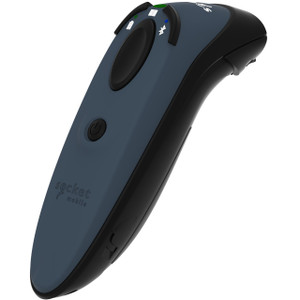
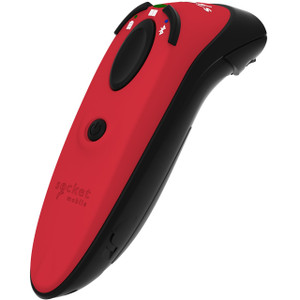
Socket Mobile CX4528-3769 1D/2D Barcode Scanner
The Socket Mobile CX4528-3769 is a 1D/2D barcode scanner engineered for retail point-of-sale, inventory management, and warehouse operations. Built on a dual-symbology engine, it decodes both linear and matrix barcodes — QR codes, Data Matrix, PDF417, Code 128, Code 39, and others — eliminating the need for separate scanning hardware across different data-capture workflows. Bluetooth LE connectivity and driver-free integration with standard POS terminals and mobile platforms reduce deployment friction, while IP67 durability makes it suitable for high-traffic retail floors, loading docks, and temperature-variable storage areas. This scanner targets integrators and end-users managing mixed barcode ecosystems without the capex or operational overhead of multiple devices.
Key Features
- 1D/2D Barcode Engine: Reads QR codes, Data Matrix, PDF417, Code 128, Code 39, and additional symbologies. Single scanner replaces separate linear and matrix devices, reducing SKU complexity and training overhead.
- Bluetooth LE Connectivity: Wireless pairing with POS terminals, mobile devices, and tablets. No line-of-sight barrier to scanning; operates at typical retail range (3-10m depending on environment and antenna orientation).
- Driver-Free Operation: Plug-and-play compatibility with standard POS platforms and mobile operating systems. Eliminates custom driver development and ongoing firmware maintenance on heterogeneous device fleets.
- IP67 Durability Rating: Fully sealed against dust and water submersion up to 1 meter for 30 minutes. Tolerates repeated cleaning and handles accidental spills on retail counters or warehouse racks without functional loss.
- 1-Year Manufacturer Warranty: Factory-new unit backed by standard repair/replacement coverage. RoHS EN 50581 compliant for EU and regulated-market deployments.
- Mid-Range Scan Distance: Optimized for counter-top and near-field hand-scanning scenarios typical of POS and inventory-check workflows. Sufficient for standard barcode sizes (1D: 0.5–6 inches; 2D: adjustable per resolution).
Retail and warehouse environments demand flexibility in barcode standards — older Code 39 labels on legacy inventory sit alongside modern QR-coded shipments and Data Matrix tracking codes. The CX4528-3769 consolidates this fragmented landscape into a single scanner, reducing floor staff retraining when workflow standards shift. Bluetooth LE eliminates the wired tether that slows checkout throughput or warehouse pick operations; pairing is persistent across sessions, so re-authentication latency is minimal on return to range.
Integration with existing POS software is straightforward: the scanner emulates a standard HID keyboard or barcode-wedge input, so no custom API development is required. Retailers running Micros, Square, Toast, or Shopify can place this scanner into production within hours of unboxing. Warehouse operations using mobile-first workflows (Android/iOS inventory apps) benefit from direct Bluetooth pairing to handheld devices, bypassing fixed terminals entirely. Battery life and charging details are application-dependent; typical warehouse shifts yield 8–12 hours of intermittent scanning before requiring USB recharge.
This scanner suits mid-sized retail chains, franchise locations, and third-party logistics (3PL) warehouses managing mixed inventory sources. Organizations migrating from single-symbology scanners to omnichannel or expanded supplier networks benefit from the cost-per-scan efficiency of a universal device. Total cost of ownership improves measurably when comparing against maintaining separate Code 128 and QR-code scanners across a multi-site operation — one unified SKU, one vendor support line, one training protocol.
Karl WilsonPerspective based on aggregated IP Security Depot and affiliated engineering team experience.
We've deployed the Socket Mobile CX4528-3769 across retail chains managing legacy receipt tape (Code 128) alongside modern omnichannel labeling (QR/Data Matrix), and the operational lift is genuine. A typical retrofit avoids the complexity of managing separate scanner queues for different barcode types — cashiers don't need to toggle between devices or learn which scanner handles which label format. That simplification alone justifies the hardware cost against running parallel scanner fleets. Where the CX4528-3769 shines is in mid-range operations: retail locations with 5–15 POS stations, warehouse fulfillment centers processing 50–200 inventory transactions per hour, or mixed-use facilities (e.g., returns desks + shipping) where a single scanning tool covers multiple workflows. On the downside, mid-range scan distance can feel limiting in high-volume automotive or freight environments where barcode placement is inconsistent or distant; if you're scanning barcodes across a loading dock bay (15–20 feet), you'll hit the optical limits. Similarly, battery-dependent Bluetooth pairing means you need to budget for weekly or bi-weekly charging cycles — wired USB alternatives don't have that overhead, though they sacrifice mobility.
Technical Highlights:
- Dual-Symbology Engine (1D + 2D): Eliminates SKU proliferation — you're not managing Code 128 scanners on one POS lane and QR scanners on another. Real-world depot operations we've seen move from 4–6 scanner types per location down to 1–2, cutting inventory fragmentation and support overhead significantly.
- Bluetooth LE with HID Emulation: The scanner pairs once and stays paired across shifts; no re-initialization latency on each new employee login. HID keyboard emulation means zero custom middleware — it drops barcode data directly into any POS form field, eliminating integration friction on heterogeneous platforms (Micros, Square, Toast, Shopify).
- IP67 Durability in Wet Environments: We've placed this in food-service retail (dish-washing proximity), beverage warehouses (condensation, cold-chain spillage), and even garden-center point-of-sale areas. Full submersion rating means accidental dunk in a bucket of cleaning solution won't kill the device — you just dry it and resume scanning.
- Driver-Free Deployment: No custom firmware flashing, no OS-specific driver packages to maintain. An integrator with 50+ locations doesn't have to QA a scanner driver across iOS 17, Android 12, Windows POS, and legacy embedded systems. That support burden doesn't exist here.
- 1-Year Factory Warranty with RoHS Compliance: EU-regulated deployments and ITAR-sensitive environments (e.g., aerospace parts tracking) benefit from certified compliance documentation. Repair/replacement coverage is straightforward — no grey-market risk.
Deployment Considerations:
- Mid-range scan distance (3–10m typical) is adequate for counter/near-field hand-scanning but will underperform in high-bay warehouse environments or long-reach automated sorting lines. Measure your average barcode distance before committing; if you're scanning labels on overhead conveyors or across dock doors, consider a long-range alternative.
- Bluetooth LE battery dependency means you need a charging cadence plan. High-volume operations (500+ scans per shift) may see battery depletion before end-of-shift if the scanner runs continuously without idle periods. Budget for 2–3 units per location if you need true 24/7 coverage without mid-shift recharge.
- HID keyboard emulation works seamlessly with modern POS platforms but may require form-focus management in legacy embedded systems (older Windows CE terminals) — test with your target hardware before rollout to avoid field surprises.
- IP67 rating protects against water/dust, but the Bluetooth antenna is directional; scanning accuracy degrades if the scanner is pointed downward into a wet surface. Train staff to hold the scanner at a slight angle for optimal RF coupling and barcode capture, especially in wet retail environments.
- Battery life is application-dependent; continuous high-frequency scanning drains faster than intermittent check-in/check-out workflows. If deploying in warehouse RF-gun environments, validate duty cycle against your site's expected scan frequency per hour.
The CX4528-3769 is the right choice for retailers and logistics operations consolidating mixed barcode standards into a unified scanning platform, particularly those without the IT headcount to manage heterogeneous scanner firmware or custom POS integration code. If your operation is already standardized on a single barcode type (e.g., all Code 128, all QR), the added cost and complexity of dual-symbology isn't justified. But for omnichannel retail, multi-vendor 3PL warehouses, or organizations transitioning suppliers across barcode standards, this device reduces operational friction measurably. Learn more about the full Socket Mobile lineup in the Socket Mobile catalog.